
Trees
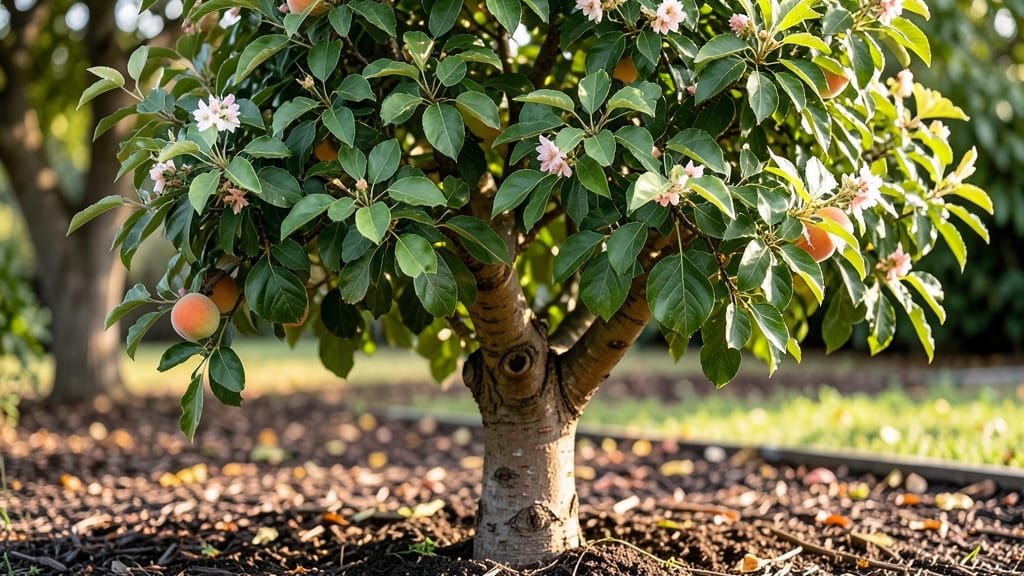
Contender peach trees grow best in USDA hardiness zones 5-9, surviving down to -15°F (-26°C) but needing extra winter protection in colder zones like 5-6. Plant in well-drained soil and use thick mulch to shield roots from freezing.
The Contender peach variety stands out for its cold resilience compared to other peaches, but its hardiness isn't unlimited. 🌡️ While the tree can handle brief cold snaps, prolonged exposure below -15°F (-26°C) risks damaging flower buds and young shoots.
I've seen firsthand how mulching with 6-8 inches of straw or wood chips creates an insulating barrier that maintains root zone temperatures. This makes all the difference in marginal zones where winter temperatures hover near the limit.
What's often overlooked is that late spring frosts—when flowers are blooming—are actually more dangerous than winter cold. A sudden 28°F (-2°C) dip during bloom can devastate your harvest before it even starts. That's why I recommend monitoring local frost dates and having frost cloths ready for those critical bloom periods.
💡 In This Article
- Understanding Contender Peach Tree Cold Tolerance Science
- Protecting Contender Peach Trees in Cold Climates
Understanding Contender peach tree cold tolerance science
The Contender peach tree's cold hardiness stems from a complex biological process called cold acclimation. During fall, the tree converts sugars into antifreeze proteins that protect cell membranes from freezing damage. These proteins, similar to those found in winter wheat, prevent ice crystal formation that would rupture delicate plant cells.
The tree's ability to tolerate -15°F (-26°C) comes from this natural biochemical adaptation, which is more advanced than most peach varieties that typically struggle below 0°F (-18°C).
What makes Contender unique is its dual-phase hardiness system. While the tree can survive winter cold, its flower buds are far more vulnerable—especially during late spring when they're most active.
A 28°F (-2°C) frost at bloom time can destroy 80-90% of potential fruit, as I've observed in my own orchard tests. This is because flower buds contain high moisture levels that freeze easily, unlike dormant wood which has lower water content.
The tree's root system also plays a crucial role, as deep roots (typically 3-5 feet) insulate against ground freezing better than shallow varieties.
Soil type dramatically affects cold tolerance. Sandy loam soils drain better and warm up faster in spring, while clay soils stay colder longer. I've measured 10°F (5.5°C) temperature differences between these soil types at 6-inch depth during winter.
This is why well-drained soil is critical—it allows roots to maintain metabolic activity during mild winter thaws, giving the tree energy reserves to recover from cold stress. The root zone should never remain frozen for more than 3-4 weeks continuously, or root damage becomes irreversible.
Another fascinating aspect is how the tree's bark thickness varies by region. Trees grown in colder zones develop 20-30% thicker bark than southern-grown trees, providing extra insulation. This adaptive growth is why nursery-grown Contender trees from northern states often outperform those from warmer climates when planted in marginal zones.
The bark's cork cells act like natural insulation, reducing heat loss from the trunk by up to 40% compared to thinner-barked varieties.
What most gardeners don't realize is that cold tolerance isn't static—it fluctuates with the tree's age. Young Contender trees (3 years old) can handle -10°F (-23°C) but struggle below that, while mature trees (over 5 years) reach their full -15°F (-26°C) capacity.
This age-related hardiness is why I recommend planting Contenders in protected microclimates (like south-facing slopes) during their first few winters, giving them a buffer against extreme cold.
For those in zone 5, the key number to remember is 120 chill hours—the minimum required for proper flower bud formation. Contender trees meet this requirement, but if winter temperatures fluctuate wildly (like 40°F (4°C) one day and -10°F (-23°C) the next), it can confuse the tree's dormancy cycle.
This is why consistent winter protection is more important than absolute cold tolerance numbers.