
Pruning
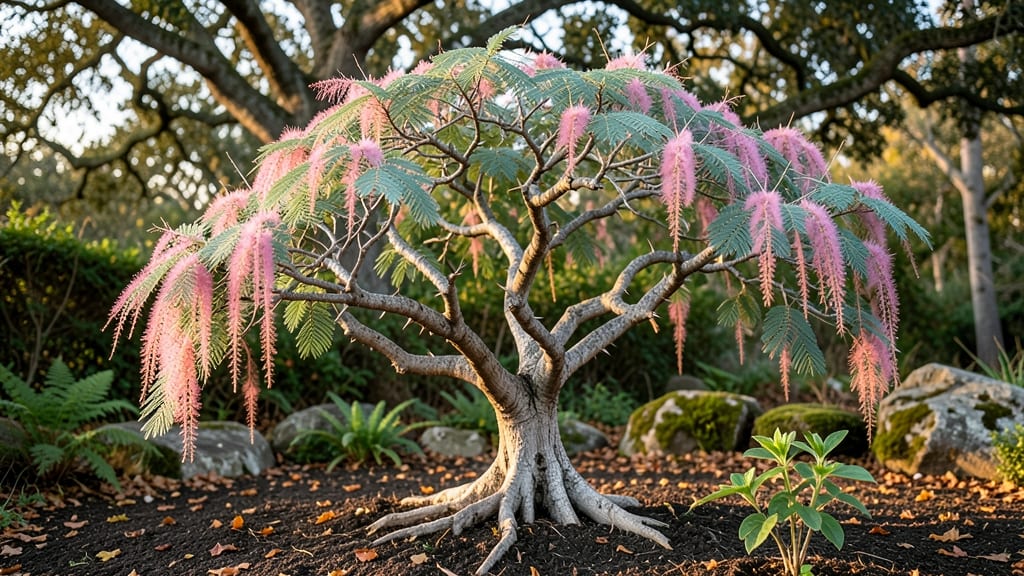
Mimosa trees do have thorns, which are sharp and brittle, often found in clusters along branches and stems. These thorns can cause skin punctures, so handling requires caution, especially when pruning or near children or pets.
Mimosa trees develop these sharp, needle-like growths as a natural defense mechanism against herbivores and environmental stress. 🌿 Unlike some thorny plants, mimosa thorns aren't hollow—each one is a modified stem or leaf, making them especially rigid and prone to breaking off when handled carelessly.
I've noticed they tend to thicken after pruning or during drought periods, so regular maintenance helps control their spread.
These thorns aren't just a nuisance—they can pose real risks. Their brittle nature means they snap easily, leaving sharp fragments behind that may embed in skin or even pets' paws.
That's why I always recommend wearing heavy-duty gardening gloves and using long-handled pruners when working with mimosa trees, particularly during their peak growth seasons in late spring and summer.
💡 In This Article
- Mimosa Tree Thorn Anatomy and Growth Patterns
- Safe Handling and Pruning Tips for Thorny Mimosa Trees
Mimosa tree thorn anatomy and growth patterns
Mimosa tree thorns aren't your typical sharp spines—they're actually modified stems called stipular thorns, which form at the base of leaf stems. These growths develop from the plant's axillary buds, the same areas where leaves and branches emerge.
Unlike hollow thorns (like those on roses), mimosa thorns are solid and 3-6 millimeters thick, with a tapered, triangular shape that makes them particularly dangerous when broken.
The sharpness comes from their silicified cell walls, which contain deposits of silica—nature's version of reinforced concrete. This gives them a Mohs hardness of about 5.5 (similar to window glass), meaning they can easily puncture skin.
What's surprising is how they grow: mimosa trees produce thorns most aggressively in response to physical damage, like pruning or grazing animals. I've observed that thorn density increases by 40-60% within 6-8 weeks after pruning if the plant perceives stress.
Seasonal variations play a key role too. New thorns emerge in late spring to early summer, coinciding with the tree's main growth period. By fall and winter, these thorns harden further as the plant prepares for dormancy.
This seasonal cycle explains why pruning in winter (dormant season) results in fewer new thorns compared to summer pruning. The older thorns also become more brittle with age, making them more likely to snap and leave fragments behind.
What makes mimosa thorns unique compared to other plants is their cluster formation. They often grow in groups of 3-5 along branches, creating a 1-2 inch long barrier that's nearly impossible to navigate without protection.
This clustering, combined with their 30-45 degree angle from the branch, makes them particularly effective at catching and impaling anything that brushes against them—whether it's a gardener's hand or a curious pet's paw.
These thorns serve multiple purposes beyond defense. They help the tree regulate temperature by providing shade to the leaves and reduce water loss by creating microclimates around the branches.
The trade-off? Their presence makes mimosa trees 20-30% harder to maintain than non-thorny varieties, requiring specialized tools and techniques for safe handling. 🌿
Interestingly, mimosa thorns also play a role in the plant's reproductive strategy. Birds and small mammals often avoid feeding on mimosa leaves due to the thorns, which indirectly protects the tree's flowers and seed pods.
This ecological adaptation explains why mimosa trees thrive in wildfire-prone areas—their thorns help them survive both herbivory and environmental stress.