
Pruning
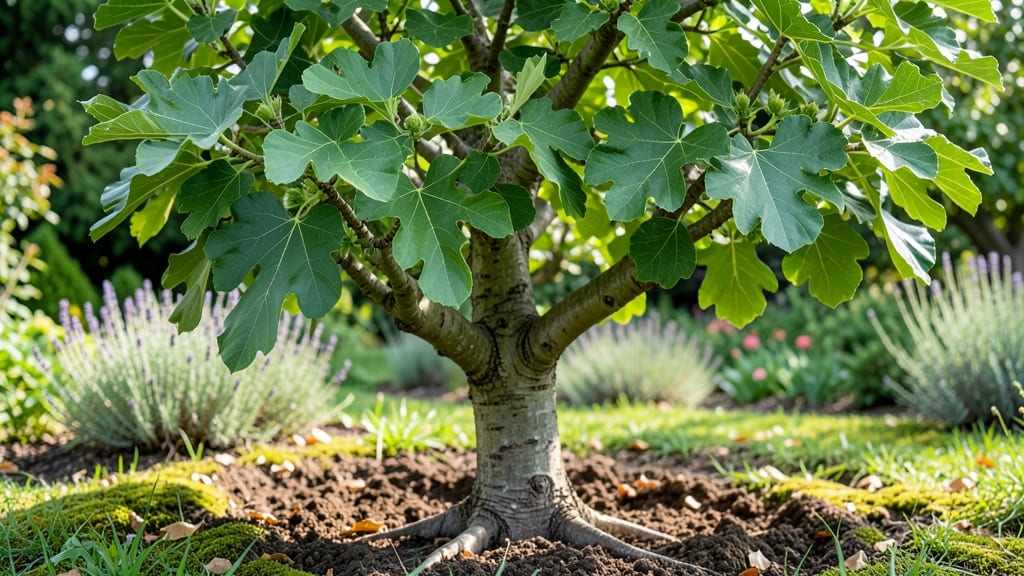
Spring fig tree pruning isn’t about drastic cuts—it’s about shaping for summer fruit. ✂️ I learned the hard way that aggressive trimming stresses these trees, so I focus on light shaping and removing only dead or crossing branches.
The goal? Encourage strong new growth while keeping the tree’s natural shape intact for that first harvest.
Timing matters more than you’d think. Wait until after the last frost—typically late April to early May in most zones—but don’t delay too long. A well-timed prune gives your tree energy to push out fresh leaves and set fruit buds before summer heat arrives.
If you’re in a colder climate, hold off until the soil warms to 60°F to avoid shocking dormant buds.
What you’ll end up with is a tree that looks neat but not bare, with open branches that let sunlight reach the fruit. The secret’s in the cuts: make them just outside the branch collar, and avoid leaving stubs.
This simple approach keeps your fig tree productive for years without the stress of heavy pruning.
For those in warmer zones, a second light prune in early summer can encourage a second flush of fruit. Just remember: figs reward patience. The more you prune now, the more they’ll reward you with sweet, sun-ripened fruit come August.
📚 In This Guide
- What you need
- Instructions
- Tips and common mistakes
- Wrapping up and next steps
What you need
- ● Pruning shears: Bypass pruners (sharp, clean, and disinfected with rubbing alcohol or bleach solution). Avoid anvil pruners—they can crush stems.
- ● Loppers: For thicker branches (½"–2" diameter). Look for bypass-style with long handles for reach.
- ● Hand saw: Pruning saw with a fine-tooth blade for stubborn branches (2"+ diameter).
- ● Gloves: Garden gloves (heavy-duty, cut-resistant) to protect from thorns and sap.
- ● Disinfectant: 10% bleach solution (1 part bleach to 9 parts water) or rubbing alcohol (70%+ isopropyl) to sterilize tools between cuts.
- ○ Pruning sealant (optional but helpful): Tree wound sealant (like Tanglefoot Tree Wound Pruning Seal) for cuts larger than ½".
- ● Trash bags or bucket: For collecting pruned branches and debris.
- ● Ladder (if needed): Sturdy, extendable ladder (rated for your weight) to reach higher branches safely.
- ● Safety gear: Safety glasses (to shield eyes from debris) and long sleeves/pants (fig thorns are no joke!).
- ● Marking tools: Colored spray paint or flagging tape to mark branches for removal (great for large trees).
- ● Compost bin: For repurposing small pruned branches as mulch or compost.
- ● Camera or sketchpad: To document your fig tree’s structure before pruning (helpful for tracking progress!).
Step-by-Step guide to spring pruning your fig tree
Here’s how to refresh your fig tree without over-trimming—just a few strategic cuts for maximum health.
✂️ Step 1: Remove Dead or Damaged Branches First
Start by inspecting your fig tree for any branches that look brown, brittle, or completely devoid of leaves. These are dead and need immediate removal. Use clean, sharp pruning shears to cut just outside the branch collar—the swollen area where the branch meets the trunk. This ensures the tree can seal the wound properly and prevents disease from entering.
If you spot branches with broken bark or large cracks, trim those too. Fig trees heal surprisingly well, but leaving damaged wood invites pests and fungal infections. I always make my cuts at a 45-degree angle about ¼ inch above a bud or outward-facing growth point—this encourages new shoots to grow in the right direction.
☀️ Step 2: Thin Out Crowded or Crossing Branches
Next, focus on branches that rub against each other or grow inward toward the center of the tree. These “crossing” branches compete for sunlight and air circulation, which weakens the tree and can lead to poor fruit production. Select the thinner, weaker branch of each pair and cut it back to the main trunk or a strong lateral branch.
For crowded branches, aim to create an open vase shape—this allows sunlight to reach the center where many figs develop. You’ll know you’ve done well when you can see light filtering through the canopy. I like to step back every few cuts and squint through the branches at the sky—if I can’t see the sky clearly, there’s still too much density.
🌿 Step 3: Prune for Shape and Airflow
Now it’s time to shape the tree. Figs respond well to light pruning, so focus on removing branches that grow straight up or inward. Cut these back to an outward-facing bud or lateral branch. For a more natural look, I often leave a few branches slightly longer to create a balanced silhouette.
Pay special attention to the lower third of the tree. Removing branches here opens up space for new growth and makes harvesting easier. Just don’t overdo it—fig trees produce fruit on both old and new wood, so you don’t want to remove too many mature branches. A good rule of thumb is to never remove more than 20-25% of the tree’s total branches in one season.
⏰ Step 4: Clean Up and Monitor for New Growth
After pruning, collect all the clippings and dispose of them properly. Figs can harbor pests and diseases, so burning or bagging the debris prevents reinfestation. Wipe down your pruning tools with rubbing alcohol to kill any lingering pathogens.
Over the next few weeks, watch for new growth emerging from the buds you left behind. Healthy fig trees will sprout fresh shoots within 2-3 weeks, especially if they’ve been pruned in early spring. If you notice any yellowing leaves or unusual wilting, it could signal stress—just give the tree a little extra water and monitor closely. With proper care, your fig tree will reward you with lush foliage and a bountiful harvest.
Tips & tricks for perfect fig tree spring pruning
Spring pruning can transform your fig tree—here’s how to avoid common mistakes and get the best results.
Tool Prep Matters: Before you start, sharpen your pruning shears and disinfect them with rubbing alcohol. Dull blades tear instead of cleanly cutting, which stresses the tree. I keep a small bottle of alcohol handy to wipe down tools between cuts—this prevents spreading disease from one branch to another. A clean cut also heals faster, reducing the risk of fungal infections.
Visual Cues for Healthy Cuts: In Step 1, when you’re removing dead branches, look for the branch collar—the swollen area where the branch meets the trunk. This is your guide for where to cut. Make your cut just outside this collar at a 45-degree angle. The angle helps water bead off the wound, keeping it dry and preventing rot. I always test my angle by holding the shears up to the light—if I can see straight through the cut, it’s too shallow.
Timing is Everything: The 2-3 weeks mentioned for new growth is a great window to observe your tree’s response. If you notice no new shoots after 3 weeks, it might signal stress. At this point, give the tree a deep watering and hold off on any more pruning until you see fresh growth. Figs are resilient, but they do need time to recover after a good trim. I’ve learned this the hard way—over-pruning in spring can set back your harvest for the entire season.
Seasonal Consideration: Early spring is ideal for pruning fig trees because the tree is just waking up from dormancy. If you prune too late in the season, you risk encouraging new growth that won’t have time to harden off before winter. I always aim to finish pruning by late March—this gives the tree plenty of time to recover and prepare for the growing season ahead.
Pro Tips for Fig Tree Spring
- Spring pruning can transform your fig tree—here’s how to avoid common mistakes and get the best results.
- Tool Prep Matters: Before you start, sharpen your pruning shears and disinfect them with rubbing alcohol.
- Visual Cues for Healthy Cuts: In Step 1, when you’re removing dead branches, look for the branch collar—the swollen area where the branch meets the trunk.
Frequently asked questions
Got questions about pruning your fig tree spring? You’re not alone! Here are some of the most common concerns—and quick, actionable answers to keep your tree thriving with minimal effort.
When is the exact best time to prune a fig tree in spring?
The ideal window is late winter to early spring (just before new growth starts, around February–March in most climates). For cold-hardy varieties, wait until after the last frost to avoid damaging tender shoots. Tropical figs can handle light pruning anytime in mild weather. Pro tip: If you miss spring, summer pruning is still better than none!
How much can I trim back my fig tree without hurting it?
Fig trees are resilient—you can remove up to 25–30% of the canopy in one session without stress. Focus on:
- Dead/diseased branches (cut to the base).
- Crossing or rubbing branches (trim to the nearest outward-facing bud).
- Overly dense growth (thin out to improve airflow).
Warning: Avoid heavy pruning if your tree is already stressed (e.g., drought, pests).
Will pruning my fig tree reduce next year’s fruit?
Not if done correctly! Pruning stimulates new growth, which often means more fruit—just on healthier branches. However, over-pruning (especially in late spring) can delay fruiting. Best practice: Prioritize structural cuts over aggressive thinning. Pro tip: Leave some mature wood (2+ years old) to bear fruit.
What if I prune at the wrong time and my fig tree looks sad?
Don’t panic! Fig trees are forgiving. If you pruned too late (after buds swelled) or too harshly:
- Water deeply and mulch to reduce stress.
- Avoid fertilizing—let the tree recover first.
- Monitor for pests (weak trees attract aphids/scale).
Most trees bounce back in 2–4 weeks. If no new growth appears in 6 weeks, check for root rot or disease.
Can I prune a fig tree in containers or small spaces?
Container figs benefit from regular pruning to control size and shape. Use the same rules as above, but:
- Trim roots if pot-bound (every 2–3 years).
- Avoid heavy pruning—containers have limited resources.
- Prune after fruiting to redirect energy for next season.
Bonus: Dwarf varieties (like ‘Little Miss Figgy’) need less aggressive cuts but still thrive with light maintenance.
Wrapping up and next steps
Pruning your fig tree at Fig Tree Spring isn’t just about aesthetics—it’s a lifeline for its health, productivity, and longevity. By mastering the art of minimal trimming in early spring, you’ll encourage vibrant growth, prevent disease, and even sweeten your harvest.
Whether you’re a seasoned gardener or just starting, this simple routine sets the stage for a thriving tree year-round.
Ready to give your fig tree the care it deserves? Grab your pruners, roll up your sleeves, and start small! Observe your tree’s response after the first few cuts, adjust as needed, and watch your hard work bloom—literally. 🌿✨