
Pruning
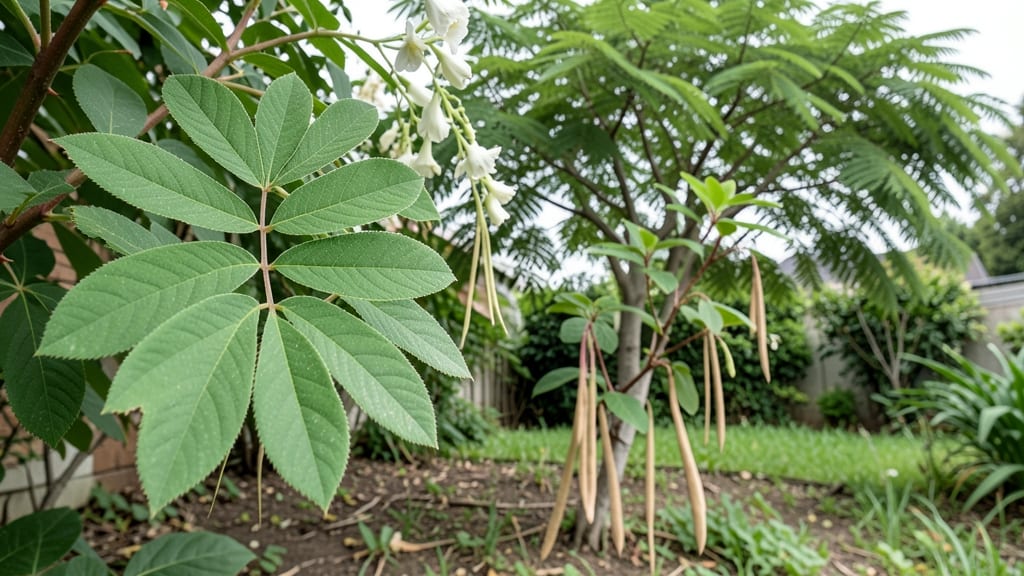
That five-leaf tree identification might be a horse chestnut—but it could also be sassafras or Japanese pagoda tree. 🌿 The key lies in leaf arrangement, bark texture, and where it grows. I’ve spent years studying these trees, and the differences become obvious once you know what to look for.
Start with the leaves: horse chestnuts have palmate (hand-like) clusters with smooth edges, while sassafras leaves are trifoliate but often have a third leaflet reduced to a tiny tooth. Bark tells another story—horse chestnut bark is deeply furrowed, while sassafras is smoother and more reddish-brown.
Once you spot these clues, you’ll never mistake them again. The right identification means better pruning, pest control, and even knowing whether those "conkers" are actually toxic. I’ll walk you through the telltale signs and tools to confirm your guess in the field.
For regional spotting, horse chestnuts thrive in the Northeast and Midwest, while sassafras loves the Southeast. Japanese pagoda trees? They’re the showstoppers of the South and West. Grab a field guide or use an app like LeafSnap to double-check your findings.
Behind The Leaf’s Five-Point Mystery
When you spot a tree with five distinct leaflets arranged symmetrically, you’re likely looking at a member of the Fabaceae (legume) family—think maples, ash, or sumac. But why does this specific leaf shape evolve?
The answer lies in a mix of survival strategies, environmental adaptations, and genetic quirks. Let’s break down the science behind this iconic pattern.
The five-pointed leaf isn’t just a pretty design—it’s a highly efficient survival tool. Plants with compound leaves (like those with five leaflets) often outperform simple-leafed species in certain conditions:
- Light Optimization: Smaller leaflets cast less shade on each other, allowing more sunlight to reach lower branches. This maximizes photosynthesis in dense canopies—critical for trees competing for light in forests. 🌿
- Water Conservation: Smaller surface area reduces water loss through transpiration, especially in dry climates. Trees like the Ginkgo biloba or Horse Chestnut thrive in temperate zones partly because their divided leaves minimize evaporation.
- Damage Resistance: If herbivores or pests nibble on one leaflet, the rest of the compound leaf remains functional. This "insurance policy" keeps the tree alive even when parts are lost. 🐛
Fun Fact: Some five-leafed trees, like the Sugar Maple, also use their shape to regulate temperature. The gaps between leaflets create micro-ventilation, cooling the leaf surface in hot summers.
The number of leaflets in a compound leaf isn’t random—it’s often hardwired into the plant’s DNA. Here’s how it works:
- Meristem Development: During growth, a tree’s apical meristem (the tip of a shoot) produces a set number of leaf primordia (leaf "buds"). In five-leafed species, genetic signals like _TB1_ (a transcription factor) limit primordia formation to five, creating the classic palmate (fan-shaped) or pinnate (feather-like) arrangement.
- Symmetry Genes: Genes like _CYCLOIDEA_ (CYC) and _DICHOTOMA_ (DICH) control leaf shape symmetry. Mutations in these genes can alter leaflet count—explaining why some ash trees have seven leaflets instead of five!
- Hybridization: Crossbreeding between species (e.g., Red Maple × Silver Maple) can produce offspring with intermediate leaflet counts, blurring the "five-leaf rule."
Pro Tip: If you’re identifying a tree and count six or seven leaflets, check for hybrid traits or regional variations—some White Ash trees naturally have extra leaflets. 🔍
Not all five-leafed trees evolved the same way—local climate and soil conditions play a huge role:
| Factor | Impact on Leaf Shape | Example Trees |
|---|---|---|
| Humidity | Tropical five-leafed trees (e.g., Ceiba pentandra) often have larger, thinner leaflets to maximize water absorption in wet climates. | Kapok Tree, Silk Cotton Tree |
| Drought | Arid-zone species (e.g., Prosopis) develop smaller, waxy leaflets to reduce water loss. | Mesquite, Honey Locust |
| Wind Exposure | Coastal trees (e.g., Liquidambar) may have stiffer, lobed leaflets to prevent tearing in storms. | Sweetgum, American Beech |
Key Takeaway: A tree’s leaflet count and arrangement are climate fingerprints. If you’re identifying a five-leafed tree in a dry region, its leaflets will likely be smaller and tougher than one growing in a rainforest. 🌡️
Not every five-leafed plant is a tree—and some "trees" with five leaflets are actually shrubs or vines. Here’s how to avoid common mix-ups:
- Poison Ivy: While it has three leaflets, some lookalikes (like Virginia Creeper) have five leaflets per stem. The key difference? Poison ivy’s leaflets are toothed, and Virginia Creeper’s are smooth with tendrils. ⚠️
- Boxelder Maple: A close cousin of the Sugar Maple, but its leaflets are asymmetrical and often uneven in size. Look for samaras (winged seeds) to confirm.
- Hop Trees (Humulus): These climbers have palmate five-leaflets but are not woody. Check for climbing vines or hop cones to rule them out.
Quick Fix: If the plant isn’t woody or lacks a trunk, it’s not a five-leaf tree—it’s likely a vine or shrub. Grab a magnifying glass and inspect the stem and seed structures for clues. 🔎
Quick Fixes for Tree ID Confusion
If you’re staring at a five-leaf wonder and scratching your head, don’t panic! With a few simple steps, you can turn frustration into clarity. Below, we’ve mapped common identification roadblocks to practical solutions—plus tips to avoid future mix-ups.
Problem: Multiple trees (like maples, horse chestnuts, or boxelder) have five-leaf patterns, making them hard to distinguish.
Fix:
- 🍂 Compare Leaf Arrangement: Check if leaves grow in pairs (opposite) or singly (alternate). Boxelder leaves alternate, while maples often grow opposite.
- 🌿 Examine Leaf Texture: Horse chestnut leaves are rough and hairy on the underside, while maple leaves are smoother.
- 🌳 Look at the Stem: Boxelder stems have a milky sap, while maple stems are dry and fibrous.
Prevention Tip: 💡 Snap a photo of the leaf and bark from multiple angles. Apps like LeafSnap can cross-check your guesses instantly.
Problem: You’re focusing only on leaves but missing key bark or branch clues.
Fix:
- 🌲 Maple Bark: Young maples have smooth, silvery-gray bark that develops shallow ridges with age.
- 🐎 Horse Chestnut Bark: Thick, furrowed, and dark brown—almost like a gnarled oak.
- 🌿 Boxelder Bark: Thin, peeling, and pale greenish-gray, often with a "camouflaged" look.
Pro Tip: ✨ Run your fingers along the bark. Smooth = likely maple; rough and ridged = probably horse chestnut.
Problem: Early spring or late fall leaves are small or damaged, making ID tricky.
Fix:
- 🌱 Check Buds in Winter: Maple buds are pointed and clustered; horse chestnut buds are plump and sticky.
- 🍁 Look for Seed Pods: Boxelders drop samaras (helicopter seeds), while maples produce paired samaras.
- 🔥 Use a Ruler: Measure leaflet size. Maple leaflets are 3–6 inches long; boxelder leaflets are smaller (1–3 inches).
Prevention Tip: 🌡️ Visit the tree in three seasons—spring (buds), summer (full leaves), and fall (seed pods)—for 100% accuracy.
Problem: Saplings or storm-damaged trees lack full features.
Fix:
- 🌱 Compare to Mature Trees: Young boxelders have compound leaves with 5–7 leaflets; young maples often have 5.
- 💥 Look for Regrowth Patterns: Damaged maples sprout new leaves in a spiral; boxelders regrow in clusters.
- 📏 Use a Field Guide: Bring a local tree ID book—regional guides account for climate variations.
Pro Tip: 🎯 If all else fails, dig one inch into the soil near the trunk. Maple roots are fibrous; boxelder roots are shallow and woody.
Final Reminder: Most ID mistakes happen because we overlook one detail. Always check leaves, bark, and growth habits—no shortcuts! With these fixes, you’ll go from guessing to knowing in minutes. 🌳✨
Frequently asked questions
What’s the easiest way to tell a horse chestnut from a maple tree?
Look at the leaf undersides and buds! Horse chestnut leaves are rough and hairy underneath, while maple leaves are smooth. Check the buds too—maple buds are sharp and clustered, but horse chestnut buds are plump and sticky to the touch.
Can a tree with five leaflets be poisonous?
Yes! Horse chestnut trees contain toxic compounds in their seeds (conkers) and leaves. Never eat them raw—they can cause vomiting and skin irritation. Sassafras roots were historically used in root beer but contain safrole, a carcinogen in high doses.
Why do some five-leaf trees have uneven leaflet sizes?
This often happens with hybrid trees or environmental stress. For example, boxelder maples may have asymmetrical leaflets due to genetic mixing. In drought conditions, trees sometimes produce smaller, irregular leaflets to conserve water.
What’s the best app for identifying five-leaf trees?
Try LeafSnap (free) or PictureThis—both use AI to analyze leaf shape, bark, and seeds. For offline use, download the USDA Plants Database app. Always take photos of leaves, bark, and seeds for best results!
Are five-leaf trees rare?
Not at all! They’re common in temperate zones. Horse chestnuts thrive in Northeast U.S. parks, while sassafras dominates Southeast forests. Japanese pagoda trees are prized in Southern landscapes for their dramatic shape. Check your region’s native species lists!