
Pruning
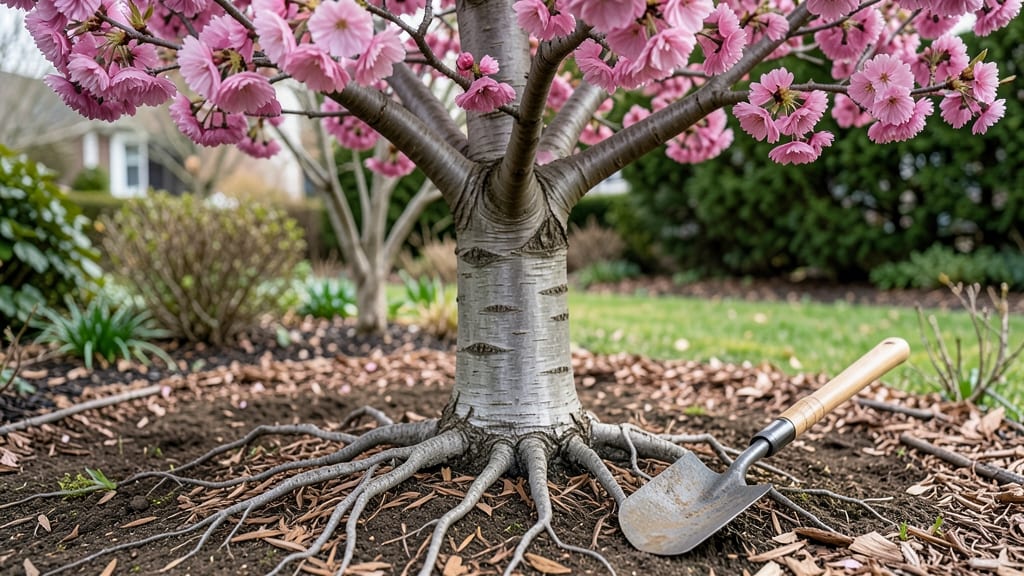
Flowering cherry tree roots spread 1.5 to 2 times wider than the tree’s canopy and typically grow 3 to 6 feet deep, though some aggressive varieties can extend even deeper. Planting too close to sidewalks, foundations, or other trees risks root conflicts and structural damage.
Understanding how flowering cherry tree roots behave is key to keeping your tree—and your landscape—healthy.
These trees develop a mix of shallow lateral roots (spreading horizontally) and a central taproot that anchors deep, which explains why they need ample space. 🌳 The root spread can become problematic near driveways or foundations, especially if you choose fast-growing varieties like Prunus serrulata.
Proper spacing at planting (15–20 feet from structures) and regular soil checks for compaction can prevent long-term issues.
For optimal growth, flowering cherries thrive in well-draining, slightly acidic soil (pH 5.5–6.5). Mulching around the base helps regulate moisture while discouraging aggressive root spread toward sidewalks. If roots do encroach, targeted pruning (using a sharp spade) can redirect growth—just avoid cutting into the main taproot.
This approach balances aesthetics with practicality, ensuring your tree stays vibrant without compromising your property.
💡 In This Article
- How Flowering Cherry Tree Roots Grow and Their Impact on Soil
- Best Planting Spots and Root Management Tips for Flowering Cherries
How flowering cherry tree roots grow and their impact on soil
Flowering cherry trees develop a biphasic root system combining a central taproot that anchors deep into the soil and a network of lateral roots spreading horizontally.
The taproot typically extends 3 to 6 feet deep, while lateral roots spread 1.5 to 2 times wider than the tree’s canopy—often reaching 15 to 25 feet in mature specimens.
This wide spread explains why planting too close to sidewalks or foundations can lead to cracks or structural damage over time. 🌱
The growth patterns vary by season: spring and early summer see the most aggressive lateral expansion as the tree prioritizes nutrient absorption for flowering and foliage. Varieties like Prunus serrulata (Kwanzan cherry) are particularly vigorous, with roots capable of penetrating deeper than 6 feet in loose, fertile soil.
In contrast, slower-growing types like Prunus subhirtella (Autumnalis cherry) have a more controlled spread. Soil compaction or clay-heavy ground can also force roots to grow shallower and wider, increasing competition with nearby plants.
This root system significantly impacts soil dynamics. Flowering cherries are moderate to heavy feeders, absorbing nitrogen, phosphorus, and potassium aggressively during peak growth. Their roots release organic acids that lower soil pH slightly, making the area slightly acidic (ideal pH range: 5.5–6.5).
Nearby plants may struggle if roots encroach, as cherry trees dominate water and nutrients in their immediate vicinity. 🌿 Drainage is another concern—poorly draining soil can lead to root rot or anaerobic conditions, which weaken the tree’s structural integrity.
Understanding these growth patterns helps explain why flowering cherries often outcompete smaller shrubs or ground covers. For example, a 15-foot-tall cherry tree with a 30-foot-wide canopy can have roots extending 45 feet outward in ideal conditions.
This is why arborists recommend planting at least 15–20 feet from structures—any closer risks root lift (where roots heave sidewalks or foundations upward during seasonal expansion).
Soil competition isn’t just about space—it’s also about mycorrhizal relationships. Cherry trees form beneficial fungi associations that enhance nutrient uptake, but these same fungi can suppress nearby plants by monopolizing resources.
This is why you’ll often see bare soil or struggling ground covers directly under and around mature cherry trees. Mulching with wood chips or pine straw helps mitigate this by reducing lateral root spread while improving soil structure.
One often-overlooked factor is root pruning. If you notice roots encroaching on hardscapes, carefully severing them with a sharp spade (avoiding the taproot) can redirect growth. However, this should only be done in early spring or late fall when the tree is dormant.
Improper timing or aggressive pruning can stress the tree, reducing flowering potential. 🌸 The key is balance—allowing the tree room to thrive while managing its expansion.