
Pruning
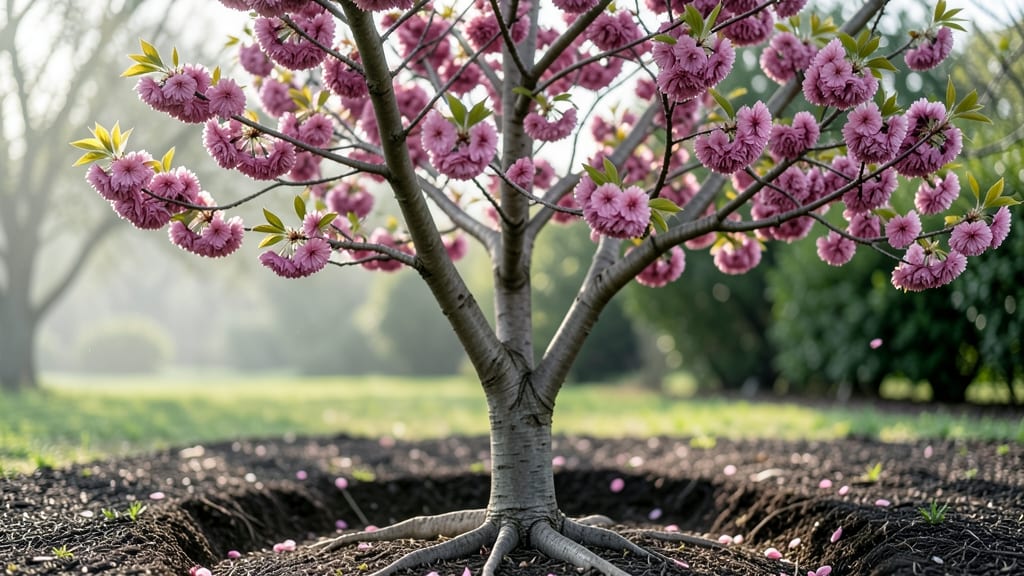
The Kwanzan cherry tree 🌸 develops a strong, fibrous root system that spreads wider than it grows deep, which is why planting depth and soil prep make all the difference for stability and bloom health.
Picture this: You’ve just planted your Kwanzan cherry tree, and by spring, it’s leaning slightly—because the roots didn’t get the room they needed. That’s not just a cosmetic issue; it affects how well the tree absorbs water and nutrients, and even its ability to handle storms.
In this guide, I’ll break down everything you need to know about the Kwanzan cherry tree’s root system, from how deep and wide those roots grow to the best soil conditions and spacing for a tree that can live for decades.
You’ll discover fast ways to ensure strong root development, including planting techniques, mulching strategies, and watering schedules that keep your tree thriving year after year.
Understanding the Kwanzan cherry tree root system: depth, spread, and growth habits
The Kwanzan cherry tree (Prunus serrulata 'Kwanzan') develops a fibrous root system with shallow lateral roots that spread widely. Unlike taproot species, its roots prioritize stability and nutrient absorption near the surface while still extending downward.
This unique structure explains why proper planting depth and soil preparation are critical for long-term health and vibrant blooms.
At maturity, the root system typically reaches 3-5 feet deep but spreads 2-3 times wider than the tree’s canopy. This wide spread helps anchor the tree against strong winds while maximizing access to surface moisture.
Understanding these patterns helps gardeners choose the right planting location and soil amendments for optimal growth.
Seasonal growth patterns also play a key role. Roots grow most actively in early spring and late fall, aligning with the tree’s dormant periods. Planting during these windows allows roots to establish before summer heat or winter stress sets in.
For nutrient uptake, the Kwanzan cherry relies on a well-aerated, slightly acidic soil (pH 6.0-7.0). Sandy loam or loamy soil with organic matter ensures roots can breathe and absorb water efficiently. Compacted or waterlogged soil restricts root expansion, leading to stunted growth or poor bloom production.
The tree’s root spread means spacing is crucial. Plant 20-25 feet apart from other trees or structures to prevent root competition. This spacing also accommodates the tree’s mature width of 25-35 feet, ensuring it has room to develop without crowding.
| Root Feature | Details |
|---|---|
| Root Type | Fibrous (shallow lateral roots) |
| Depth | 3-5 feet (mature) |
| Spread | 2-3x canopy width (50-75 feet) |
| Soil pH | 6.0-7.0 (slightly acidic) |
| Best Planting Time | Late fall or early spring |
| Water Needs | Deep watering (15-20 gallons) |
When planting, avoid disturbing the root ball excessively. Gently loosen roots at the edges if they’re circling the container, but preserve as much of the root structure as possible.
This minimizes transplant shock and speeds up establishment. A 2-3 feet deep planting hole ensures roots aren’t buried too deeply, which can suffocate them.
The Kwanzan cherry’s roots are sensitive to soil compaction, especially in urban settings. Amend the planting hole with compost or organic matter to improve drainage and aeration. This is particularly important in clay-heavy soils, where water can pool around roots, leading to rot or fungal diseases.
Seasonal adjustments are key for root health. In summer, roots need consistent moisture to support flowering, while winter dormancy reduces watering needs. Mulching with 2-4 inches of organic mulch retains moisture, regulates soil temperature, and protects roots from extreme fluctuations.
Signs of root stress include wilting leaves, yellowing foliage, or stunted growth. These often indicate overwatering, compaction, or poor drainage. Adjust care practices immediately—reduce watering if soil feels soggy, or aerate compacted soil to restore root function.
By understanding your Kwanzan cherry’s root system, you’ll make informed decisions about planting, soil care, and seasonal maintenance. A healthy root system is the foundation for decades of stunning blooms and strong tree structure.
Best planting techniques for a Kwanzan cherry tree’s root system
A Kwanzan cherry tree thrives when planted correctly, and its root system is the foundation for stability and growth. Unlike shallow-rooted shrubs, this tree develops a deep taproot combined with extensive lateral roots, requiring careful handling during planting.
The right technique ensures your tree establishes quickly and resists common issues like root rot or poor nutrient uptake.
When planting, focus on three critical factors: hole size, soil composition, and proper depth. A common mistake is digging too small a hole, which restricts root expansion.
Instead, aim for a hole that’s 3 times wider than the root ball and 2-3 feet deeper to accommodate the taproot. This extra depth prevents the tree from settling too low over time, which can suffocate roots.
⚠️ callout-warning ⚠️
A Kwanzan cherry tree planted too deep risks girdling roots and oxygen deprivation. Always align the root flare (where roots meet trunk) with the soil line. Use a stake to mark the correct depth before backfilling.
Start by amending the native soil with compost or well-rotted manure to improve drainage and fertility. Kwanzan cherries prefer slightly acidic to neutral soil (pH 6.0-7.0), so test your soil before planting.
If drainage is poor, mix in sand or perlite to create a loamy texture. Poor drainage leads to root suffocation, especially in clay-heavy soils.
After loosening the soil, place the tree in the hole and spread its roots outward, ensuring they’re not circled or bent. Gently tease apart any root-bound roots to encourage outward growth.
The taproot should point downward naturally—never force it. Backfill with the amended soil, tamping lightly every 6 inches to eliminate air pockets.
Spacing is another critical factor. Mature Kwanzan cherries reach 20-25 feet wide, so plant them 20-25 feet apart from other trees or structures. Crowding restricts root growth and increases competition for water and nutrients.
If planting near a fence or wall, ensure at least 10 feet of clearance to avoid root damage during mowing or construction.
Once planted, water deeply to settle the soil and encourage root contact. Mulch the base with 2-3 inches of organic mulch (like wood chips), keeping it 6 inches away from the trunk to prevent rot.
This mulch layer retains moisture, regulates soil temperature, and suppresses weeds—all of which support root health during the critical first year.