
Pruning
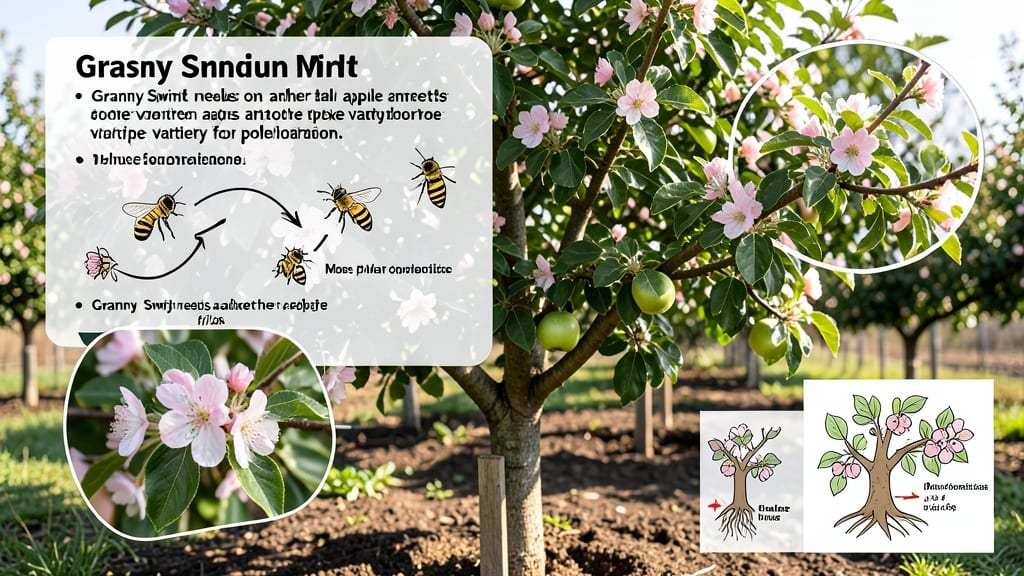
A Granny Smith apple tree pollination chart shows you’ll need compatible varieties like Golden Delicious, Fuji, or Honeycrisp since it’s self-unfruitful. Position pollinators 50–100 feet apart to ensure proper fruit development, with bloom periods aligned in early to mid-spring when bees are most active.
A Granny Smith apple tree won’t produce fruit without a pollinator because its genetics prevent self-pollination. 🌸 This means you’ll need at least one compatible apple variety nearby—ideally within 50–100 feet—to facilitate cross-pollination.
The key is timing: both trees must bloom simultaneously in early to mid-spring when bees are active, usually between late March and early May, depending on your growing zone. Choosing varieties with overlapping bloom periods maximizes your chances of a successful harvest.
For best results, pair Granny Smith with varieties like Gala, Braeburn, or McIntosh, which share similar bloom times. 🍏 In smaller gardens, consider dwarf or semi-dwarf trees spaced closer together, but always ensure proper airflow to prevent disease.
If you’re in a cooler climate (zones 5–7), plan for slightly later blooming varieties to match Granny Smith’s timing.
💡 In This Article
- How Granny Smith Apple Trees Require Cross-Pollination
- Best Pollinator Varieties for Granny Smith Trees
How Granny Smith apple trees require cross-pollination
Granny Smith apple trees are self-unfruitful, meaning their flowers lack the genetic diversity needed to produce fruit without external pollen.
This trait stems from their breeding history—developed in Australia in the 19th century, Granny Smiths were cultivated for their tart flavor and firm texture, but this came at the cost of self-fertility. 🌸 The tree's flowers contain both male and female parts, but the pollen grains are incompatible with their own stigma, preventing fertilization.
This biological quirk is common in many commercial apple varieties, like Fuji or Braeburn, which also require cross-pollination.
The pollination process relies on insect-mediated transfer, primarily by bees, which carry pollen from one tree's flowers to another. When bees land on Granny Smith blossoms, they pick up pollen from its anthers (male parts) and deposit it on the stigma (female parts) of a different apple variety's flower.
The pollen must land within 24-48 hours of release to remain viable, though some sources suggest it can last up to 72 hours under ideal conditions (cool, dry weather). Temperature extremes—below 50°F or above 85°F—can reduce pollen viability, while consistent 60-70°F days with active bee populations optimize success.
Timing is everything: Granny Smith trees typically bloom in early to mid-spring, with peak bloom lasting 7-10 days.
For successful pollination, both trees must share overlapping bloom periods—even a 2-3 day mismatch can drastically reduce fruit set. 🌤️ Weather plays a critical role here; rainy or windy conditions can wash pollen away or deter bees.
In regions with unpredictable springs (like the Pacific Northwest), choosing varieties with staggered bloom times—such as pairing Granny Smith with a slightly early bloomer like Gala (which blooms 3-5 days earlier)—can hedge against weather-related setbacks.
What most gardeners don’t realize is that distance matters beyond just bloom timing. While bees can travel up to 2 miles for pollen, optimal fruit set occurs when pollinators are planted 50-100 feet apart. This spacing ensures bees efficiently transfer pollen between trees without expending too much energy.
In urban settings or small yards, this might require creative solutions like vertical spacing (training trees against fences) or selecting dwarf varieties, which can be placed closer together while still allowing bee access.
Here’s the science behind why spacing works: Apple tree flowers release pollen clouds that disperse in the wind, but bees navigate visually and chemically. A 50-foot radius creates a "pollination zone" where bees can reliably move between trees without getting lost or distracted by competing floral scents.
Too close (20 feet), and you risk inbreeding depression; too far (300+ feet), and bees may abandon the area entirely. 🐝 Pro tip: Plant a third variety if possible—this increases genetic diversity and reduces the risk of disease spreading between identical trees.
For those in cooler climates (zones 5-7), Granny Smith’s bloom period often aligns with McIntosh or Cortland, which thrive in similar conditions. In warmer zones (8-10), varieties like Fuji or Golden Delicious bloom later and handle heat better.
Always check your local agricultural extension service for chill-hour requirements—Granny Smith needs 400-800 hours below 45°F annually, so mismatched varieties may not bloom at all in your area.