
Size
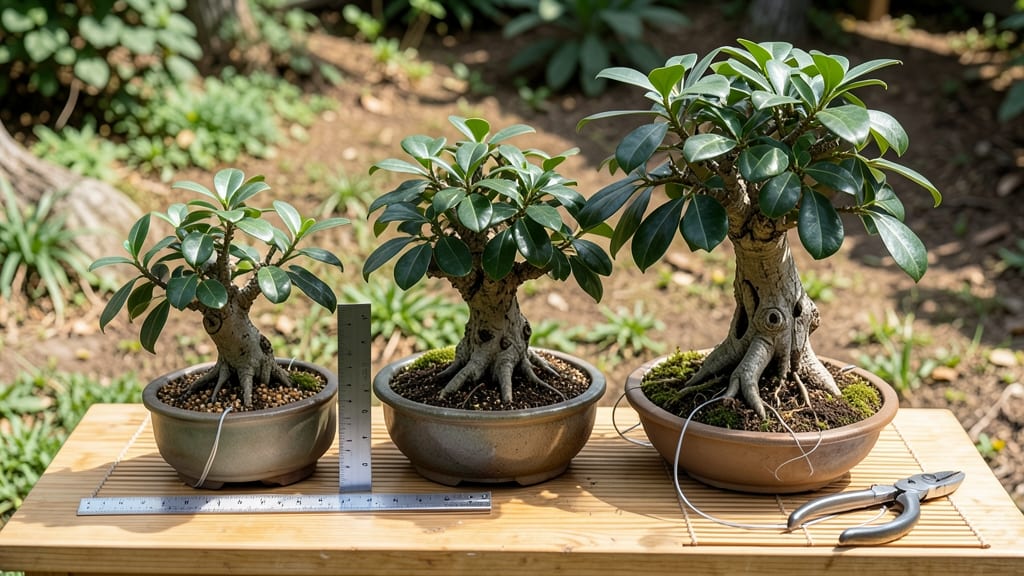
A bonsai tree can grow anywhere from 1 foot to 6 feet tall, depending on species, pruning, and the gardener’s patience—but most stay between 1 and 3 feet with regular care.
Ever wondered why bonsai trees stay so small—or if you can grow one as tall as a shrub? The answer lies in species genetics, pruning techniques, and patience.
Some species, like junipers, naturally top out around 2 feet, while others, such as ficus or pine, can stretch toward 5 or 6 feet if left unchecked.
Pruning is the key to controlling height, but it’s not just about cutting branches. Wiring, root pruning, and even the size of your pot play a role in keeping your bonsai at your desired height.
And yes, you can let it grow taller—if you’re aiming for a semi-cascade style or an informal upright form.
Below, I’ll break down the natural height limits of popular bonsai species, the pruning secrets that keep them compact, and when it’s okay to let your tree grow taller than the classic bonsai look. Ready to discover the art of size control?


Natural height limits of bonsai trees by species
Bonsai trees are famous for their miniature size, but their natural height limits vary dramatically by species. In the wild, a juniper bonsai might grow to 40 feet tall, while a ficus bonsai could reach 50 feet.
The key to bonsai art lies in understanding these species-specific growth potentials and using techniques like pruning and root restriction to keep them small.
Every bonsai species has a genetic height ceiling—the maximum height it could reach without human intervention. For example, a maple bonsai (like the Japanese maple) could grow to 30 feet in nature, but with careful bonsai techniques, it stays between 1-3 feet.
This difference highlights why species selection is critical before starting your bonsai journey.
Here’s how popular bonsai species compare in their natural vs. bonsai height limits, along with their growth habits and ideal pruning approaches:
The juniper bonsai and Japanese maple are classic choices for beginners because their slow growth makes them easier to manage. Meanwhile, ficus bonsai and Chinese elm grow faster, requiring more frequent pruning to maintain their miniature size. Always match your bonsai species to your patience level and care routine.
Understanding these height limits helps you set realistic expectations. For instance, a pine bonsai might take decades to reach its ideal bonsai height of 3-6 feet, while a ficus bonsai could achieve a similar size in half the time.
The key is balancing species genetics with your pruning and training schedule.
If you’re aiming for a taller bonsai (like a semi-cascade style), species like ficus or Chinese elm are better suited because they tolerate more aggressive pruning. However, even these species need careful root management to prevent them from outgrowing their pots. Always repot every 2-3 years to control root spread.
One common misconception is that bonsai trees stay small because they’re "dwarf" plants. In reality, they’re fully grown trees genetically forced into miniature forms through pruning, wiring, and root restriction. This artistry is what makes bonsai so rewarding—you’re not just growing a plant; you’re sculpting a living masterpiece.
For best results, research your chosen species’ natural growth habits before purchasing. Some, like pine bonsai, require years of dedicated care, while others, like ficus bonsai, are more forgiving. Start with a species that aligns with your experience level and long-term
Pruning and training techniques to control bonsai height
Mastering the art of bonsai height control starts with understanding your tree's natural growth patterns. Most bonsai trees—like juniper or ficus—can grow 10-20 feet tall in nature, but with proper pruning, they stay between 1-3 feet as miniatures.
The key is balancing pruning cuts, wiring techniques, and seasonal care to guide growth without causing stress.
I’ve learned that timing is everything—pruning too aggressively in summer can shock your bonsai, while waiting too long risks losing that delicate balance.
For example, a maple bonsai might need 3-4 pruning sessions per year to maintain its height, while a pine bonsai can handle fewer cuts due to its slower growth rate. Let’s dive into the techniques that keep your bonsai at your desired height.
⚠️ Height Limits Aren’t Fixed—But Mistakes Are!
While juniper bonsai can stay under 2 feet with diligent care, pushing a ficus bonsai beyond 3 feet risks losing its miniature charm. Over-pruning weakens roots, while under-pruning lets branches grow wild. Common height killers: Using wire too long, pruning at wrong seasons, or ignoring root pruning during repotting.
Start with pinching, the gentlest method for young bonsai. Simply pinch off new growth tips with your fingers or clean pruners to encourage branching. This works best on softwood (new growth) in spring and early summer.
For example, a 2-year-old ficus bonsai might need weekly pinching to keep it compact. Remember, less is more—over-pinching stunts growth entirely.
For more dramatic height control, wiring bends branches into your desired shape. Use aluminum or copper wire (thickness depends on branch size) and wrap it gently—too tight can gouge bark. Leave wire on for 4-8 weeks max, then remove it before it cuts into the wood.
I once wired a juniper bonsai into a sweeping curve, but forgot to check it monthly—result? A branch snapped under the strain. Always monitor!
Don’t overlook defoliation, a technique where you remove leaves to reduce growth. This is common with deciduous bonsai like maples, where removing half the leaves in late spring slows height gain.
After defoliation, your bonsai will produce smaller, denser leaves—ideal for that miniature look. Just be prepared for a 2-3 week recovery period where the tree looks stressed.
Seasonal care is non-negotiable. Prune juniper bonsai in late winter (just before buds swell) and ficus bonsai in early summer (when growth is most vigorous). Repot every 2-3 years to refresh soil and trim roots—overgrown roots lead to height spikes as the tree compensates.
I repotted my 5-year-old pine bonsai last month and noticed new growth stayed 10% shorter than before.
Watch for these red flags: yellowing leaves (overwatering), stunted new growth (under-pruning), or branches growing upwardcontrolled height and stunning miniature beauty. Start small, observe closely, and adjust as you go—your bonsai’s height is in your hands! 🌿✂️🪴