
How To
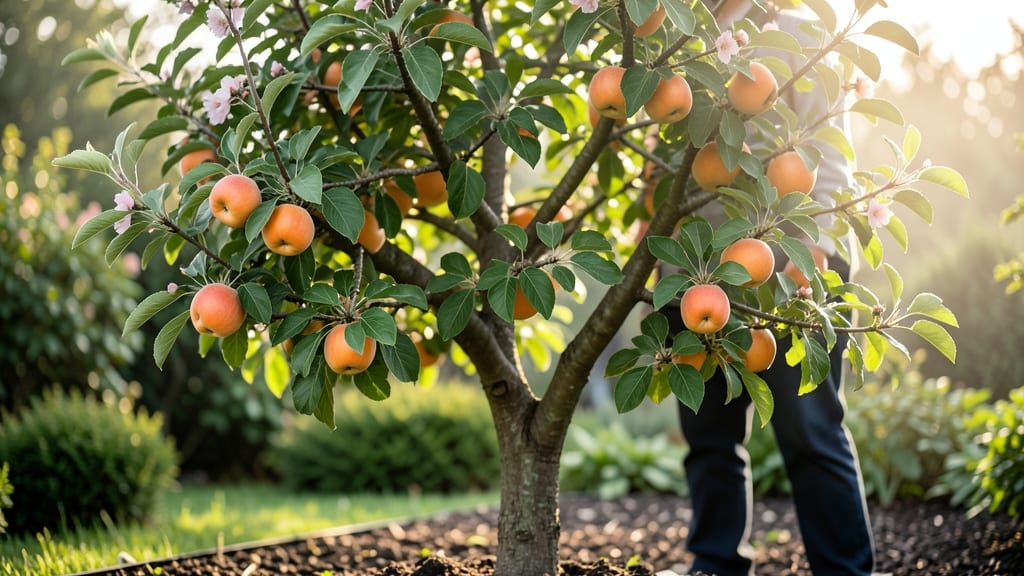
A nectarine tree grows how tall does a nectarine tree grow between 10 and 25 feet at maturity, depending on the variety and care you provide—so where you plant it matters just as much as when.
If you're dreaming of homegrown nectarines but wondering whether your backyard can accommodate a full-sized tree, the height of your nectarine tree will determine where—and how—you plant it.
Standard varieties can reach 20 to 25 feet, towering like a small tree in your landscape, while dwarf versions stay compact at 6 to 12 feet, making them perfect for smaller yards or containers.
Below, I’ll break down the exact height ranges by variety, how to control growth with pruning, and the best spacing tips to keep your 🍑 nectarine tree thriving without overcrowding your space.


Nectarine tree height by variety: dwarf, semi-dwarf, and standard sizes explained
Choosing the right nectarine tree size is critical for your garden's layout and long-term care. Standard varieties can reach 20-25 feet tall, while dwarf varieties stay between 6-12 feet. The difference isn't just about aesthetics—it affects fruit production, pruning needs, and even harvesting ease.
Let's break down the exact height ranges and what they mean for your backyard.
Before planting, measure your space carefully. A 25-foot tree needs 15-20 feet of clearance all around, while a 6-foot dwarf fits neatly in small yards or even large containers. Semi-dwarf varieties (12-16 feet) offer a middle ground, perfect for medium-sized gardens.
Your choice depends on your available space, pruning commitment, and whether you want easy-pick fruit or classic tree aesthetics.
Growth rates also vary dramatically. Dwarf trees mature in 3-5 years, while standard varieties take 8-12 years to reach full height. This means quicker fruit production for smaller trees but potentially longer waits for larger varieties. Understanding these timelines helps you plan for soil prep, watering schedules, and even future landscaping around your tree.
Here’s how the three main types compare at maturity—and what each means for your garden:
If you're working with limited space, dwarf varieties like 'Fantasia' or 'Redgold' are excellent choices. These trees produce high-quality fruit while staying under 10 feet tall, making them perfect for patio gardens or even large containers.
Just ensure your container has drainage holes and is at least 18 inches in diameter to accommodate root growth.
For a balance between size and yield, semi-dwarf varieties like 'Summerbreeze' or 'Crimson Snow' thrive in medium-sized yards. They require slightly more space but still fit well in suburban backyards.
These trees often produce larger fruit than dwarf varieties, making them a great compromise for home orchards where you want both accessibility and abundance.
Standard varieties, such as 'Flamecrest' or 'Suncrest,' are ideal if you have ample space and want a classic tree experience. Their taller stature provides shade and a traditional look, but they demand regular pruning to maintain health and fruit quality.
If you choose a standard tree, plan for 15+ feet of clearance and consider professional pruning every few years to keep the tree manageable.
Another factor to consider is rootstock. Dwarf and semi-dwarf trees are often grafted onto dwarfing rootstock like 'Lovell' or 'Nemaguard,' which naturally limits their height. Standard trees, however, are typically grafted onto seedling rootstock, allowing them to grow much taller.
If you're unsure about rootstock, check with your local nursery—they can provide varieties tailored to your space and climate.
Proper planting location also influences how your nectarine tree grows. Even dwarf varieties need full sun (6+ hours daily) and well-draining soil to reach their full potential.
If you're planting near a fence or structure, leave at least 3 feet of clearance to avoid root competition and future pruning headaches. For standard trees, aim for 20+ feet of open space to allow for natural growth and airflow.
Remember, pruning plays a huge role in managing height. Even dwarf trees benefit from annual pruning to remove dead branches and encourage fruit-bearing wood. For standard trees, structural pruning in early spring helps maintain a balanced canopy and prevents overgrowth.
If you're new to pruning, start with 10-15% of the tree's branches each year to avoid shocking the plant.
No matter which size you choose, nectarine trees reward patience and care with
How to control nectarine tree height: pruning and training techniques for compact growth
Managing the height of your nectarine tree is essential for both practical gardening and maximizing fruit production. Without proper pruning techniques, even dwarf varieties can grow taller than expected, crowding your yard or making harvests difficult.
The good news? With the right approach, you can keep your tree at your desired height while ensuring optimal airflow and sunlight penetration for healthy fruit development.
Timing is everything when it comes to controlling height. Pruning at the right season—typically late winter or early spring before buds swell—stimulates new growth while avoiding damage to fruit-bearing branches. For compact growth, combine pruning with training methods like espalier or central leader shaping.
These techniques not only limit height but also create a more manageable canopy for easier maintenance and harvesting.
Step-by-Step Guide to Pruning and Training
-
Step 1: Choose Your Method
Select between central leader (single trunk) or open-center (multiple branches) for compact growth. -
Step 2: Prune in Late Winter
Remove dead or crossing branches first, then cut back 1/3 of new growth to encourage bushier growth. -
Step 3: Train Young Trees
Use ties or stakes to guide branches into your desired shape (e.g., espalier against a fence). -
Step 4: Summer Pruning
Lightly trim water sprouts (vertical shoots) to redirect energy to fruit production. -
Step 5: Maintain Airflow
Thin branches to ensure sunlight reaches inner leaves, reducing disease risk and improving fruit quality.
For espalier training, start early by selecting 3-4 main branches and attaching them horizontally to a trellis or wall. This method can reduce tree height by up to 50% while increasing fruit accessibility.
Just be sure to prune regularly to maintain the shape, as branches will naturally grow taller without guidance. I’ve used espalier with my 'Redgold' nectarines, and it’s transformed my small patio into a productive fruit zone!
Another key to compact growth is understanding root restriction. Planting in containers or using root barriers can limit the tree’s ability to grow vertically, though this requires careful monitoring of soil moisture and nutrients.
Pair this with regular pruning every 1-2 years, and you’ll keep your nectarine tree at a manageable height—even for standard varieties. Just remember: never prune more than 25% of the canopy in a single session to avoid stressing the tree.
If you’re working with a dwarf nectarine variety, like 'Fantasia' or 'Summerbreeze,' your pruning focus shifts slightly. These trees naturally stay under 12 feet tall, so your goal is to maintain their shape rather than drastically reduce height.
Focus on removing suckers (shoots from the base) and thinning out crowded branches to prevent disease. With the right care, even standard varieties can be kept under control—it’s all about consistency and timing!
🌱