
How To
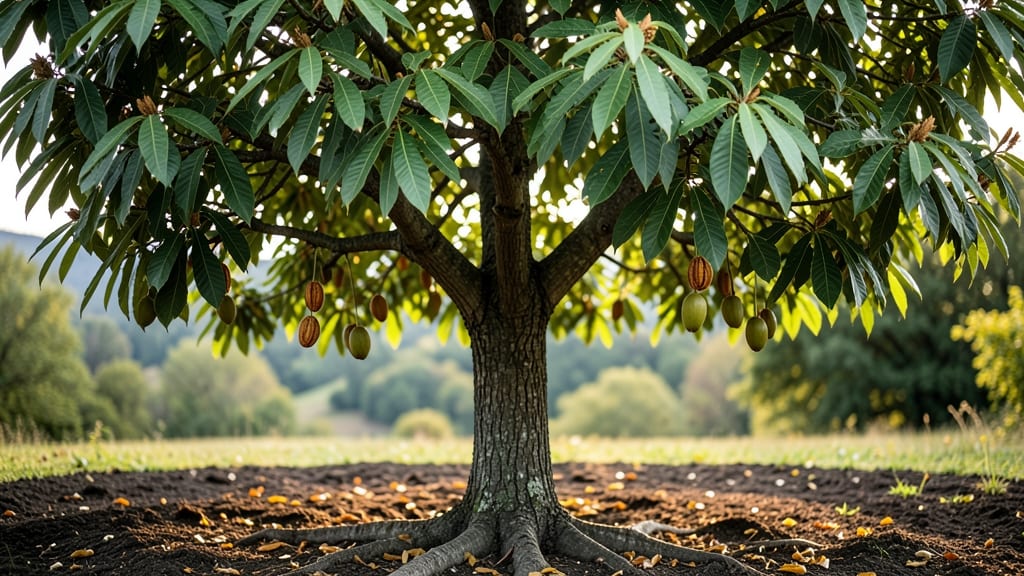
A pecan tree can grow between 60 and 100 feet tall at maturity, making it one of the tallest nut-producing trees you can plant in your yard.
If you're dreaming of a backyard pecan harvest but wondering whether your space can accommodate a towering 🌰, you're not alone—many gardeners hesitate before planting these majestic nut producers.
The truth? Pecan trees grow fast, but their mature height depends on your climate zone, soil, and pruning strategy.
In warmer regions like USDA Zone 8 or higher, they can reach their full height in 15-20 years, while in cooler zones like Zone 6a, growth slows, and they may take 25-30 years to reach their peak.
Below, I’ll break down how to manage their size—whether you’re working with a standard variety or a dwarf option—so you can enjoy homegrown pecans without sacrificing your yard’s layout.


Pecan tree height by climate Zone: growth charts and mature size expectations
Pecan trees (Carya illinoinensis) are among the fastest-growing nut-producing trees, but their mature height varies dramatically based on your USDA climate zone.
In warmer zones like Zone 9-10, these trees can reach 100 feet tall with a 50-foot spread, while in cooler zones like Zone 5-6, growth slows, often maxing out at 60-80 feet.
The key? Climate zone, soil quality, and variety selection all play critical roles in determining how tall your pecan tree will grow.
Standard pecan varieties dominate landscapes, but dwarf varieties like 'Pawnee' or 'Western' offer space-saving solutions for urban gardens, topping out at just 20-30 feet. These compact trees thrive in Zones 6-9 and produce nuts just as prolifically as their towering counterparts—though with a 10-year delay in full production.
Understanding these differences helps you choose the right tree for your yard and climate.
Below is a growth chart comparison showing how pecan trees develop over time across different zones. Pay special attention to the 5-year and 10-year markers—these give you a realistic timeline for when your tree will start producing significant shade (and nuts!).
🌰
| USDA Zone | 5-Year Height | 10-Year Height | Mature Height | Growth Rate (ft/year) | Notes |
|---|---|---|---|---|---|
| Zone 5-6 | 8-12 ft | 15-25 ft | 60-80 ft | 1.5-2 ft | Slow growth; needs protection from late frosts |
| Zone 7-8 | 12-18 ft | 25-35 ft | 70-90 ft | 2-3 ft | Moderate growth; ideal for nut production |
| Zone 9-10 | 18-25 ft | 35-50 ft | 90-100 ft | 3-4 ft | Fastest growth; requires regular pruning |
| Dwarf Varieties (Zones 6-9) | 4-6 ft | 8-12 ft | 20-30 ft | 1-1.5 ft | Best for small yards; slower nut production |
In Zone 5-6, pecan trees grow more slowly due to shorter growing seasons and colder winters. A 10-year-old tree in these zones will only reach 15-25 feet, while in Zone 9-10, the same tree could tower at 35-50 feet.
This dramatic difference is why gardeners in cooler climates often opt for semi-dwarf varieties like 'Desirable' or 'Cape Fear', which balance growth rate and nut production.
Climate also affects root spread. Pecan trees develop extensive root systems, often spreading 30-50 feet wider than their
Pruning plans to control pecan tree height: when and how to trim for optimal growth
Controlling the height of your pecan tree isn't just about aesthetics—it's essential for nut production and tree health. Without proper pruning, your majestic Carya illinoinensis could easily reach 60-100 feet, towering over your backyard.
The key is strategic trimming that balances growth with fruit-bearing branches and structural integrity. I'll walk you through proven techniques to keep your tree manageable while maximizing your harvest.
Timing is everything when pruning pecan trees. For young trees (under 5 years), focus on shaping their central leader and removing water sprouts during late winter or early spring, just before new growth begins.
This is when the tree's dormant season ends and it's easier to see the branch structure. For mature trees, summer pruning (after harvest) helps control height while reducing stress on the tree's vascular system.
- When: Late February to early March (dormant season)
- What to do: Remove dead, diseased, or crossing branches first
- Focus: Shape central leader to encourage upward growth
- Tools: Pruning saw for thick branches, loppers for medium, hand pruners for small
- When: June to August (after harvest)
- What to do: Trim suckers and water sprouts to redirect energy
- Focus: Remove up to 25% of live growth to control height
- Tools: Pruning saw for thick branches, extendable pole pruners for high branches
- When: Year-round as needed
- What to do: Remove low-hanging branches that create ladder branches
- Focus: Keep fruit-bearing branches (usually 3-5 years old) healthy
- Tools: Hand pruners for precise cuts, sterilized after each cut
- When: Late fall (November)
- What to do: Remove all pruned debris from the area
- Focus: Apply mulch around base to protect roots
- Tools: Rake, gloves, sterilizing solution for tools
When pruning, remember that aggressive height reduction can temporarily reduce nut production by 20-30% as the tree redirects energy to regrow lost branches. To minimize impact, never remove more than 25% of live growth in a single season.
For example, if your 10-year-old pecan tree is already 30 feet tall, focus on removing vertical water sprouts rather than cutting back main branches.
Your tools are just as important as your technique. Always use sharp, sterilized tools to prevent disease transmission. For branches thicker than 4 inches, use a pruning saw with a curved blade designed for clean cuts.
For high branches, invest in an extendable pole pruner to avoid climbing hazards. And never forget to seal larger wounds with pruning sealant to protect against pests and diseases.
For dwarf varieties like 'Pawnee' or 'Western', you can be more aggressive with pruning since their mature height is only 20-30 feet. These varieties respond well to annual shaping prunes in late winter.
Meanwhile, standard varieties need a more gradual approach—think of pruning as a conversation with your tree, guiding its growth over decades rather than forcing immediate results.
With consistent pruning, you can keep your pecan tree at a manageable 15-25 feet while still enjoying a bountiful harvest. The key is patience and regular maintenance—just like any great relationship, your pecan tree will reward you with abundance when you give it the right care.
Start with these techniques this winter, and you'll be well on your way to a perfectly proportioned, productive pecan tree. ✂️🌳🌰