
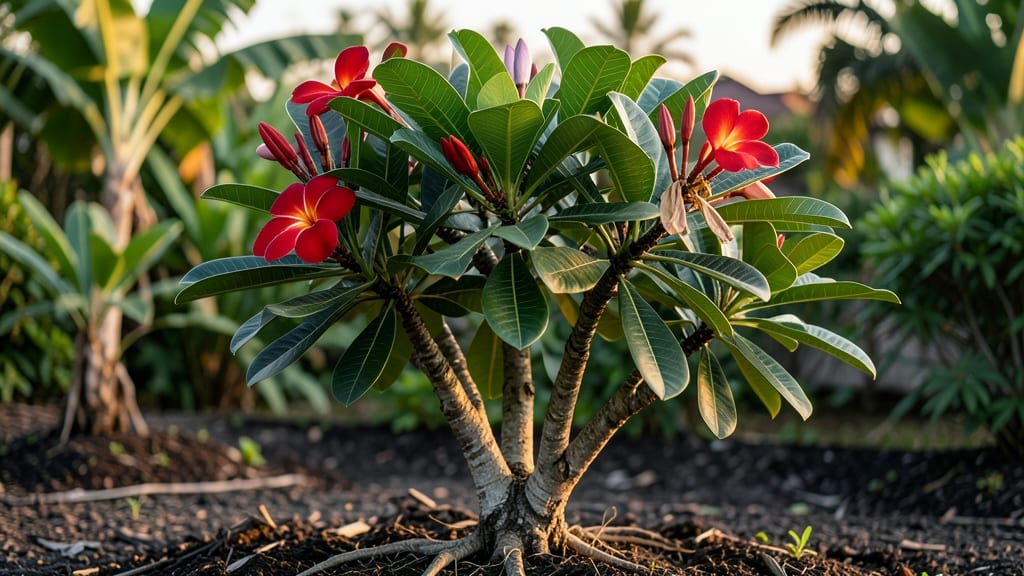
How Tall Do Plumeria Trees Grow: Exact Height Ranges by Variety & Climate Zones

How To

How Tall Do Plumeria Trees Grow: Exact Height Ranges by Variety & Climate Zones

A plumeria tree can grow anywhere from 6 to 25 feet tall, depending on the variety and growing conditions—so your dream tropical centerpiece might be a compact shrub or a towering statement piece.

If you're dreaming of a tropical paradise in your garden but worry a plumeria tree 🌺 might outgrow its space, you’re in the right place—these fragrant beauties come in surprising sizes, from compact shrubs to towering giants.

Some varieties, like the Plumeria rubra, stay under 10 feet if pruned, while others, such as the Plumeria obtusa, can reach 20+ feet in ideal tropical climates like USDA Zones 10-11.

Below, I’ll break down the exact height ranges by variety, how climate affects growth, and the 5 best pruning tricks to keep your plumeria at your desired height—without sacrificing those stunning blooms.

Dwarf
6-10 ft
Container friendly
Semi-Dwarf
10-15 ft
Most popular
Standard
15-25 ft
Full orchard size

Plumeria tree height ranges by variety: dwarf to giant species explained

If you're wondering how tall does a plumeria tree grow, the answer depends entirely on the variety you choose. Some plumeria trees stay as dwarf shrubs at 6 feet, while others can soar to 25 feet or taller in ideal conditions.

The key is selecting the right species for your space—whether you want a container-friendly mini plumeria or a statement tropical tree for your landscape.

Plumeria trees are famously adaptable, but their mature height varies dramatically. For example, the Plumeria rubra (commonly called frangipani) often reaches 15–20 feet in tropical climates, while Plumeria obtusa (the "Hawaiian plumeria") can grow even taller, up to 25 feet in perfect conditions.

Meanwhile, dwarf varieties like 'Mini White' max out around 6–8 feet, making them perfect for patios or small gardens.

Here’s the crucial detail: container growth slows height significantly. A Plumeria obtusa in a 15-gallon pot might stay under 10 feet for years, while the same plant in the ground could double that size.

This makes pot size one of the best tools for controlling height in urban or small-space gardens.

🌺

Variety Mature Height (ft) Growth Rate (per year) Best For Notes
Plumeria rubra (Frangipani) 15–20 ft 1–2 ft Large gardens, landscapes Classic tropical beauty; needs full sun.
Plumeria obtusa (Hawaiian) 20–25 ft 2–3 ft Large properties, tropical climates Fastest-growing; thrives in heat.
Plumeria pudica (Dwarf Frangipani) 6–10 ft 6–12 in Containers, patios, small gardens Slow-growing; ideal for pots.
Plumeria 'Mini White' 6–8 ft 8–12 in Balconies, small spaces Compact; great for urban gardens.
Plumeria acutifolia (Mexican) 10–15 ft 1–2 ft Arid climates, desert landscapes Drought-tolerant; slower growth.
Plumeria 'Snowbird' 8–12 ft 1–1.5 ft Containers, mixed borders Cold-hardy; great for Zone 9.
Plumeria 'Red Butterflies' 12–18 ft 1.5–2 ft Landscaping, tropical themes Vibrant blooms; needs warm winters.
Plumeria 'Yellow Delight' 10–14 ft 1–1.5 ft Containers, small yards Bright color; slower growth.
Plumeria 'Pink Parfait' 8–12 ft 1 ft Patios, small gardens Compact; great for borders.
Plumeria 'Lavender Queen' 12–16 ft 1.5 ft

How climate zones affect plumeria tree growth: cold tolerance & height impact

If you’ve ever admired a plumeria tree’s show-stopping blooms and wondered why some varieties grow like towering giants while others stay compact, the answer lies in your USDA climate zone. Native to tropical regions, plumeria trees thrive in Zones 10-11, where they can reach 20+ feet tall.

But in cooler zones like Zone 9, the same varieties often max out at 10 feet—or worse, struggle to survive winters. The difference isn’t just luck; it’s science.

Your local climate directly impacts a plumeria’s growth rate, height potential, and even its cold tolerance. In warmer zones, plumeria trees grow aggressively, with some varieties like Plumeria rubra or Plumeria obtusa stretching toward 25 feet when given ideal conditions.

Meanwhile, in Zone 9, the same tree might grow only half that height due to slower metabolic activity during cooler months. Even the soil temperature plays a role—root growth stalls below 60°F, limiting vertical expansion.

Plumeria Height by Climate Zone

Zone 10-11: 15–25 ft | Zone 9: 10–15 ft | Zone 8 (with protection): 6–10 ft
🌡️ Warmth = Height | ❄️ Cooler = Compact
Pro Tip: In Zone 9, container-grown plumeria stay 30% smaller than in-ground plants due to root restriction.

Cold snaps are the biggest height limiter for plumeria trees outside their native range. While Zone 10-11 varieties handle year-round warmth, Zone 9 gardeners often see stunted growth because plumeria trees enter a dormant phase when temperatures dip below 50°F.

This slows vertical growth, but it also means you can prune aggressively in early spring to shape the tree before new shoots emerge.

In Zone 8, most plumeria trees survive only as container plants or with heavy winter protection—like wrapping the trunk in burlap and moving pots to a garage or shed.

Pruning isn’t just for aesthetics—it’s a climate adaptation tool. In cooler zones, I recommend late-winter pruning (just before buds swell) to remove dead or weak branches and encourage bushier growth. For Zone 9 gardeners, this can reduce a plumeria’s height by 20-30% while boosting bloom production.

Use sterilized shears and cut just above a leaf node to promote new shoots. Avoid heavy pruning in Zones 10-11, where plumeria trees grow so fast that over-pruning can stress the tree and reduce flowering.

Soil drainage and root health also play a hidden role in height control. Plumeria trees hate soggy roots, which can stunt growth in humid climates like Zone 10. Amend heavy soil with perlite or sand to improve drainage, and always plant in well-draining mixes if growing in containers.

In Zone 9, I’ve seen plumeria trees grow 50% taller in raised beds compared to in-ground plantings because the roots stay warmer and drier—two critical factors for vertical growth.

If you’re in a cooler climate but still want a tall plumeria, choose dwarf varieties like Plumeria pudica or Plumeria obtusa ‘Alba’, which max out at 10-12 feet even in Zone 9.

For standard varieties, combine container growing with annual pruning to keep heights manageable. With the right approach, you can enjoy plumeria blooms without sacrificing your garden’s layout—or your sanity during winter pruning season!

★★★★★5.0(5 reviews)
Categories How To