
How To
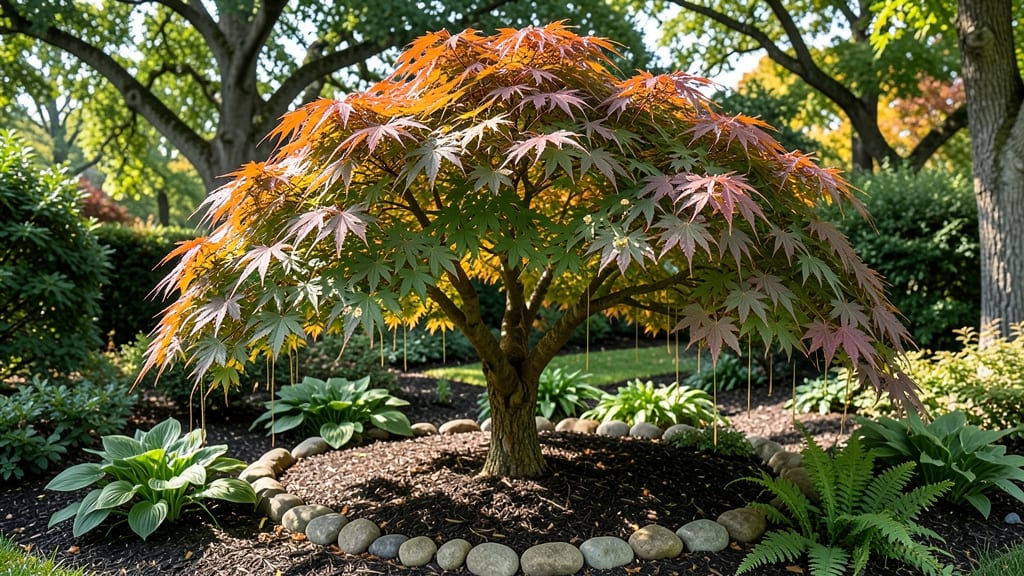
A Japanese maple tree grows anywhere from 10 to 30 feet tall 🌳, depending on the variety and growing conditions—so if you’re planning your landscape, knowing the exact range for your pick is half the battle.
Picture this: a Bloodgood Japanese maple standing proudly at 20 feet, its fiery foliage casting dappled shade across your patio, while a Dwarf Moonlight barely clears your fence at 8 feet. The difference isn’t just in height—it’s in how much space you’ll need to let them thrive.
But here’s the catch: sunlight, soil, and pruning can push a tree toward its upper limits or keep it compact. A standard variety in full sun might reach 30 feet, while the same tree in partial shade could stay under 15 feet.
Even the same cultivar can vary by 10 feet depending on care.
In this guide, I’ll break down the height ranges for popular varieties, the factors that shape their growth, and how to prune for the perfect size—whether you want a towering centerpiece or a bonsai-style beauty.


Japanese maple tree height by variety: small to giant size guide
Choosing a Japanese maple tree often comes down to one critical question: how tall will it grow? The answer varies dramatically between varieties, from dwarf cultivars that stay under 6 feet to giant specimens reaching 30 feet.
Understanding these differences helps you select the perfect tree for your space—whether that’s a container garden or a sprawling backyard.
Japanese maples (Acer palmatum) are prized for their vibrant foliage and graceful form, but their mature height determines where they thrive. Some varieties grow slowly, making them ideal for urban landscapes, while others shoot up quickly, needing ample room to spread their branches.
Let’s explore the height ranges of popular cultivars and what they mean for your garden.
⚠️ Visual Guide: Height Comparison
If you’re working with limited space, dwarf varieties like 'Dissectum' or 'Crimson Queen' are excellent choices, often staying under 12 feet. These trees grow slowly, making them perfect for containers or small gardens.
On the other hand, tall varieties like 'Emperor I' or 'Viridis' can reach heights of 20–30 feet, requiring ample room to develop their full potential.
For urban gardeners, semi-dwarf varieties like 'Shishigashira' offer a middle ground, typically reaching 10–15 feet. These trees provide year-round interest without overwhelming your space. Always consider the mature height and spread of the tree when planning your landscape, as some varieties can grow wider than they do tall.
One common misconception is that all Japanese maples grow at the same rate. In reality, growth rates vary significantly. For example, 'Emperor I' can grow up to 2 feet per year, while 'Dissectum' might only add 6–12 inches annually.
This difference impacts how quickly your tree will fill out its space, so plan accordingly if you’re impatient for shade or foliage.
When selecting a Japanese maple, also consider its form and branching habit. Some varieties, like 'Bloodgood', have a upright growth habit and may need pruning to control height, while others, like 'Seiryu' (Dragon’s Blood), grow more horizontally.
Understanding these traits helps you visualize how the tree will fit into your landscape over time.
For container gardening, choose dwarf or semi-dwarf varieties and opt for large pots (15+ gallons) to accommodate root growth. Even small trees need room to establish their roots, so avoid planting in cramped containers that restrict growth.
If you’re unsure about a variety’s final size, consult a local nursery or check the USDA Plant Hardiness Zone compatibility for accurate growth predictions.
Finally, remember that pruning and care
Factors that influence Japanese maple tree height growth
Japanese maple trees are stunning additions to any landscape, but their mature height varies dramatically based on environmental factors and care practices.
Understanding these influences helps you choose the right variety for your space and optimize growth conditions. Sunlight exposure plays a critical role—too much direct sun can stress delicate foliage, while partial shade promotes healthier, more compact growth in many cultivars.
The soil type you plant in also determines how quickly your Japanese maple reaches its full height. Well-draining, slightly acidic soil (pH 5.0–6.5) encourages robust root development, which directly impacts upward growth.
Heavy clay soils, on the other hand, can stunt growth by restricting oxygen flow to the roots and causing waterlogging.
Climate zones further shape your tree’s growth trajectory. In warmer climates (Zones 7–9), Japanese maples often grow faster and reach their mature height more quickly due to extended growing seasons. Conversely, in colder climates (Zones 5–6), growth slows during winter dormancy, potentially delaying height progression by 1–2 years.
🌳 Key Factors Affecting Japanese Maple Height
- Sunlight: Partial shade (4–6 hrs/day) promotes compact growth; full sun can stress some varieties.
- Soil: Well-draining, acidic soil (pH 5.0–6.5) speeds growth; clay soil stunts height.
- Climate: Warmer zones (7–9) = faster growth; colder zones (5–6) = slower height progression.
- Pruning: Annual pruning in late winter controls height; avoid heavy cuts in summer.
Pro tip: Dwarf varieties (e.g., 'Crimson Queen') stay under 10 ft with proper care, while standard types (e.g., 'Bloodgood') can reach 25 ft.
Pruning techniques are another game-changer for height control. Regular pruning in late winter or early spring removes competing branches and directs energy upward or outward, depending on your goal. For example, topping the central leader encourages bushier growth, while selective branch removal can limit vertical expansion. Avoid pruning in summer, as new growth may be more susceptible to disease.
Finally, watering habits indirectly influence height by maintaining tree health. Deep, infrequent watering (every 7–14 days) encourages deep root systems, which support taller growth. Overwatering, however, can lead to root rot and weaken the tree’s structure, potentially reducing its ability to reach its full height potential.
By aligning these factors—sunlight, soil, climate, and pruning—you can steer your Japanese maple toward its ideal height, whether you’re aiming for a compact accent tree or a towering focal point.
Pay attention to your tree’s response to these conditions, and adjust care practices as needed to achieve the perfect fit for your landscape. 🌿