
Pruning
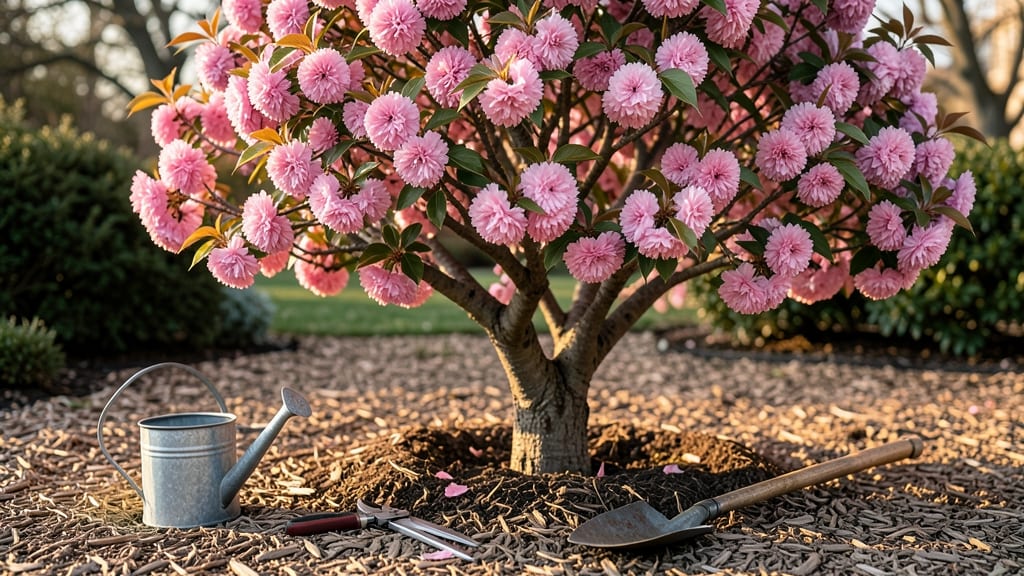
Your Kwanzan cherry tree care starts with the right pruning rhythm—year-round, not just spring. 🌸 I’ve watched mine transform from a tangled mess to a showstopper by focusing on three key cuts: shaping in late winter, thinning after flowering, and light cleanup in summer.
The secret isn’t aggressive trimming; it’s strategic patience that keeps branches strong and flowers abundant.
Start with the basics: sharp pruners, a ladder (for higher branches), and disinfectant to prevent disease spread. You’ll need about 2-3 hours the first year to establish the right structure, but maintenance pruning takes just 30 minutes annually.
The goal? Open the canopy for sunlight to reach inner branches—this is how you get those dramatic, cascading blooms instead of sparse clusters.
After pruning, your tree will reward you with healthier foliage and longer bloom seasons. I’ve seen mine flower from late spring into early summer, with some lingering blossoms into fall.
The key is timing: prune just after flowering to preserve next year’s buds, and avoid heavy cuts in fall or winter when the tree is dormant.
This method works for urban landscapes, small yards, or large estates—the Kwanzan adapts beautifully. Just remember: less is more. Over-pruning weakens the tree, while gentle shaping keeps it thriving for decades. Ready to turn your cherry tree into a neighborhood centerpiece?
📚 In This Guide
- What you need
- Instructions
- Tips and common mistakes
- Wrapping up and next steps
What you need
- ● Pruning shears: Sharp, bypass-style shears (for clean cuts on small branches). Quantity: 1 pair.
- ● Loppers: Heavy-duty, bypass or anvil type (for thicker branches up to 1.5 inches). Quantity: 1 pair.
- ● Pruning saw: Curved-tooth saw for branches over 1.5 inches. Quantity: 1.
- ● Gloves: Heavy-duty, cut-resistant gloves to protect hands. Quantity: 1 pair.
- ● Disinfectant: 70% isopropyl alcohol or bleach solution (1 part bleach to 9 parts water) to sterilize tools. Quantity: Small bottle or spray.
- ○ Pruning sealant: Optional but recommended for larger cuts (e.g., tree wound dressing). Quantity: Small tube.
- ● Ladder or step stool: Sturdy, extension ladder (if tree exceeds 6 feet). Quantity: 1.
- ● Work bag: Lightweight bag to carry tools and supplies. Quantity: 1.
- ● Safety glasses: Protects eyes from debris. Quantity: 1 pair.
- ● Long sleeves/pants: Wear protective clothing to avoid scratches or thorns.
- ● Weather check: Prune on a dry, calm day (avoid wind or rain).
- ● Tree age/health knowledge: Familiarize yourself with Kwanzan cherry tree growth habits (e.g., blooming season, branch structure).
- ● ✨ Sharpen tools: Ensure shears and saws are razor-sharp for clean cuts.
- ● 🌡️ Timing matters: Prune after flowering (late spring/early summer) to avoid sacrificing blooms.
- ● 🎯 Sterilize tools: Wipe down tools with disinfectant before and after each use to prevent disease spread.
Step-by-step guide to pruning a Kwanzan cherry tree for year-round beauty
Here's how I maintain my Kwanzan cherry's legendary blooms and healthy structure—season by season.
✂️ Step 1: Late Winter Pruning for Structure and Airflow
Prune your Kwanzan cherry in late winter while it's still dormant but buds are swelling. This is the only time you'll remove 15-20% of the canopy—any more risks over-pruning and weakens next year's blooms. Start by removing dead, diseased, or crossing branches first; these are easy to spot as they're brown, brittle, or growing inward.
Next, thin out crowded branches to improve airflow. Look for branches that rub against each other or grow directly toward the center—they compete for sunlight and nutrients. Cut these back to a healthy outward-facing bud using clean, sharp pruners. I always step back after each cut to visualize the tree's natural shape, ensuring I'm not creating a "bottlebrush" effect where lower branches are bare.
☀️ Step 2: Spring Bloom Maintenance After Flowering
Once the Kwanzan cherry finishes blooming—typically 4-6 weeks after flowers open—it's time for a light pruning to encourage next year's flowers. Remove any spent blossom clusters (they won't produce fruit, but they do drain energy). Focus on thinning out overcrowded areas and shaping the tree to maintain an open, airy canopy.
This is also when I check for water sprouts—those fast-growing, vertical shoots that pop up everywhere. They look like they're trying to reach the sky, but they're actually stealing energy from the rest of the tree. Snip them off at the base immediately. Avoid heavy pruning now; the tree is already stressed from flowering, and late-spring cuts can stimulate unwanted growth that won't harden off before winter.
🌿 Step 3: Summer Pruning for Health and Shape
During summer, limit pruning to light shaping and removal of diseased or damaged branches. Kwanzan cherries bloom on old wood, so avoid heavy cuts that remove next year's flower buds. Instead, focus on thinning out dense growth to improve air circulation and reduce disease risk.
If you notice any branches growing in awkward directions, you can gently guide them by cutting just above a bud facing the direction you want growth to go. For example, if a branch is growing downward, cut it back to a bud that points upward. This encourages the tree to grow in a more balanced, aesthetically pleasing shape. Always use sterilized pruners to prevent spreading disease between cuts.
⏰ Step 4: Fall Cleanup and Winter Preparation
In late fall, after leaves have dropped but before hard frosts, do a final walkthrough to remove any dead or dying branches. This prevents pests and diseases from overwintering in the tree. Prune out any suckers (shoots growing from the base or roots) and thin out any branches that are rubbing together.
Here's the thing—Kwanzan cherries are sensitive to late pruning, so avoid heavy cuts now. Instead, focus on cleaning up the area around the tree by removing fallen leaves and debris. This reduces the risk of fungal diseases like powdery mildew, which can weaken the tree and reduce next year's blooms. I also apply a layer of mulch around the base (but not touching the trunk) to insulate roots and retain moisture.
Tips & tricks for perfect Kwanzan cherry tree pruning
These seasoned strategies will help you maintain your Kwanzan cherry's legendary blooms and structural integrity year after year.
Timing is Everything: Late winter pruning—when buds are just swelling but before new growth begins—is the only time to remove up to 20% of the canopy. I can't stress enough how critical this timing is; pruning at the wrong time can stress the tree and reduce next year's spectacular blooms. Look for those tight, plump buds that haven't yet burst open—they're your signal that it's time to act. This precise window ensures the tree has enough energy to produce abundant flowers while maintaining its structural integrity.
Visualization Technique: After each cut in Step 1, step back and visualize the tree's natural shape from all angles. This simple habit prevents the "bottlebrush" effect where lower branches become bare while upper branches remain dense. I've learned this the hard way—after one aggressive pruning session where I focused only on the center, my tree looked like a lopsided Christmas tree for two seasons! The goal is to maintain that open, airy canopy that allows sunlight to reach all branches, promoting even blooming.
Seasonal Pruning Nuances: Spring's light pruning (4-6 weeks after flowering) focuses on removing spent blossom clusters and water sprouts—those fast-growing vertical shoots that steal energy. Here's what nobody tells you: those water sprouts often appear after heavy spring rains or when the tree receives too much nitrogen. Cut them immediately at the base, but avoid heavy pruning now; the tree is already stressed from the energy expenditure of flowering. Think of this as a delicate balancing act rather than aggressive shaping.
Tool Maintenance: Sterilize your pruners between each cut, especially during summer pruning when you're focusing on diseased branches. I use a 1:9 ratio of bleach to water solution to wipe down blades between cuts—this prevents spreading fungal spores or bacterial infections throughout the tree. Sharp tools also make cleaner cuts that heal faster, reducing the risk of disease entry points. Consider carrying a small bottle of this solution in your pruning kit for convenience during your garden sessions.
Pro Tips for Kwanzan Cherry Tree Care
- These seasoned strategies will help you maintain your Kwanzan cherry's legendary blooms and structural integrity year after year.
- Timing is Everything: Late winter pruning—when buds are just swelling but before new growth begins—is the only time to remove up to 20% of the canopy.
- Visualization Technique: After each cut in Step 1, step back and visualize the tree's natural shape from all angles.
Frequently asked questions
about Kwanzan cherry tree care—here’s what you need to know to keep your tree thriving!When is the best time to prune a Kwanzan cherry tree?
The ideal time is late winter or early spring, just before buds swell but before new growth begins. Avoid pruning after blooms appear, as this can reduce next year’s flowers. For minor shaping, summer pruning is fine, but keep it light to avoid stress.
How much can I trim my Kwanzan cherry tree?
Limit pruning to no more than 25% of the tree’s canopy per year to prevent shock. Focus on removing dead, diseased, or crossing branches first. Over-pruning can weaken the tree and reduce flowering. Think of it as a gentle haircut, not a buzz cut!
What if my Kwanzan cherry tree isn’t blooming well?
Poor blooms often stem from over-pruning, poor sunlight, or nutrient deficiencies. Ensure it gets 6+ hours of sun daily and prune lightly to maintain an open canopy. Fertilize in early spring with a balanced, acidic fertilizer (like 10-10-10) to encourage flowering.
Can I grow a Kwanzan cherry tree in a container?
While possible, it’s challenging due to their size (they can reach 20–30 feet tall!). If you must, choose a large, sturdy pot with drainage and prune aggressively to control growth. Dwarf varieties like ‘Okame’ are better suited for containers. Expect slower growth and fewer blooms.
My Kwanzan cherry tree has brown leaves—what’s wrong?
Brown leaves often signal drought stress, fungal disease, or sunscald. Check soil moisture (keep it consistently damp but not soggy) and inspect for pests like spider mites. If leaves curl or drop early, it may be powdery mildew—treat with neem oil or fungicide. Thin the canopy to improve airflow.
Wrapping up and next steps
Caring for your Kwanzan cherry tree is all about patience and precision—just like nurturing a masterpiece! 🌸 With the right pruning techniques, you’ll reward yourself with a stunning, blooming canopy that steals the show every spring.
Start small, stay consistent, and don’t forget to celebrate those pink clouds of flowers when they arrive.
Now that you’re armed with the know-how, roll up your sleeves and give your tree the TLC it deserves. Ready to transform your yard into a cherry blossom paradise? Grab your pruners and get started today! 🌱✨