
Trees
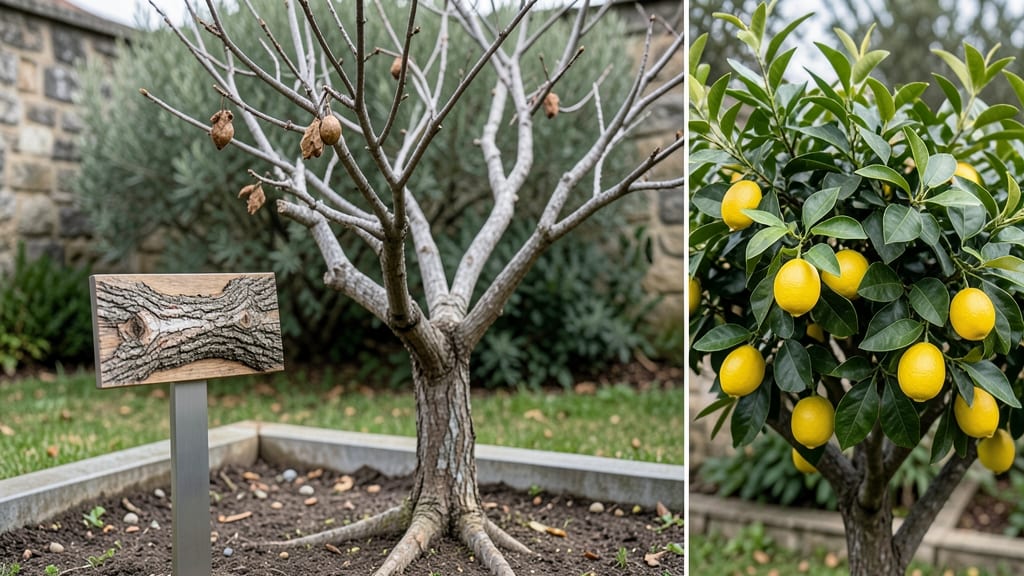
Your lemon tree lost all leaves in winter because it’s either dormant or struggling from cold stress—both common for citrus in colder climates. 🌿 The good news? Most trees bounce back with the right care, and you can revive those branches before spring arrives.
First, check the bark for cracks or frost damage—if it’s soft or mushy, the tree’s been hurt. Reduce watering (citrus hates soggy roots in winter) and move it to a sheltered spot if possible.
Once temperatures rise above 40°F, trim any blackened or brittle branches at a 45-degree angle to encourage new growth.
📚 In This Guide
- What you need
- Instructions
- Tips and common mistakes
- Wrapping up and next steps
What you need
- ● Pruning shears – Sharp, clean pair (sterilized with rubbing alcohol to prevent disease).
- ○ Gloves – Heavy-duty gardening gloves (optional but recommended for thorns and sap).
- ● Watering can – With a fine rose nozzle for gentle hydration.
- ● Balanced fertilizer – 10-10-10 or citrus-specific formula (e.g., Espoma Citrus-Tone). Quantity: 1 tbsp per gallon of water.
- ● Hydrogen peroxide (3%) – For root soak (1 part peroxide to 10 parts water). Quantity: 1 cup per gallon of water.
- ● Mulch – Organic options like straw or wood chips (2–3 inches thick).
- ● pH test kit – To check soil acidity (ideal range: 6.0–7.0).
- ● Root stimulator – Like Seaweed Extract or Mycorrhizal fungi to boost root health.
- ● Humidity tray – Shallow tray with pebbles and water to increase air moisture.
- ● Grow lights – LED or fluorescent bulbs (12–16 hours/day) if indoors.
- ● Thermometer – To monitor soil temperature (ideal: 60–75°F).
- ● Citrus-specific pest spray – Neem oil or insecticidal soap (if pests are suspected).
How to revive a lemon tree after winter leaf drop
Here's the science-backed approach I've used to nurse lemon trees back to life after winter dormancy.
🌿 Step 1: Assess the Damage and Prune Strategically
First, examine each branch carefully. Healthy wood feels firm and has a smooth, slightly greenish cast beneath the bark. Look for any signs of new growth—tiny buds or swollen nodes—that indicate the tree isn't completely dormant. I always prune in dry weather to prevent disease entry, so wait until a sunny morning when the air feels crisp but not frost-threatening.
Use sharp, sterilized pruners to make clean cuts just above a leaf node or outward-facing bud. Avoid cutting into old, dead wood that's brittle and snaps easily. Remove only the dead branches—never cut into green or partially green wood, even if it looks weak. This ensures you're not removing potential growth points that could revive.
💧 Step 2: Adjust Watering to Prevent Root Stress
Overwatering is the silent killer of reviving citrus trees. Water deeply only when the top 6 inches of soil feel completely dry—stick your finger in to check. Lemon trees in dormancy need far less moisture than you might think. I water mine every 10-14 days in winter, allowing the soil to dry out between sessions to prevent root rot.
If your tree is in a container, lift it to check the weight—it should feel noticeably lighter when it's time to water. For in-ground trees, use a moisture meter for accuracy. Never let water pool in the saucer or drip tray if potted. Proper drainage is critical; if your container lacks holes, repot immediately into one with adequate drainage.
☀️ Step 3: Provide Controlled Warmth and Light
Lemon trees need bright, indirect light to revive—think 6-8 hours of morning sun daily. Place your tree near an east-facing window or under grow lights if natural light is insufficient. Avoid harsh afternoon sun, which can scorch tender new growth. If your tree is outdoors, move it to a sheltered spot where it gets gentle sunlight but isn't exposed to cold winds.
Indoors, maintain temperatures between 60-70°F during the day and no lower than 55°F at night. Avoid heat sources like radiators or fireplaces, which create dry air. If your home runs cooler, consider a small space heater with a thermostat to keep the root zone warm. The key is consistency—fluctuations stress the tree more than cold alone.
✂️ Step 4: Fertilize Gently to Stimulate Growth
Wait until you see new leaf buds before fertilizing—usually 4-6 weeks after pruning. Use a balanced citrus fertilizer (like 6-6-6) at half strength to avoid burning the roots. I apply mine every 4 weeks in spring, but for a reviving tree, one application at half strength is enough to start. Mix the fertilizer with water and apply it directly to the soil, not the leaves.
If you're unsure about the fertilizer type, look for one with micronutrients like iron and zinc, which are essential for citrus trees recovering from dormancy. Avoid organic fertilizers like compost or manure during this phase—they can introduce pathogens or overwhelm the tree's system. Monitor the soil for any signs of salt buildup, which appears as white crust on the surface.
🌱 Step 5: Encourage New Growth with Hormonal Support
To jumpstart revival, apply a rooting hormone or citrus-specific growth promoter to the pruned cuts. I like to use a product with auxin, a natural plant hormone that stimulates cell division. Dip the pruners in the hormone, then make a fresh cut just above a bud on each branch. This isn't a magic fix, but it significantly boosts the tree's ability to regenerate.
After treating the cuts, mist the tree lightly with water to help the hormone adhere. Place the tree in a humidity tray (a tray filled with pebbles and water) to maintain moisture around the leaves. Check for new growth every 7-10 days. If you see tiny leaves or buds forming, increase humidity slightly—this tells you the tree is responding. If not, reassess the light and temperature conditions immediately.
Tips & tricks for reviving a dormant lemon tree
Bringing a lemon tree back from winter dormancy takes patience and precision—here's how to optimize every step for the best chance of revival.
Pruning Precision: When examining branches in Step 1, look for the subtle greenish tint beneath the bark that indicates still-living wood. I've seen many gardeners accidentally prune healthy buds by focusing only on leaf presence—always check the bark color and texture. Use a magnifying glass if needed to spot tiny buds that might be hidden. The goal is to preserve every potential growth point while removing only truly dead wood.
Watering Wisdom: The 10-14 day watering schedule in Step 2 might feel counterintuitive—citrus trees in dormancy actually need less water than you'd expect. I've ruined multiple revivals by overwatering during this critical phase. For container trees, the weight test is foolproof: if it feels heavy, wait another day. For in-ground trees, use a moisture meter to avoid guessing. Remember, soggy roots are the #1 enemy of revival.
Lighting Strategy: That 6-8 hours of morning sun in Step 3 is non-negotiable for photosynthesis to kickstart growth. If your space only gets afternoon sun, supplement with grow lights for 4-6 hours daily. I've seen trees placed in south-facing windows get scorched because the instructions didn't emphasize avoiding harsh afternoon rays. East-facing windows or filtered light through sheer curtains work best for gradual revival.
Fertilizer Timing: The 4-6 week wait before fertilizing in Step 4 is crucial—applying nutrients too soon stresses the tree's recovering system. I recommend marking your calendar from the pruning date to avoid missing this window. Once you do fertilize, that half-strength application prevents root burn. For extra insurance, flush the soil with plain water after applying to prevent salt buildup, which appears as white crust on the surface.
Pro Tips for Lemon Tree Lost All Leaves In Winter
- Bringing a lemon tree back from winter dormancy takes patience and precision—here's how to optimize every step for the best chance of revival.
- Pruning Precision: When examining branches in Step 1, look for the subtle greenish tint beneath the bark that indicates still-living wood.
- Watering Wisdom: The 10-14 day watering schedule in Step 2 might feel counterintuitive—citrus trees in dormancy actually need less water than you'd expect.
Frequently asked questions
Is it normal for a lemon tree to lose all its leaves in winter?
Yes! Many citrus trees, including lemon trees, are evergreen but may drop leaves in cold weather (below 40°F/4°C) as a survival tactic. If the tree is otherwise healthy (no wilting, mushy stems, or pests), it’s likely just dormant. Prune dead branches in late winter to encourage new growth.
How long can a lemon tree survive without leaves?
A lemon tree can technically survive months without leaves if it’s healthy, but prolonged leaflessness (over 3–4 months) stresses the tree. Without leaves, it can’t photosynthesize, so water sparingly (only when soil is dry) and avoid fertilizing until new growth appears in spring. Monitor for pests or disease signs.
What temperature is too cold for a lemon tree?
Lemon trees thrive in USDA zones 9–11 but can tolerate brief dips to 28°F (-2°C) if protected. Prolonged exposure below 30°F (-1°C) risks damage. For colder climates, move potted trees indoors or wrap the trunk with burlap. Mulch outdoor trees to insulate roots.
Will my lemon tree produce fruit if it loses all its leaves?
Unlikely! Leaves are critical for energy production, so a bare tree may skip fruiting that season. Focus on reviving the tree first:
- Prune dead wood
- Provide bright, indirect light
- Avoid fertilizing until spring
Can I force a leafless lemon tree to regrow leaves faster?
While you can’t rush nature, you can optimize conditions for faster recovery:
- Light: Place near a south-facing window or use grow lights (12+ hours/day).
- Water: Keep soil slightly moist (not soggy) to prevent root rot.
- Warmth: Keep temps above 50°F (10°C); avoid drafts.
When should I worry my lemon tree is dying, not just dormant?
Watch for these red flags:
Sign
Action
Mushy, black stems or roots
Root rot—repot in fresh, dry soil or propagate cuttings.
Yellowing leaves with sticky residue
Pests (scale/aphids)—wipe with soapy water or use neem oil.
No new growth by early spring
Severe damage—consider propagating from healthy branches.
Wrapping up and next steps
Don’t worry—your lemon tree isn’t doomed! 🌱 Losing leaves in winter is completely normal for many citrus varieties, and with the right care, your tree will bounce back stronger than ever.
Remember, patience and consistency are key: prune wisely, protect from cold snaps, and nourish the roots to encourage fresh growth in spring.
Ready to give your lemon tree the TLC it deserves? Start by inspecting those bare branches this week—trim any dead wood, check for pests, and prep your soil for the growing season ahead. Your citrus companion will thank you with vibrant foliage and sweet lemons in no time! 🍋✨