
Diseases
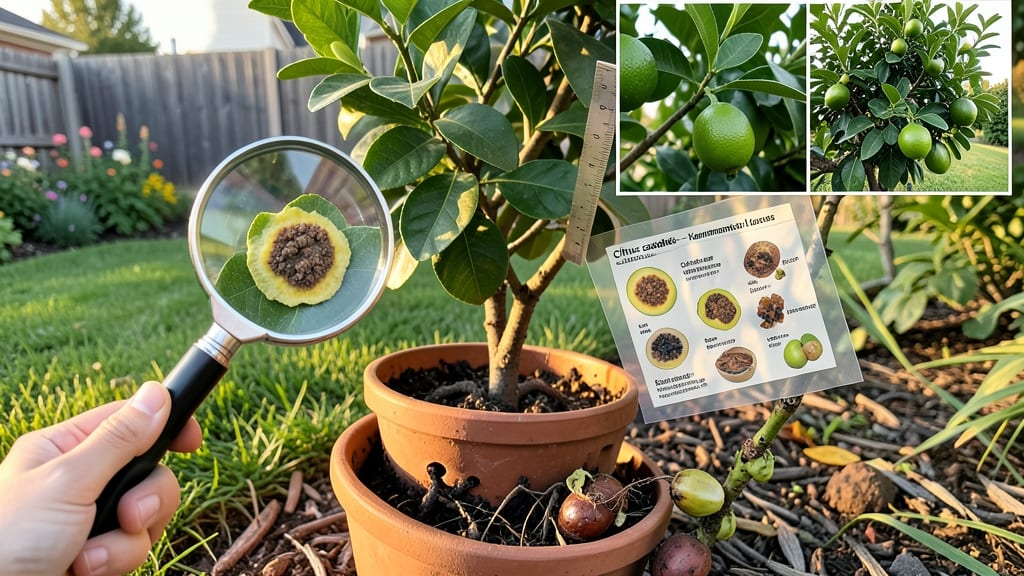
Spotting lime tree diseases early—and recognizing them from pictures—can save your tree—and your patience. 🌱 The moment you notice yellowing leaves, black spots, or sticky sap, you're looking at a fight between you and one of these common ailments: anthracnose, citrus greening, or root rot.
I've battled all three, and I'll show you exactly what to watch for so you can act before it's too late.
Anthracnose starts with dark, sunken spots on leaves that spread like a bad rumor. Citrus greening sneaks in with yellowing between veins and stunted growth, while root rot turns your soil into a soggy mess that chokes the roots.
The key is catching these early—before your tree looks like a science experiment gone wrong. I'll walk you through the visual clues and what they mean for your tree's health.
Once you identify the problem, treatment gets real. Fungicides for anthracnose, copper sprays for greening, and proper drainage for root rot—each has its own battle plan. I'll break down the steps so you can tackle it like a pro, even if your green thumb is still learning.
Your tree's survival depends on acting fast, and I've got the playbook.
This isn't just about fixing what's broken—it's about keeping your lime tree thriving for years. Whether you're dealing with a young sapling or a mature tree, these solutions work. Let's get your tree back to producing those sweet, tangy fruits without the stress of disease. You've got this!
Root Causes Of Lime Tree Ailments
Understanding why lime tree diseases develop is the first step to preventing and treating them effectively. These issues rarely arise from a single factor—most stem from a combination of environmental stress, poor cultural practices, or biological invaders.
Below, we break down the primary culprits behind lime tree diseases, using science-backed explanations to help you identify the root of the problem.
Lime trees, like all plants, thrive within a narrow comfort zone of temperature, humidity, and sunlight. When conditions stray too far from ideal, their immune systems weaken, making them vulnerable to infections and pests.
- Extreme Heat or Cold 🔥❄️ Prolonged heatwaves or sudden freezes disrupt cellular function, causing sunburn (visible as brown, crispy patches on leaves) or cold damage (blackened, wilted branches). Weakened tissue becomes an easy entry point for fungal pathogens like Phytophthora or bacterial leaf spot.
- Poor Air Circulation 🌬️ Dense foliage or overcrowded plantings trap moisture, creating a humid microclimate that fosters fungal growth. Diseases like anthracnose or powdery mildew thrive in these conditions, spreading rapidly when leaves stay damp for extended periods.
- Waterlogged Soil 💦 Lime trees hate "wet feet." Excessive moisture in the root zone starves roots of oxygen, leading to root rot (caused by Fusarium or Pythium fungi).
This not only weakens the tree but also makes it susceptible to secondary infections like citrus greening (HLB), which is vectored by psyllids.
Pro Tip: 💡 Mulch properly—use a 2–4 inch layer of organic mulch (like wood chips) to regulate soil temperature and moisture, but keep it 6 inches away from the trunk to prevent rot.
Diseases caused by microorganisms are often the most destructive because they can spread silently before symptoms appear. Here’s how they exploit lime trees:
- Fungal Infections 🍄 Fungi like Colletotrichum (causing anthracnose) or Alternaria (responsible for leaf spot) thrive in warm, wet conditions. They enter through stomata (leaf pores) or wounds, releasing enzymes that break down plant tissue.
Look for: - Dark, sunken lesions on leaves/fruit (anthracnose). - Yellow halos around spots (bacterial spot).
- Bacterial Diseases 🧫 Bacteria such as Xanthomonas (causing citrus bacterial spot) or Pseudomonas (linked to cankers) spread via water splashes, tools, or insects.
They clog vascular tissue, disrupting nutrient flow and causing: - Oozing, water-soaked lesions (early sign of bacterial infection). - Wilting or dieback in severe cases.
- Viruses 🦠 Viruses like citrus tristeza virus (CTV) or citrus psorosis virus (CPV) are spread by aphids, whiteflies, or grafting. They hijack plant cells, altering growth patterns. Symptoms include:
- Stunted growth or malformed leaves.
- Uneven ripening of fruit (common in tristeza).
Pro Tip: ✨ Sanitize tools between trees with 70% rubbing alcohol to prevent spreading bacterial/fungal spores. Remove and dispose of infected leaves (don’t compost) to break the disease cycle.
Even the hardiest lime trees succumb when basic care is neglected. These mistakes create openings for diseases:
- Overwatering or Underwatering 💧
- Overwatering leads to root rot (as mentioned above) and leaf fungal infections.
- Underwatering causes stress cracks in bark, inviting canker-forming bacteria like Agrobacterium.
- Improper Pruning ⚔️
- Cutting too late in the season (fall/winter) leaves wounds exposed to cold and pathogens.
- Using dirty tools can introduce bacterial cankers or fungal infections at the cut site.
- Nutrient Imbalances 🍃
- Nitrogen deficiency (yellow leaves) weakens the tree’s defense mechanisms.
- Excess phosphorus can suppress beneficial microbes in the soil, making roots more susceptible to rot.
Pro Tip: 💪 Test your soil every 2–3 years to check pH (lime trees prefer 6.0–7.0) and nutrient levels. Adjust with slow-release fertilizers (like 8-3-9) in early spring to avoid burning roots.
Some diseases hitchhike on pests like psyllids, aphids, or scale insects. These bugs don’t just feed—they transmit pathogens or damage plant tissue, making trees more vulnerable.
- Psyllids (HLB Vector) 🐛 The Asian citrus psyllid spreads Huanglongbing (HLB), a devastating bacterial disease with no cure. Infested trees show:
- Yellowing between leaf veins (mosaic pattern).
- Stunted shoots and small, lopsided fruit.
- Aphids & Scale 🐞 These sap-suckers weaken trees by removing nutrients, making them prone to sooty mold (a black fungal growth on honeydew). Sooty mold blocks sunlight, further stressing the tree.
Pro Tip: 🎯 Monitor for pests with yellow sticky traps and neem oil sprays (early season). Release beneficial insects like ladybugs or parasitic wasps to control populations naturally.
Not all lime trees are created equal—some varieties are naturally more resistant to diseases, while others are bred for fruit quality at the expense of durability.
- Young Trees 🌱 Saplings have underdeveloped immune systems and are more prone to root rot or fungal leaf spots if stressed.
- Old or Declining Trees 🌳 As trees age, their vascular system degrades, making them susceptible to vascular diseases like tristeza or citrus decline.
Pro Tip: 🌿 Choose disease-resistant varieties like ‘Meyer’ lime (more cold-hardy) or ‘Bearss’ lime (resistant to some fungal diseases). If replanting, solarize soil (cover with clear plastic for 4–6 weeks) to kill lingering pathogens.
Fixing Lime Tree Diseases Step by Step
Now that you’ve identified the problem, it’s time to take action! Early intervention is key to saving your lime tree. Below are practical, step-by-step solutions for the most common diseases, along with prevention tips to keep your tree thriving. 🌿💪
1. Powdery Mildew
🔥 Remove Infected Leaves 🍳
- Snip off white, powdery patches with clean pruning shears (sterilize with rubbing alcohol).
- Do not compost—dispose of debris in a sealed bag.
👨🍳 Apply Fungicide 🥘
- Use a sulfur-based or neem oil spray (1 tbsp neem oil + 1 tsp mild soap per quart of water).
- Spray early morning or evening (avoid direct sunlight) and repeat every 7–10 days until cured.
💡 Prevention Tips ✨
- Improve airflow by thinning dense branches.
- Water at the base (avoid overhead spraying).
- Space trees 6–8 feet apart to reduce humidity buildup.
2. Anthracnose
🔪 Prune Aggressively ⏰
- Cut out dark, sunken lesions and blighted leaves—extend cuts ½ inch beyond visible damage.
- Burn or trash infected plant material (do not compost).
🌡️ Boost Tree Health 🎯
- Fertilize with balanced 10-10-10 in early spring to strengthen immunity.
- Mulch with 2–3 inches of organic matter (wood chips, straw) to retain moisture.
💡 Prevention Tips ✨
- Water deeply but infrequently (early morning only).
- Avoid overhead irrigation—use drip systems.
- Plant resistant varieties (e.g., ‘Bearss’ lime) if possible.
3. Citrus Psyllid (HLB Carrier)
🔥 Remove Eggs & Nymphs 🍳
- Scrape off white, waxy eggs from new growth with a soft brush.
- Hose off adults with strong water pressure (early morning).
👨🍳 Use Systemic Insecticide 🥘
- Apply imidacloprid or dinotefuran (follow label rates) before buds swell in spring.
- Repeat every 4–6 weeks during peak psyllid season.
💡 Prevention Tips ✨
- Install yellow sticky traps 6–8 feet high to monitor populations.
- Encourage natural predators (ladybugs, lacewings) with dill or fennel plants.
- Remove volunteer citrus trees (psyllids thrive on wild hosts).
4. Root Rot (Fusarium/Pythium)
🔪 Improve Drainage ⏰
- Dig a 1-foot-wide trench around the tree to redirect water.
- Amend soil with sand or perlite (mix 20% into the top 12 inches).
🌡️ Adjust Watering 🎯
- Water only when the top 2 inches of soil are dry—use a moisture meter if unsure.
- Install a French drain if water pools near the base.
💡 Prevention Tips ✨
- Plant on a slight mound (6–12 inches high) to prevent soggy roots.
- Avoid over-mulching—keep mulch 2–3 inches deep, 6 inches from the trunk.
- Choose well-draining soil (sandy loam is ideal).
5. Iron Chlorosis (Yellow Leaves)
🍳 Apply Chelated Iron 🥘
- Spray or soil-drench with iron sulfate or EDTA-chelated iron (follow package rates).
- Reapply every 2–3 months during growing season.
🌡️ Adjust pH 🎯
- Test soil pH (aim for 6.0–7.0 for limes).
- Add elemental sulfur (1 lb per 100 sq ft) if pH is above 7.0.
💡 Prevention Tips ✨
- Mulch with compost to improve soil structure.
- Avoid over-fertilizing with nitrogen—stick to balanced 6-6-6 or 8-3-9.
- Plant in slightly acidic soil (lime trees hate alkaline conditions).
🔥 Sanitize Tools 🍳
- Wipe pruners with 70% isopropyl alcohol before and after use.
👨🍳 Monitor Regularly 🥘
- Inspect leaves weekly for early signs (spots, wilting, discoloration).
💡 Pro Tips ✨
- Rotate fungicides to prevent resistance (e.g., alternate copper, sulfur, neem).
- Thin the canopy to let sunlight dry leaves faster (reduces fungal spores).
- Plant companion plants like marigolds or basil to repel pests naturally.
🚨 When to Call a Pro ⚠️ If your tree shows sudden wilting, oozing sap, or large dieback, consult an arborist or extension service—some diseases (like citrus greening) require professional treatment.
Frequently asked questions
How can I tell if my lime tree has anthracnose just by looking at pictures?
Anthracnose shows up as dark, sunken spots with yellow halos on leaves and fruit. Look for these key visual clues: spots start small (like a pinprick) but expand rapidly, often with a raised, crusty edge. Compare your tree's symptoms to reliable sources like the University of Florida IFAS Extension—they have excellent diagnostic images.
What's the difference between citrus greening (HLB) and regular yellow leaves?
HLB causes uneven yellowing (chlorosis) that follows the vein pattern—leaves stay green around veins but turn yellow between them. Regular nutrient deficiencies (like iron chlorosis) cause uniform yellowing across entire leaves. Also check for stunted shoots and small, lopsided fruit—classic HLB signs.
Can I use the same fungicide for all lime tree diseases?
No—different diseases require different treatments. Copper-based fungicides work for bacterial spots, while neem oil or sulfur targets fungal issues like powdery mildew. For root rot, fungicides won't help—you need to fix drainage first. Always match the treatment to the specific pathogen you've identified.
How often should I check my lime tree for early disease signs?
Inspect your tree weekly during growing season (spring through fall) and biweekly in winter. Pay special attention to new growth (where pests hide) and undersides of leaves (common fungal hotspots). Early detection gives you the best chance to treat issues before they spread.
Are there any organic ways to prevent citrus psyllids without chemicals?
Yes! Start with yellow sticky traps to monitor populations. Plant dill or fennel nearby to attract beneficial predators like ladybugs. Neem oil sprays (applied at dusk) can also disrupt psyllid life cycles. For severe infestations, consider kaolin clay (Surround WP) as a physical barrier.