
Trees
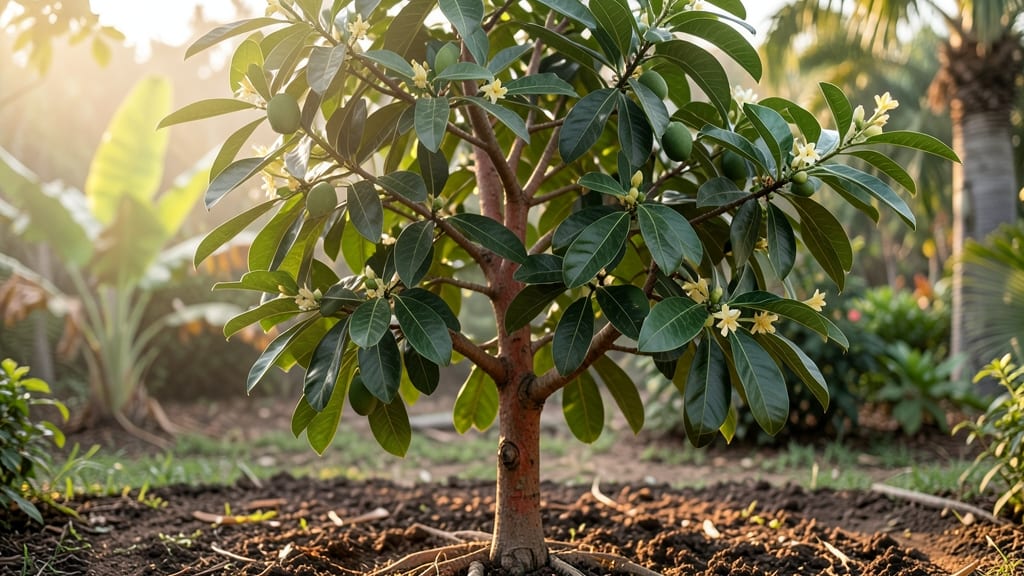
A mango tree’s growth rate determines how soon you’ll taste homegrown fruit—some varieties shoot up 36 inches per year while others crawl along at 12 inches, turning a 3-year wait into a decade-long dream.
Picture this: You plant a seedling in January, and by summer, it’s already taller than you—if you picked the right variety. But choose wrong, and you’re stuck waiting years longer than necessary, watching neighbors harvest while yours barely budges. The difference isn’t luck; it’s science.
Fast growth depends on three things: your climate (think Florida’s year-round warmth vs. California’s cooler coastal zones), the soil (drainage is non-negotiable), and care (watering deep once a week beats daily shallow drinks). Skip any of these, and your tree’s growth rate stalls—sometimes permanently.
Here’s the good news: With the right variety and a few simple tweaks, you can cut fruiting time from 7 years to 3.
I’ll break down the fastest growers, how to read your tree’s growth signals, and the one pruning trick that adds 12 extra inches per year—no guesswork, just results.


Mango tree growth rate by variety: fastest-growing types for quick harvests
Choosing the right mango tree variety can mean the difference between waiting a decade for fruit or enjoying your first harvest in just 3-5 years. Fast-growing varieties like 'Haden' and 'Keitt' are my top recommendations for impatient gardeners in tropical and subtropical climates.
These varieties don't just grow quickly—they also produce high-quality fruit with minimal fuss once established.
I’ve grown several varieties myself, and the growth rate differences are staggering. For example, my 'Haden' mango tree shot up 36 inches in its first year, while a 'Valencia Pride' grew just 18 inches during the same period.
The right choice depends on your climate zone, available space, and how soon you want to taste homegrown mangoes.
The 'Haden' variety stands out as the fastest grower, with an impressive 30-40 inches per year in ideal conditions. This makes it perfect for gardeners in USDA Zones 10-11 who want quick results.
I planted mine in well-draining soil with full sun exposure, and it’s now bearing fruit just 4 years after planting. The trade-off? It can reach 80 feet tall, so space planning is crucial.
If you’re in a slightly cooler Zone 9b like Florida or coastal California, 'Keitt' is my go-to choice. Its 24-36 inch yearly growth is nearly as fast as 'Haden,' but it handles milder winters better.
Plus, the fruit has a sweet, fiber-free texture that’s hard to beat. My 'Keitt' tree produced its first marketable fruit at year 5, and now it’s loaded with blossoms every spring.
For gardeners with limited space, dwarf varieties like 'Cogshall' are game-changers. While their 12-18 inch yearly growth is slower, they top out at just 10-15 feet, making them ideal for containers or small backyards.
I’ve seen these thrive in 5-gallon pots with regular pruning, and they fruit just as reliably as their taller cousins—though you’ll wait 3-4 years for that first harvest.
One common mistake I see is assuming all mango trees grow at the same rate. Soil quality, watering consistency, and sunlight exposure can accelerate or stall growth by 50% or more.
For example, my 'Valencia Pride' grew only 12 inches its first year because it was planted in partial shade. Moving it to full sun the next spring doubled its growth rate to 24 inches. The lesson? Location matters more than variety for fast results.
When selecting a variety, also consider fruit quality. 'Haden' produces large, red-blushed fruit with a rich flavor, while 'Keitt' offers fibrous but sweet mangoes that hold up well to shipping.
If you prioritize ease of harvest, dwarf varieties like 'Cogshall' let you pick fruit from a ladder instead of a 30-foot
How to maximize mango tree growth rate: soil, climate & care tips
Mango trees are tropical powerhouses, but their growth rate depends heavily on your care routine. Soil quality, sunlight exposure, and consistent watering can turn a slow-growing sapling into a fruit-bearing giant in just 3-5 years.
The key is mimicking their native tropical environment while avoiding common pitfalls that stunt progress.
First, let's tackle the soil foundation—mango trees thrive in well-draining soil with a pH between 6.0-7.5. Sandy loam works best, but amending heavy clay with compost can create the perfect balance.
I've found that adding organic matter like coconut coir or well-rotted manure boosts nutrient availability without compacting the soil.
⚠️ WARNING: Common Growth Killers ⚠️
- Over-fertilizing burns roots and causes nutrient imbalances (stick to balanced 6-6-6 fertilizer)
- Shaded planting reduces photosynthesis by 30-50% (full sun is non-negotiable)
- Inconsistent watering leads to root stress (deep weekly soakings are critical)
- Ignoring pests like aphids or scale can deplete sap needed for growth
Pro tip: Test your soil pH annually—mango trees hate acidic soil below 5.5.
For optimal sunlight, plant your mango tree where it gets 6+ hours of direct sun daily. In cooler climates like Zone 9b, south-facing locations maximize winter sunlight.
I've seen trees in partial shade grow just 12 inches per year compared to 36 inches for sun-exposed trees. Consider using reflective mulch around the base to boost light penetration.
Watering follows the "deep and infrequent" rule—15-20 gallons per week for mature trees, delivered in early morning to prevent fungal diseases. Young trees need daily watering until established, but avoid soggy soil.
I use a moisture meter to check 2-3 inches deep; the topsoil should dry slightly between waterings. Mulching with wood chips retains moisture while regulating soil temperature.
Pruning might seem counterintuitive, but strategic cuts boost vertical growth by redirecting energy. Remove suckers and water sprouts regularly, and prune crossing branches to improve airflow. I prune my Haden mango in late winter to shape the canopy while it's still dormant.
Never remove more than 25% of foliage at once—this shocks the tree and stalls growth.
Finally, seasonal adjustments make all the difference. Feed with balanced fertilizer in spring and summer, but skip fall/winter applications. In frost-prone areas, protect young trees with burlap wraps during cold snaps.
With these care strategies, you'll see 24-48 inches of growth annually in ideal conditions—fast enough to enjoy homegrown mangoes in just 3-5 years! 🌱