
Pruning
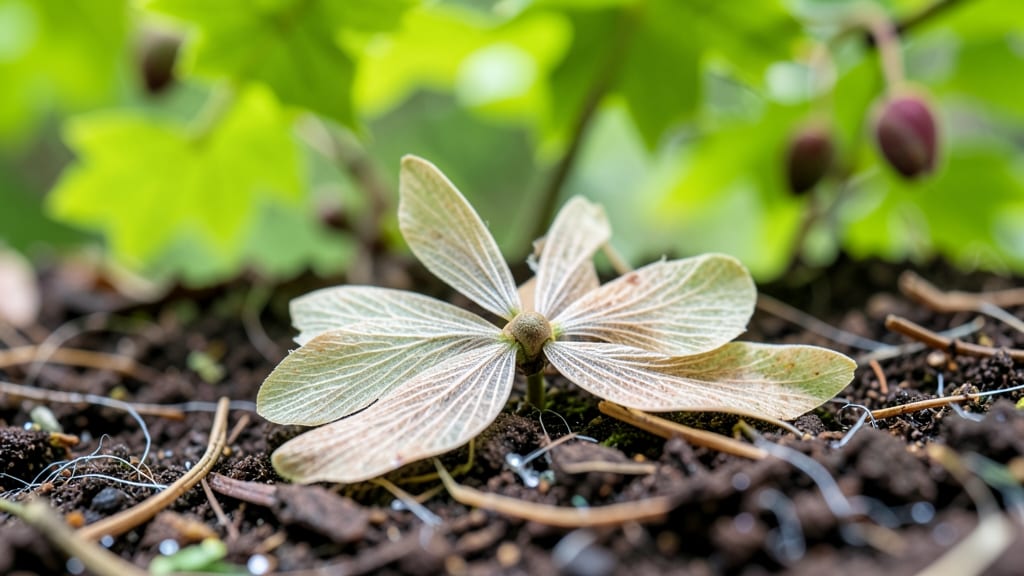
Spring’s maple tree droppings—those endless piles of seeds and leaves—can smother your lawn and trigger yellowing leaves if ignored. 🌳 I’ve learned the hard way that skipping cleanup turns a quick spring chore into a summer root rot nightmare.
The key is acting fast before the debris blocks sunlight and traps moisture against the roots.
Start by raking up the thickest piles around the base of the tree, focusing on areas where leaves overlap or seeds accumulate in mats. A leaf blower makes this 30-minute job easier, especially under mature trees.
For eco-friendly disposal, compost the leaves (if disease-free) or bag the seeds to prevent volunteer saplings from popping up everywhere.
What you’ll notice after just one cleanup is healthier grass growing back and fewer yellowed leaves by early summer. The roots breathe better, pests like fungus gnats avoid the damp mess, and your tree’s energy goes into new growth instead of fighting suffocation.
Timing matters most—tackle this before the seeds germinate (usually by late April in most climates) and repeat every 4-6 weeks until the tree stops dropping debris. The effort pays off in a tree that thrives without the hidden stress of spring’s messy aftermath.
The Science Behind Spring Leaf Drop
Spring is a time of renewal for maple trees, but it’s also when you might notice an unexpected flood of leaves, seeds, or even small branches hitting your lawn.
If you’re wondering why your maple tree is shedding so much in spring, the answer lies in a mix of biological processes, environmental triggers, and even the tree’s own survival strategies. Let’s break it down by the most common causes.
Maple trees are deciduous powerhouses, and their spring awakening is tied to sap production—a process driven by rising temperatures and longer daylight. Here’s why this leads to droppings:
- Pressure Build-Up: As temperatures warm, the tree’s xylem vessels (water-conducting tubes) fill with sap, creating internal pressure.
This can cause buds to burst prematurely or weaken branch attachments, leading to small twigs or leaves detaching. - Nutrient Push: Maple trees flush stored nutrients from their roots to fuel new growth.
Weak or stressed branches may not handle this sudden demand, causing leaf drop or seed pod release (like helicopter seeds from silver maples). - Species-Specific Traits: Some maples, like boxelder or silver maples, are prone to early seed drop in spring as a survival tactic—seeds germinate faster in moist soil, but the process can be messy for homeowners.
💡 Pro Tip: If you see helmet-shaped seeds (boxelder) or winged seeds (silver maple), this is normal—but raking them up can reduce lawn clutter and prevent future tree stress.
Even if your maple tree survived the winter, subtle cold damage can trigger spring shedding. Here’s how:
- Frost Cracks: Sudden freeze-thaw cycles in late winter can split bark or damage vascular tissue, weakening branches.
Come spring, these branches may drop leaves or small limbs to conserve energy. - Desiccation: If winter winds were dry, the tree may have lost moisture through transpiration (even when dormant).
This stress can cause premature leaf drop as the tree prioritizes root recovery. - Late Frost Burns: Early spring leaves are highly sensitive to frost. If a late freeze hits, the tree may shed damaged foliage to protect its energy reserves for healthier growth later.
🌡️ Watch For: If leaves turn brown or crispy before falling, frost damage is likely. Prune affected branches in early spring (before bud break) to encourage new growth.
Not all spring droppings are harmless—pests and pathogens can weaken your maple tree, leading to excessive leaf or branch loss. Common culprits include:
| Pest/Disease | How It Causes Droppings | Signs to Watch For |
|---|---|---|
| Aphids | Sap-sucking insects weaken leaves, causing yellowing and premature drop. | Sticky residue ("honeydew") on branches. |
| Maple Leaf Cutter | Beetles cut semi-circular notches in leaves, making them fall early. | Ragged leaf edges, sawdust-like frass. |
| Verticillium Wilt | Fungal disease clogs water vessels, leading to wilting and defoliation. | Yellowing between veins, stunted growth. |
| Borers (e.g., Maple Bark Borer) | Larvae tunnel under bark, starving the tree and causing branch dieback. | D-shaped exit holes, oozing sap. |
✨ Prevention Tip: Apply dormant oil in late winter to smother overwintering pests. If you spot discolored leaves or sawdust-like frass, treat with neem oil or contact a arborist.
Maple trees are sensitive to soil moisture and competition. Spring droppings can spike when:
- Poor Drainage: Waterlogged soil (common in clay-heavy areas) suffocates roots, causing root rot and leaf yellowing (chlorosis). The tree may shed leaves to reduce water loss. - Lawn Competition: Grasses and weeds compete for nutrients, starving the maple’s roots.
Weakened trees drop leaves or seeds as a last-resort survival tactic. - Sudden Heat Waves: Early spring heat can dehydrate the tree before its roots fully recharge. This triggers leaf scorch and drop.
💡 Actionable Fix: Test your soil’s drainage and pH—maples prefer slightly acidic (6.0–7.0) and well-draining conditions. Mulch 3–4 inches deep (but keep it 6 inches away from the trunk) to retain moisture.
If your maple tree was pruned at the wrong time (late fall/winter) or physically damaged, spring shedding can be a response to stress:
- Improper Cuts: Pruning too late in the season can leave wounds vulnerable to disease. Topping (cutting back to a stub) creates weak regrowth points that drop easily.
- Storm or Animal Damage: Broken branches or girdling (bark damage from rodents) can cause sectional dieback, leading to leaf loss.
- Transplant Shock: If the tree was recently moved, its roots may struggle to support new growth, causing premature leaf drop.
🔪 Pruning Rule: Always prune maples in late winter (before buds swell) using clean, sharp tools. Make cuts just outside the branch collar to prevent disease.
Not all maples behave the same. Some naturally shed more in spring due to their biology:
- Silver Maple (Acer saccharinum): Aggressive seed drop—those iconic "helicopter" seeds can blanket your yard. The tree prioritizes seed production over leaf retention. - Boxelder (Acer negundo): Fast-growing but weak-wooded—branches snap easily, and leaves drop frequently.
It’s a short-lived species prone to stress. - Sugar Maple (Acer saccharum): More resistant to shedding, but cold snaps can still trigger leaf drop. If you see yellowing before drop, it’s often nutrient deficiency (common in compacted soil).
🎯 Key Takeaway: If your maple is a silver or boxelder, expect more droppings—it’s part of their life cycle! Focus on mulching and deep watering to offset the stress.
Quick Fixes for Maple Tree Mess
Spring isn’t just about blooms—it’s also the season when maple trees shed their winter’s worth of leaves, seeds, and sometimes even weak branches. If your yard is drowning in maple tree spring droppings, don’t panic.
With the right approach, you can clean up the mess and protect your tree’s health. Below, we break down the most common causes of excessive droppings (and yellowing leaves or root rot risks) and provide practical, step-by-step solutions—plus tips to keep your tree happy long-term.
Why it happens: Maple trees produce thousands of winged seeds (samaras) in spring to spread their genes. If your tree is young, stressed, or over-fertilized, it may drop even more than usual—clogging gutters, staining sidewalks, and attracting pests.
🔥 How to Fix It
Step 1: Prune Strategically (Before They Fall!) 👨🍳 Prune in late winter/early spring (before buds swell) to remove overcrowded or weak branches.
Focus on: - Branches growing straight up (water sprouts). - Crossing branches rubbing against each other. - Dead or diseased limbs (check for hollow spots or mushrooms).
✨ Pro Tip: Use clean, sharp pruners and make cuts just outside the branch collar (the swollen area where the branch meets the trunk). Seal larger cuts (>2 inches) with pruning sealant to prevent disease.
Step 2: Collect the Fallout 🍳 Lay down tarps or burlap sacks under the tree before seed drop peaks. Shake branches gently to encourage early release, then rake up debris daily for a week. 💡 Bonus: Repurpose the seeds—dry and roast them for maple syrup-flavored treats (yes, really!).
Step 3: Mulch & Water Smartly 🥘 Apply 2–4 inches of mulch (wood chips or shredded bark) around the base to suppress weeds (which compete for nutrients). Keep mulch 6 inches away from the trunk to avoid rot. 🌡️ Water deeply 1–2 times per week (unless rain does the job). Overwatering stresses trees, leading to more seed production.
Why it happens: If leaves turn yellow between veins (chlorosis), it’s often due to iron or manganese deficiency—common in alkaline soils. Fungal diseases (like anthracnose) can also cause premature leaf drop.
🔥 How to Fix It
Step 1: Test Your Soil 📊 Grab a soil test kit (available at garden centers) and check pH. Maples prefer slightly acidic soil (6.0–7.0). 💡 If pH is high (>7.0):
- Mix elemental sulfur or peat moss into the top 6 inches of soil in early spring.
- For quick fixes, use a chelated iron supplement (like Ironite) every 4–6 weeks.
Step 2: Fertilize Correctly 🥗 Avoid high-nitrogen fertilizers (they encourage leafy growth but more seed pods). Instead, use a balanced 10-10-10 or 8-3-9 fertilizer in early spring (before buds break). ✨ Pro Tip: Slow-release organic fertilizers (like compost or bone meal) are gentler and reduce runoff.
Step 3: Treat Fungal Issues 🔪 Prune infected leaves (black spots, wilting) and sterilize tools with rubbing alcohol. 🌿 Spray with a copper fungicide (like Bonide Copper Fungicide) every 2–3 weeks until new leaves harden off (usually by late spring).
Why it happens: A thick layer of decaying leaves and seeds around the trunk can smother roots, trap moisture, and invite root rot (a fungal infection). Compacted soil also blocks oxygen, weakening the tree.
🔥 How to Fix It
Step 1: Aerate the Soil ⏰ Rent a core aerator (or use a manual garden fork) to poke 6-inch-deep holes around the drip line (the tree’s canopy edge).
This breaks up compacted soil and improves drainage. 💡 For small trees: Gently loosen soil with a shovel in a 6-inch-wide band around the trunk.
Step 2: Improve Drainage 🥘 Create a "tree well"—a 6-inch-deep, 3-foot-wide ring around the trunk. Fill it with gravel or coarse sand to prevent waterlogging. 🌡️ Avoid overwatering—stick your finger in the soil 2 inches deep. Water only if it’s dry.
**Step 3: Mulch Properly 🍎 Remove old mulch (more than 2 inches thick) and replace it with a 2-inch layer of chunky mulch. Never pile mulch against the trunk—this creates a rot trap.
Want to slash droppings by 50% next year?
Try these low-effort hacks: - Plant ground covers (like clover or creeping thyme) under the tree to catch falling debris. - Install gutter guards to reduce seed buildup in downspouts. - Encourage natural predators (like birds and squirrels) to eat the seeds before they fall. - Prune in stages—remove only 10–20% of the canopy per year to avoid shocking the tree.
Final Thought: Maple trees are dramatic shedders, but with a little strategy, you can turn their spring mess into a manageable (and even beneficial!) part of yard care. Start with pruning and soil checks, then mulch and monitor**—your tree (and your sanity) will thank you!
Frequently asked questions
Why does my maple tree drop so many seeds in spring?
Maple trees produce thousands of winged seeds (samaras) in spring as a natural reproduction strategy. Species like silver maple are especially aggressive shedders, while sugar maples drop fewer seeds. The tree prioritizes seed production over leaf retention, especially if stressed or over-fertilized.
How often should I clean up maple tree droppings?
Remove debris every 4-6 weeks during peak shedding season (typically March-May). Focus on piles thicker than 2 inches around the base, as these can smother roots. Use a leaf blower for quick cleanup or lay tarps under the tree to catch falling seeds before they spread.
Can I compost maple tree leaves and seeds?
Yes, but only if the leaves are disease-free. Maple leaves compost well, adding nutrients to your soil. For seeds, crush them first to speed decomposition. Avoid composting if you suspect fungal diseases like anthracnose, which can survive composting and reinfect your garden.
Will removing maple seeds stop new saplings from growing?
Not completely—some seeds will still germinate from those you miss or birds carry away. However, consistent cleanup reduces sapling populations by 70-80%. For stubborn volunteers, hand-pull them when small or apply a mulch barrier (cardboard + landscape fabric) around your lawn edges.
Are maple tree seeds harmful to my lawn?
No, but they can smother grass if left in thick layers. The seeds themselves aren't toxic, though they may attract pests like squirrels or rodents. For lawns, focus on raking up seed piles before they germinate (usually within 2-4 weeks