
Container Gardens
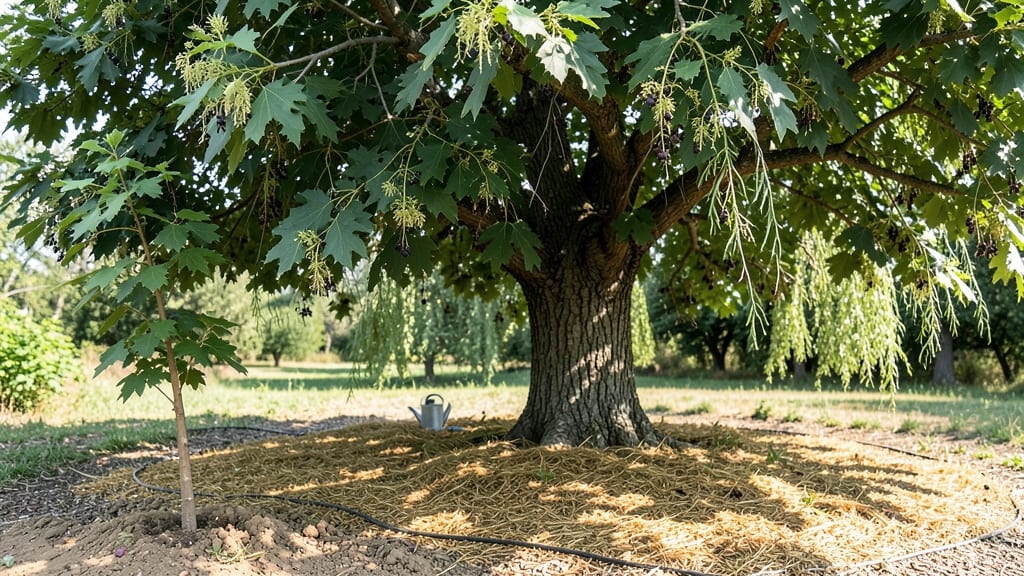
Growing mulberry trees thrives best in full sun and warm climates—my black mulberry produces foot-long berries every summer once I got the conditions right. The secret isn't just sunlight; it's matching soil, water, and even the right variety to your zone.
I've seen white mulberries struggle in heavy clay while black mulberries thrive in rocky soil—each has its own quirks.
For containers, use a well-draining mix with 50% compost and a pot at least 24 inches wide. In-ground, amend clay soil with sand or compost to prevent root rot. Mulberries hate soggy feet—water deeply once a week in summer, but let the top 2 inches dry between waterings.
My tree now drops shade in summer and feeds birds year-round.
You'll know you've nailed it when branches sag under berry weight and new shoots appear in spring. The fruit ripens in waves, so harvest every 2-3 days to avoid pests. Just watch for invasive roots—black mulberries spread aggressively, so contain them with root barriers if needed.
Works for white, black, or red varieties—just adjust spacing (15-20 feet apart for in-ground). Container trees stay smaller but need winter protection in cold zones. Here's how to match your climate to the perfect mulberry.
📚 In This Guide
- What you need
- Instructions
- Tips and common mistakes
- Wrapping up and next steps
What you need
- ● Mulberry tree sapling: Choose a Morus alba (white mulberry) or Morus nigra (black mulberry) from a nursery. Opt for a 1- to 2-year-old tree for best results.
- ● Container (if applicable): A 15- to 20-gallon pot with drainage holes (minimum 24-inch diameter for dwarf varieties).
- ● Well-draining soil: Garden soil (for in-ground planting): Mix with 20% compost and 10% perlite for aeration.
- ● Potting mix (for containers): Use a high-quality, loamy blend (e.g., 60% garden soil, 30% compost, 10% sand or grit).
- ● Fertilizer: Balanced fertilizer (10-10-10 or 20-20-20): Apply ½ cup per tree at planting, then monthly during growing season (spring-fall).
- ● Organic option: Composted manure or worm castings (1 cup per tree, 2x/year).
- ● Mulch: 2-3 inches of organic mulch (e.g., wood chips or straw) to retain moisture and regulate soil temp.
- ● Watering can or hose: With a gentle spray nozzle for deep watering.
- ● Pruning tools: Bypass pruners (for small branches).
- ● Loppers (for thicker branches).
- ○ Support stakes (optional): 2-3 bamboo stakes (5-6 ft tall) + soft ties for young trees in windy areas.
- ● Pest control (preventative): Neem oil (for aphids/spider mites).
- ● Insecticidal soap (as needed).
- ● Location: Full sun (6+ hours/day) and sheltered from strong winds (mulberries are sensitive!).
- ● Climate: Hardy in USDA Zones 5-9 (adjust watering in extreme heat/drought).
- ● Space: Dwarf varieties: 10-15 ft wide (ideal for containers).
- ● Standard trees: 20-30 ft wide (plant 15+ ft from property lines—mulberries spread!).
- ● Legal check: Verify local regulations—some areas restrict mulberry trees due to invasive roots or fruit mess.
Step-by-Step guide to mulberry tree growing conditions
Here's the straightforward approach I use to help mulberry trees thrive—no guesswork, just proven conditions.
☀️ Step 1: Choose the Perfect Sunlight Spot
Mulberry trees demand full sun exposure, meaning at least 6-8 hours of direct sunlight daily. I always plant mine where they'll receive morning sun and afternoon light without harsh midday shade interference. Young trees tolerate light shade, but mature trees need full sun to produce sweet fruit and strong growth.
Watch for nearby structures or taller trees that might cast shadows. If your yard only offers partial sun, consider a container setup where you can move the tree to sunnier spots as needed. Mulberries grow best when they get consistent, unfiltered sunlight throughout the day.
🌱 Step 2: Prepare the Ideal Soil Mix
Mulberries thrive in well-draining soil with a slightly acidic to neutral pH between 6.0 and 7.5. I start by amending native soil with 3 inches of compost and a light layer of coarse sand to improve drainage. Heavy clay soils should be mixed with organic matter to prevent waterlogging, which mulberry roots hate.
Test your soil's drainage by digging a hole and filling it with water. If it drains completely within 1-2 hours, your soil is ready. If water pools for longer, add more organic material. Mulberries aren't picky about soil fertility, but they grow best in loose, airy soil that lets roots spread easily.
💧 Step 3: Water Deeply but Infrequently
Once established, mulberry trees are drought-tolerant, but young trees need 1-2 inches of water weekly during their first two years. I water deeply at the base, soaking the soil down to 12 inches deep rather than giving frequent shallow waterings. This encourages deep root growth, which makes mature trees more resilient.
Check moisture by sticking your finger 2-3 inches into the soil. If it feels dry, water thoroughly. Overwatering is the biggest mistake—mulberries rot in soggy soil. Mulch around the base with 2-3 inches of organic mulch to retain moisture and regulate soil temperature.
⏰ Step 4: Time Planting for Optimal Growth
Plant mulberry trees in early spring or fall when temperatures are mild. Spring planting gives roots time to establish before summer heat, while fall planting allows roots to grow before winter dormancy. Avoid planting in extreme heat or cold—mulberries struggle to adapt when stressed.
Dig a hole twice as wide as the root ball but no deeper. Place the tree so the top of the root ball sits 1-2 inches above ground level. This prevents water from pooling around the trunk. Backfill with native soil and water immediately to eliminate air pockets.
☀️ Step 5: Adjust for Your Climate Zone
Mulberries grow in USDA zones 5-9, but their needs vary by region. In colder zones, plant near a south-facing wall for winter protection. In hot, dry climates, provide afternoon shade during the first year to reduce stress. I've seen mulberries thrive in both humid and arid conditions as long as drainage is good.
Prune in late winter to remove dead or crossing branches. Mulberries produce fruit on new growth, so avoid heavy pruning in fall. In warmer zones, expect fruit production as early as 2-3 years after planting. Patience pays off—mature trees yield hundreds of pounds of berries annually.
Tips & tricks for perfect mulberry tree growth
Took me years of trial and error to figure out these essentials—your mulberry tree will thank you for paying attention to these details.
Lighting Strategy: If you're planting in Step 1 and your yard only gets partial sun, consider using a large container with wheels. This lets you move your mulberry tree to follow the sun's path throughout the day, ensuring those critical 6-8 hours of direct sunlight. I've seen container-grown mulberries produce fruit even in shady yards when given this extra care. The key is mimicking full sun exposure, not just hoping for the best.
Soil Test Shortcut: For the soil preparation in Step 2, skip the full pH test kit if you're in a hurry. Mulberries are forgiving—just focus on that 3 inches of compost and sand mix. If your soil drains poorly (water pools after 2+ hours), add more coarse sand or perlite. The goal is loose, airy soil that prevents waterlogging, which is more critical than exact pH for beginners.
Watering Hack: When you're establishing that deep watering routine in Step 3, use a long, thin spout on your watering can or hose. This lets you direct water straight to the root zone without wetting the leaves. I water mine for about 10 minutes at a time to reach those 12 inches deep. Mulch helps retain this moisture while keeping the soil temperature stable—just keep the mulch 2-3 inches away from the trunk to prevent rot.
Climate Adaptation: For Step 5's climate adjustments, pay special attention to winter protection in colder zones. Wrap the trunk with burlap or tree wrap before temperatures drop below 20°F. I've seen mulberries survive winters just fine, but young trees or newly planted ones benefit from this extra insulation. In hot climates, that afternoon shade during the first year prevents heat stress while the tree establishes its root system.
Pro Tips for Mulberry Tree Growing Conditions
- Took me years of trial and error to figure out these essentials—your mulberry tree will thank you for paying attentio...
- Lighting Strategy: If you're planting in Step 1 and your yard only gets partial sun, consider using a large container...
- Soil Test Shortcut: For the soil preparation in Step 2, skip the full pH test kit if you're in a hurry. Mulberries ar...
Frequently asked questions
Got questions about growing mulberry trees? You’re not alone! Here are answers to the most common concerns—from sunlight needs to troubleshooting pests—so you can grow a thriving tree with confidence.
How much sunlight does a mulberry tree need daily?
A mulberry tree thrives in full sun (6–8 hours daily), but it can tolerate partial shade (4+ hours). For best fruit production and growth, plant it in a spot with direct sunlight. In hot climates, light afternoon shade helps prevent leaf scorch.
Can mulberry trees grow in containers, or do they need ground planting?
Yes! Mulberry trees adapt well to containers if given adequate space (15+ gallons for dwarf varieties, 50+ gallons for standard types). Use well-draining soil and repot every 2–3 years. Dwarf varieties like ‘Illinois Everbearing’ are ideal for pots.
How cold can mulberry trees tolerate before winter damage occurs?
Most mulberry trees handle USDA Zones 5–9, surviving down to −15°F (−26°C). Young trees need winter protection (mulch, frost cloth) in colder zones. Prune damaged branches in early spring. Black mulberries are hardier than white or red varieties.
What pests or diseases should I watch for, and how do I treat them?
Common issues include:
- Mulberry pygmy moth: Handpick larvae or use neem oil.
- Powdery mildew: Improve airflow; spray baking soda solution (1 tsp per quart of water).
- Root rot: Ensure well-draining soil; avoid overwatering.
How long does it take for a mulberry tree to bear fruit?
Patience is key! Dwarf varieties may fruit in 2–3 years, while standard trees take 4–7 years. Female trees (for berries) need a male pollinator nearby. Prune in late winter to encourage faster fruiting.
Wrapping up and next steps
Growing a mulberry tree is a rewarding journey that combines patience with nature’s bounty! 🌱 Whether you’re nurturing one in a container or a garden bed, remember: sunlight, well-draining soil, and the right climate are your best allies.
With these growing conditions mastered, you’ll soon enjoy fresh berries and lush foliage—plus, the joy of watching your tree thrive over the years.
Ready to take the next step? Start by selecting your preferred mulberry variety (like Morus nigra for sweetness or Morus alba for hardiness) and sketch a planting plan. Then, gather your tools and soil amendments—your thriving mulberry tree awaits!