
Pruning
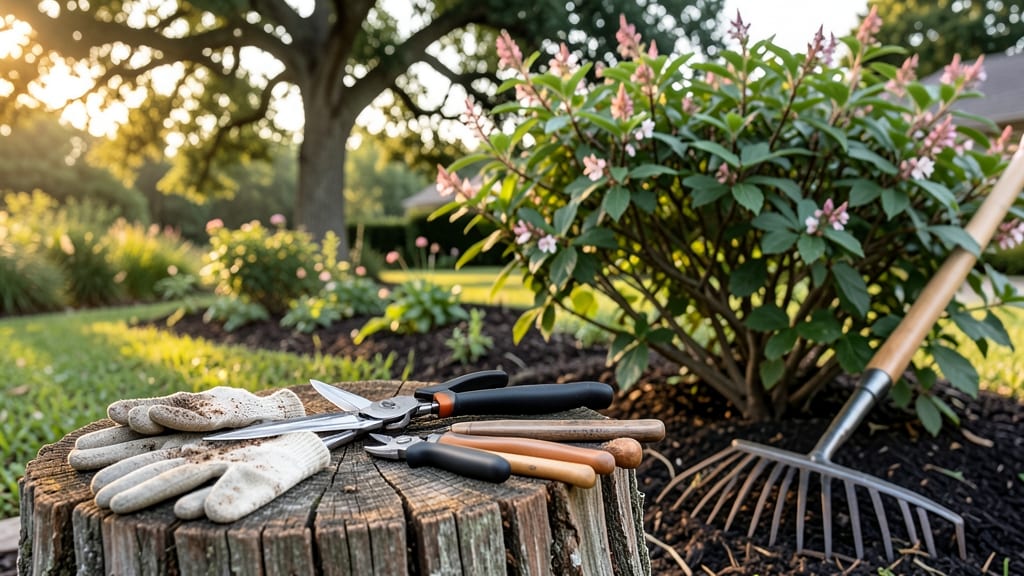
Your ninebark tree pruning starts with a single cut—done right, it transforms from scraggly to showstopping. ✂️ I’ve pruned mine for years, and the secret isn’t just timing (though that matters), but knowing how to coax new growth from those peeling bark stems.
Most gardeners wait until spring, but the real magic happens when you spread out the work across seasons.
The tools you’ll need are simple: sharp pruners, a hand saw for thicker branches, and a glove (ninebark’s sap stains like ink). Start by removing dead or crossing branches first—these are the easy wins that instantly improve airflow and shape.
Then, cut back up to one-third of the oldest stems to the ground to rejuvenate the shrub. The goal? Encourage fresh, vibrant growth where the peeling bark reveals new color every year.
By late summer, you’ll see the payoff: dense foliage, more flowers, and stems packed with those signature exfoliating layers. The key is consistency—skip a year, and you’ll end up with a leggy mess.
But once you get the rhythm, ninebark becomes the low-maintenance star of your landscape, thriving with minimal effort.
Works for both newly planted shrubs and mature giants—just adjust the cuts. Here’s how to do it without overthinking it.
📚 In This Guide
- What you need
- Instructions
- Tips and common mistakes
- Wrapping up and next steps
What you need
- ● Pruning shears (bypass or anvil type) – Choose sharp, high-quality shears (4–6 inches) for clean cuts on smaller branches.
- ● Loppers (long-handled) – For thicker branches (½–1½ inches in diameter), opt for bypass loppers with a 12–18-inch reach.
- ● Pruning saw (if needed) – A curved or bow saw for branches thicker than 1½ inches.
- ● Gloves (gardening or pruning) – Heavy-duty, cut-resistant gloves to protect hands from thorns and rough bark.
- ● Disinfectant (rubbing alcohol or bleach solution) – 70% isopropyl alcohol or 1:9 bleach-water mix to sterilize tools between cuts and prevent disease spread.
- ● Rake or broom – For clearing debris after pruning.
- ● Bucket or trash bag – To collect pruned branches and clippings.
- ○ Pruning sealant – Apply to larger cuts (over ½ inch) to prevent disease entry (optional for ninebark but useful in humid climates).
- ● Extension pole pruners – For high branches (10+ feet), saving you from ladder hassles.
- ● Safety glasses – Protects eyes from flying debris, especially when using a saw.
- ● Notebook & pen – To sketch your tree’s shape or track pruning progress over time.
- ● Tree tie or zip tie – For securing branches if you’re doing structural pruning.
Step-by-Step guide to pruning ninebark trees for healthier growth
This is the method I’ve used for years to keep ninebark trees thriving—whether you’re shaping a young plant or rejuvenating an overgrown specimen.
✂️ Step 1: Prune in Late Winter or Early Spring for Structural Shaping
Ninebark trees respond best to pruning in late winter or early spring, just as new growth begins to swell. This timing ensures you remove dead wood while encouraging vigorous spring blooms. Use clean, sharp pruning shears to make cuts at a 45-degree angle, about ¼ inch above a bud facing the outside of the plant.
Start by removing any dead, diseased, or crossing branches first. These take priority because they compete with healthy growth. I always scan the tree from all angles—what looks like a weak branch from one side might be a perfect structural support from another. Never remove more than 25% of the tree’s total foliage in one session, or you’ll shock the plant.
🌿 Step 2: Thin Out Overcrowded Branches for Better Airflow
Ninebark trees naturally develop dense growth, which can lead to fungal issues if airflow is restricted. Focus on thinning branches from the center outward, removing those that rub against each other or grow inward. The goal is to create an open, vase-like shape that allows sunlight to reach all parts of the tree.
Look for branches that are thinner than a pencil—these are often the oldest and least productive. Cut them back to their point of origin or to a strong lateral branch. You’ll notice the tree’s canopy lighten up immediately, and new growth will fill in more evenly. This step is especially critical if your ninebark hasn’t bloomed well in past seasons.
☀️ Step 3: Light Summer Pruning to Encourage Bushier Blooms
After the initial spring pruning, wait until mid-to-late summer to do a lighter trim. This is when ninebark produces its most vibrant new growth, and pruning now will encourage thicker, bushier stems for next year. Focus on cutting back any leggy or overly long branches by about one-third of their length.
Use hand pruners for smaller branches and loppers for thicker stems. Avoid heavy pruning at this stage—think of it as a gentle nudge rather than a dramatic reshaping. You’ll see fresh green growth sprout within a few weeks, and the tree will develop a fuller, more compact form. This is also the time to remove any suckers growing at the base, redirecting the plant’s energy upward.
⏰ Step 4: Clean Up in Fall and Winter for Next Year’s Growth
As winter approaches, do a final cleanup to remove any remaining dead branches, spent flowers, or weak growth. Ninebark trees are deciduous, so they’ll shed their leaves naturally, but a light prune in late fall keeps the tree tidy and prepares it for dormancy. Avoid heavy pruning now—focus only on removing anything that looks damaged or diseased.
Sterilize your pruning tools with rubbing alcohol between cuts to prevent spreading pathogens. I also like to rake up and dispose of all pruned material, as it can harbor pests or diseases. By the time spring rolls around, your ninebark will be ready to burst into new growth, with a stronger structure and even more abundant blooms.
Tips & tricks for perfect ninebark tree pruning
These game-changing strategies will help you transform your ninebark into a thriving, blooming powerhouse—no matter what season you're tackling.
Timing is Everything: The late winter/early spring window (Step 1) is your golden opportunity to shape the tree's structure while it's still dormant but ready to wake up. I've found that pruning just as buds begin to swell—when you can see a slight green tint at the branch tips—maximizes spring bloom potential. If you miss this window, don't panic—just avoid pruning after mid-summer, as new growth won't harden off properly before winter.
Branch Selection Strategy: When thinning in Step 2, I use the "pencil test" to identify branches for removal: anything thinner than a standard #2 pencil is likely a candidate. But here's the real trick—look for branches that grow inward or cross others. These compete for sunlight and nutrients, weakening the tree. Cut them back to their point of origin where a strong lateral branch emerges, creating that perfect open vase shape.
Summer Pruning Precision: During the mid-to-late summer trim (Step 3), focus on cutting back leggy branches by exactly one-third of their length. This might seem arbitrary, but it's the sweet spot that encourages bushier growth without stressing the tree. I like to make these cuts just above a leaf node where new growth will emerge. Pro tip: If you're unsure which way is up on a branch, look for the leaf scars—they'll show you the direction of last year's growth.
Tool Maintenance Matters: Your pruning tools are your most important equipment. After each session, especially during fall cleanup (Step 4), take 5 minutes to clean and sharpen your shears. A dull blade tears wood, creating larger wounds that take longer to heal. I keep rubbing alcohol wipes in my tool bag to sterilize between cuts—this simple habit prevents spreading diseases between branches. For thicker branches, invest in a good pair of loppers with bypass blades for cleaner cuts.
Pro Tips for Ninebark Tree Pruning
- These game-changing strategies will help you transform your ninebark into a thriving, blooming powerhouse—no matter what season you're tackling.
- Timing is Everything: The late winter/early spring window (Step 1) is your golden opportunity to shape the tree's structure while it's still dormant but ready to wake up.
- Branch Selection Strategy: When thinning in Step 2, I use the "pencil test" to identify branches for removal: anything thinner than a standard #2 pencil is likely a candidate.
Frequently asked questions
When is the best time to prune a ninebark tree?
The ideal time is late winter or early spring (just before new growth starts). You can also do light pruning after flowering to shape it, but avoid heavy cuts then—it’ll reduce next year’s blooms! For rejuvenation, prune in stages over 2-3 years to avoid stressing the plant.
How much can I trim back a ninebark tree?
For routine shaping, remove up to 1/3 of the plant’s total growth per year. If rejuvenating an overgrown ninebark, cut back 1/3 of the oldest stems to the ground in the first year, then repeat with new stems over the next two years. Never remove more than 1/3 in a single season—it can shock the plant!
Why is my ninebark not blooming after pruning?
Ninebarks bloom on old wood, so delayed or aggressive spring pruning (after buds swell) can reduce flowers. Prune right after flowering for shaping, but avoid heavy cuts—focus on removing dead, crossing, or weak branches instead. If blooms are sparse, check for over-fertilization (too much nitrogen) or poor sunlight.
Can I prune a ninebark tree in fall or winter?
Light structural pruning (removing dead wood or shaping) is fine in late fall or dormant winter (Dec–Feb). However, avoid heavy pruning in fall—it can stimulate tender new growth that may freeze or invite pests. If you must prune in winter, do it before a hard freeze for best results.
What if my ninebark looks sad after pruning?
Don’t panic! Ninebarks are hardy and often bounce back. If it looks leggy or sparse, it may need more sunlight or balanced fertilizer (low nitrogen). Water deeply after pruning, and avoid fertilizing until spring. If browning persists, check for pests (like spider mites) or fungal issues—treat with neem oil or a fungicide if needed.
Pro Tip:
Use sharp, sterilized tools (like pruning shears or a saw) to make clean cuts at a 45-degree angle just above a bud or branch collar. This speeds healing and keeps your ninebark healthy and bushy!
Wrapping up and next steps
Pruning your ninebark tree doesn’t have to be intimidating—with the right timing and techniques, you’ll reward yourself (and your garden!) with vibrant blooms and lush foliage year after year. 🌿 Whether you’re shaping it for the first time or refining your skills, consistency is key.
Now that you’re armed with the know-how, grab those pruners and give your ninebark the TLC it deserves—your future self (and pollinators!) will thank you.
💡 Next step: Mark your calendar for late winter or early spring and start with a light trim—your ninebark’s beauty is just one cut away!