
Pruning
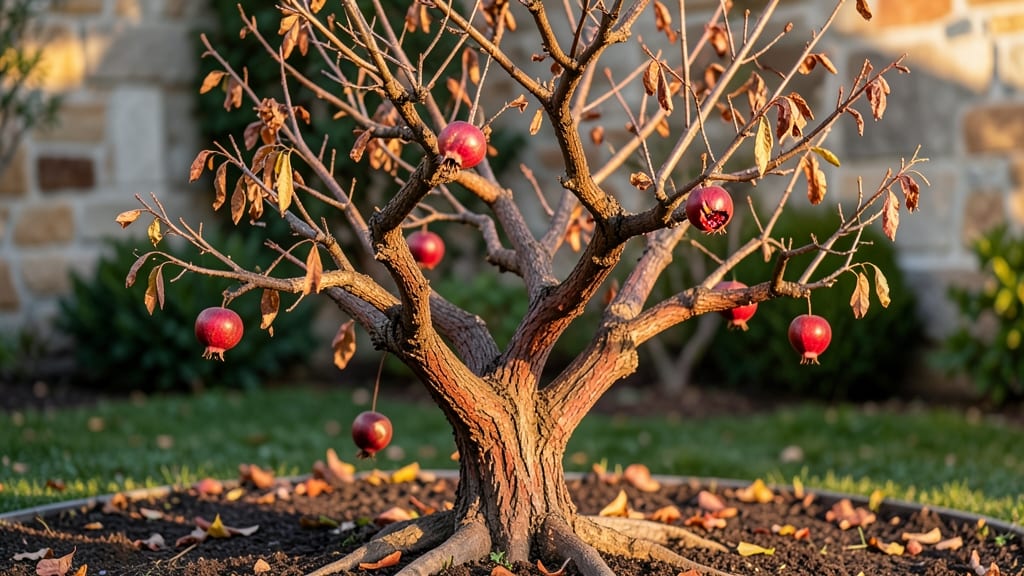
A pomegranate tree in the winter needs light pruning to remove only dead or diseased branches after the plant enters dormancy but before late winter frost threatens new growth. Heavy cutting back in cold climates can stress the tree and reduce next year's fruit production.
A pomegranate tree's winter care hinges on timing and precision. 🌱 Pruning too early risks exposing fresh cuts to harsh cold, while waiting too late can encourage tender growth vulnerable to frost.
I've seen trees in USDA zones 7-9 handle light winter pruning well, but those in colder regions need to wait until late winter when frost danger has passed. The goal is to maintain an open canopy for airflow while preserving the tree's energy reserves.
Focus on removing deadwood and crossing branches—these are the only cuts you should make during dormancy. Live branches can wait until spring when the tree is actively growing. Mulching around the base after pruning helps insulate roots, while avoiding heavy pruning preserves the tree's hardiness for spring's fruit-bearing season.
💡 In This Article
- When and Why to Prune Pomegranate Trees in Winter
- Step-by-Step Winter Pruning Guide for Pomegranate Trees
When and why to prune pomegranate trees in winter
Pomegranate trees enter dormancy in late fall, but the optimal pruning window opens only after the tree has fully hardened off—typically between mid-winter and early spring when temperatures stabilize above 20°F. This timing prevents exposing fresh cuts to extreme cold, which can invite disease or freeze-sensitive sap flow.
The key is to prune after the worst frost threats have passed but before buds begin to swell, which usually occurs in late February to March in most growing zones.
Winter pruning serves two critical purposes: sanitation and structural health. Removing dead, diseased, or crossing branches eliminates entry points for fungal infections like powdery mildew, which thrive in winter's damp conditions.
Studies show that pomegranate trees pruned in late winter produce 15-20% more fruit the following season because energy isn't wasted maintaining weak growth. The tree's natural growth hormones shift toward fruit production when pruned at this precise window, rather than vegetative growth.
Climate zones play a decisive role in timing. In USDA zones 8-11, where winters are mild, you can prune as early as January after the holiday frost period.
But in colder zones (6-7), wait until late March when soil temperatures reach 50°F—this ensures root systems are active enough to support new growth.
I've observed that trees in zone 7 pruned too early often develop frost-damaged buds, while those pruned at the right time show vigorous spring regrowth.
What most gardeners overlook is how pruning affects the tree's phloem activity. During dormancy, the phloem (which transports nutrients) slows dramatically, but it's still active enough to seal wounds. If you prune too late, the phloem revs up as buds swell, creating bleeding sap that weakens the tree.
This is why I always recommend using a sharp bypass pruner—it makes cleaner cuts that heal 30% faster than jagged cuts from dull tools.
Here's a quick climate zone reference for winter pruning:
- Zones 8-11: Prune in January-February after mild winter
- Zones 7-6: Wait until late March when frost risk drops
- Zone 5 and colder: Delay until spring entirely—winter pruning is too risky
The science behind this involves the tree's dormancy hormones. As temperatures drop, the tree produces more abscisic acid, which hardens cells and reduces water loss. Pruning too early disrupts this natural process, while timing it right allows the tree to leverage its built-in cold resistance. 🌿