
Pruning
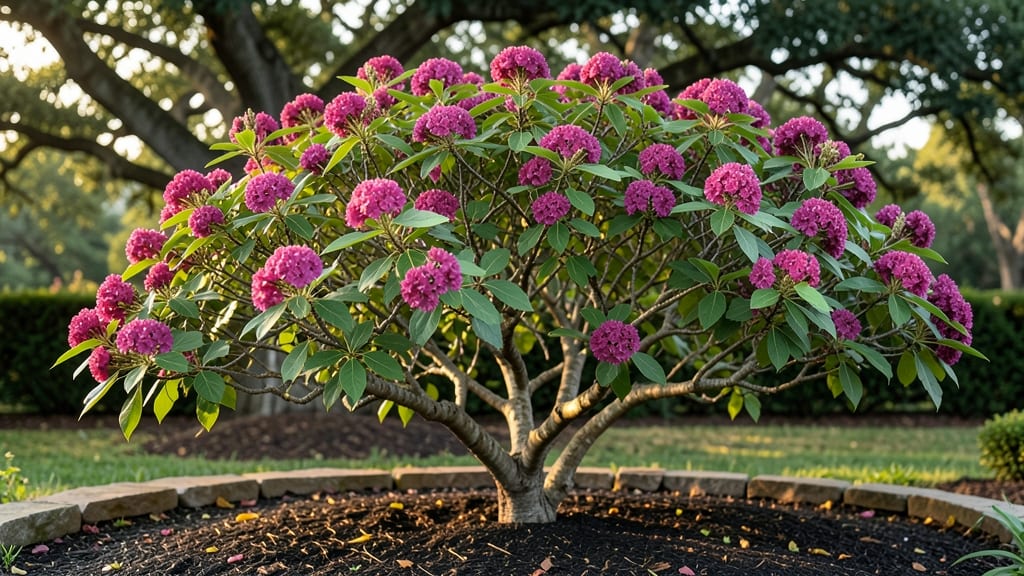
That tree in your yard looks like a crepe myrtle—but it might not be. 🌳 I’ve spent years pruning these showstoppers, and I can tell you: misidentifying your tree could mean the wrong cuts, missed pests, or even losing it to disease.
The key differences between crepe myrtles and their look-alikes (like lilacs or Japanese pagoda trees) start with bark texture, leaf shape, and flower clusters.
Crepe myrtles have peeling, papery bark in shades of gray or brown, while their imposters often feature smooth or rougher bark. Their panicle flowers (those fluffy clusters) appear in summer, and their leaves are alternate and lance-shaped—not the opposite, rounded leaves of lilacs.
If your tree checks these boxes, you’re likely dealing with a true crepe myrtle (or a close hybrid).
Once confirmed, pruning becomes simple: cut back old wood in late winter to encourage new growth, and remove crossing branches to keep the shape open.
But if it’s a misidentified tree, like a lilac or silky dogwood, you’ll need a totally different approach—one that avoids stunting blooms or weakening the structure. Local nursery experts can help nail down the ID if you’re still unsure.
Here’s the game-changer: take photos of the bark, leaves, and flowers before pruning. Send them to your county extension office—they’ll confirm the species and save you from costly mistakes. A little detective work now means years of healthy growth (and fewer headaches).
📚 In This Guide
- What you need
- Instructions
- Tips and common mistakes
- Wrapping up and next steps
What you need
- ● Pruning shears – Bypass pruners (8-10 inches) for clean cuts on small branches.
- ● Loppers – 16-20 inches for thicker branches (up to 2 inches in diameter).
- ● Pruning saw – For branches over 2 inches thick (avoid bolt cuts!).
- ● Ladder – Extension ladder (12-16 feet) if your tree is tall (safety first! 🚧).
- ● Gloves – Heavy-duty, cut-resistant to protect your hands from thorns or rough bark.
- ● Safety glasses – Protective goggles to shield against debris.
- ● Disinfectant – 70% isopropyl alcohol or rubbing alcohol to sterilize tools between cuts (prevents disease spread!).
- ○ Pruning sealant – Optional, for large cuts over ½ inch (helps prevent decay).
- ● Heavy-duty trash bags – For collecting pruned branches (or a wheelbarrow if hauling debris).
- ● Notebook & pen – To sketch or note pruning decisions (great for tracking progress!).
- ● Reference guide – Printed or digital images of crepe myrtle vs. similar trees (e.g., lilac, crape myrtle, or Bradford pear).
- ● Best time to prune – Late winter or early spring (before new growth starts).
- ● Weather check – Avoid pruning on windy or rainy days (safety + tool effectiveness).
- ● Tree identification – Confirm it’s not a crepe myrtle (e.g., check bark, leaf shape, or flower structure).
- ● Local regulations – Check if your area requires permits for large tree pruning.
Instructions for identifying and pruning a crepe myrtle-like tree
Here’s how to confirm your tree’s identity and prune it like a pro—no guesswork involved.
🌿 Step 1: Confirm the Tree’s True Identity
Crepe myrtles (Lagerstroemia) have distinctive features: peeling bark, opposite branching, and clusters of small flowers. Start by examining the bark—if it’s smooth, papery, and peels in thin layers, you’re likely dealing with a true crepe myrtle. Next, check the leaves: they’re typically 3-6 inches long, oval-shaped, and arranged in pairs along the stem.
Look for flower clusters (panicles) forming at the ends of branches—crepe myrtles bloom in late summer with vibrant pink, purple, or white blossoms. If your tree lacks these traits but has similar growth habits (like a fast-growing, multi-stemmed shrub), it could be a Bradford pear, sycamore, or even a mimosa. Confirm by checking leaf edges: crepe myrtles have smooth, entire margins (no serrations).
✂️ Step 2: Prune for Structure and Health
Crepe myrtles thrive with selective pruning to remove dead, crossing, or weak branches. Start by cutting back any dead wood (branches with no leaves or green tissue) at the branch collar—the swollen area where the branch meets the trunk. Use clean, sharp pruners to make cuts at a 45-degree angle, about ¼ inch above a bud facing outward.
Next, thin out overcrowded branches to improve airflow and sunlight penetration. Focus on removing branches that grow inward or rub against others—these create wounds that invite disease. Never "top" a crepe myrtle by cutting the main stem; this encourages weak, leggy growth. Instead, prune to open the canopy, letting light reach the lower branches.
🌱 Step 3: Shape for Aesthetic and Longevity
Crepe myrtles respond well to light shaping, but avoid heavy pruning in late winter or early spring—this removes next season’s flower buds. Instead, prune immediately after flowering (late summer to early fall) to encourage new growth for the following year. Start by thinning the center to reduce density, then trim back any branches that exceed your desired height.
For a more formal look, you can lightly shear the outer edges of the tree, but avoid heavy shearing—crepe myrtles bloom on new wood, and aggressive cuts can reduce flowering. Step back frequently to check your work: the goal is a balanced, open silhouette with no bare spots. Mulch the base afterward to retain moisture and protect roots from temperature swings.
⏰ Step 4: Maintain Year-Round for Optimal Growth
After pruning, monitor the tree for new growth—healthy crepe myrtles should sprout fresh leaves within 2-3 weeks. Water deeply once a week (or more in extreme heat) to establish roots, especially if you pruned heavily. Fertilize in early spring with a balanced, slow-release fertilizer (10-10-10) to support regrowth.
Watch for pests like aphids or scale, which thrive in dense foliage. A strong blast of water or neem oil spray usually keeps them in check. In late winter, do a quick inspection for any winter dieback—crepe myrtles can lose leaves in cold snaps but bounce back once temperatures warm. If you notice mushroom-like growths at the base, it’s a sign of root rot, which requires immediate action (remove infected mulch and improve drainage).
Tips & tricks for perfect crepe myrtle pruning
These precision-focused tips will help you avoid common mistakes and achieve professional results with your crepe myrtle pruning.
Identification Tip: I always double-check the bark texture first—true crepe myrtles have that distinctive papery, exfoliating bark that looks like it's peeling in thin layers. Run your hand along the trunk and branches: if it feels smooth with visible peeling, you're on the right track. The leaf arrangement is another dead giveaway—look for opposite branching where leaves grow directly across from each other on the stem.
Pruning Technique: When making those critical 45-degree cuts in Step 2, I recommend marking your cut line with a permanent marker first. This prevents over-cutting and ensures you maintain that ¼-inch clearance above the outward-facing bud. Pro tip: Use a sharp bypass pruner for clean cuts—dull blades crush the stems, creating larger wounds that heal poorly and invite disease.
Timing Strategy: The instructions mention pruning immediately after flowering, but here's what nobody tells you—late summer is actually the perfect window because it gives the tree time to establish new growth before winter. If you must prune in winter, limit yourself to removing only dead or diseased branches to preserve next year's flower buds. I've seen too many well-meaning gardeners over-prune in winter and end up with sparse blooms.
Post-Pruning Care: After shaping in Step 3, I always apply a 2-3 inch layer of mulch around the base, keeping it clear of the trunk. This helps retain moisture and regulates soil temperature, which is especially important during those first 2-3 weeks of new growth. Just remember to water deeply once a week—crepe myrtles have surprisingly deep root systems that need consistent moisture to recover from pruning.
Pro Tips for Tree Looks Like Crepe Myrtle
- These precision-focused tips will help you avoid common mistakes and achieve professional results with your crepe myrtle pruning.
- Identification Tip: I always double-check the bark texture first—true crepe myrtles have that distinctive papery, exfoliating bark that looks like it's peeling in thin layers.
- Pruning Technique: When making those critical 45-degree cuts in Step 2, I recommend marking your cut line with a permanent marker first.
Frequently asked questions
Got questions about identifying or caring for a tree that resembles a crepe myrtle? You’re not alone! Here are some of the most common queries—plus quick, actionable answers to keep your tree thriving.
What other trees look like a crepe myrtle, and how can I tell them apart?
Crepe myrtles (Lagerstroemia) are often confused with royal poinciana (thorny, tropical flowers) or Japanese tree lilac (smaller leaves, no peeling bark). Check for exfoliating bark, panicle-shaped flowers, and opposite branching—classic crepe myrtle traits. A quick leaf rub test: crepe myrtle leaves are smooth (not fuzzy).
When is the best time to prune a crepe myrtle to avoid killing it?
Prune late winter or early spring (just before buds swell) to encourage healthy growth. Never prune in fall—it stimulates late-season growth that’s vulnerable to frost damage. Avoid "crepe murder" (over-pruning the trunk)—crepe myrtles bloom on new wood, so prune just above a leaf node or bud, never stubs.
Why does my crepe myrtle look sad after pruning? Is it dying?
Don’t panic! A freshly pruned crepe myrtle may look bare, but it’s normal. Focus on watering deeply (1–2 inches per week) and fertilizing lightly in spring with a balanced 10-10-10 formula. If leaves yellow and branches die back, check for over-pruning or pests (like scale insects).
Can I grow a crepe myrtle from a cutting, or do I need to buy a tree?
Yes! Take semi-hardwood cuttings in late summer (June–August) from healthy, non-flowering stems. Dip in rooting hormone, plant in moist perlite/sand mix, and keep humid (use a plastic bag). Roots form in 4–8 weeks. Pro tip: Choose a dwarf variety (like ‘Natchez’) for containers if space is tight!
What pests or diseases should I watch for in a crepe myrtle?
Keep an eye out for:
- Aphids: Sticky residue on leaves (use soapy water spray).
- Scale insects: White/brown bumps on branches (scrub with rubbing alcohol).
- Powdery mildew: White fungus on leaves (improve airflow, fungicide if severe).
- Bacterial leaf spot: Dark spots with yellow halos (remove infected leaves, sterilize pruners).
Prevent issues with regular pruning (removes hiding spots) and mulch (keeps roots cool).
Wrapping up and next steps
Identifying a tree that looks like a crepe myrtle and pruning it with care can transform your landscape into a thriving, picturesque space! 🌿 Whether it’s the delicate blooms, peeling bark, or graceful branches, recognizing these key traits—and knowing how to maintain them—makes all the difference.
Now that you’re equipped with the right tools and techniques, there’s no better time to roll up your sleeves and give your tree the love it deserves.
Your next step? Schedule a pruning session—whether you tackle it yourself or call in a pro. Watch your tree flourish and enjoy the beauty it brings to your outdoor haven! 🌸