
Pruning
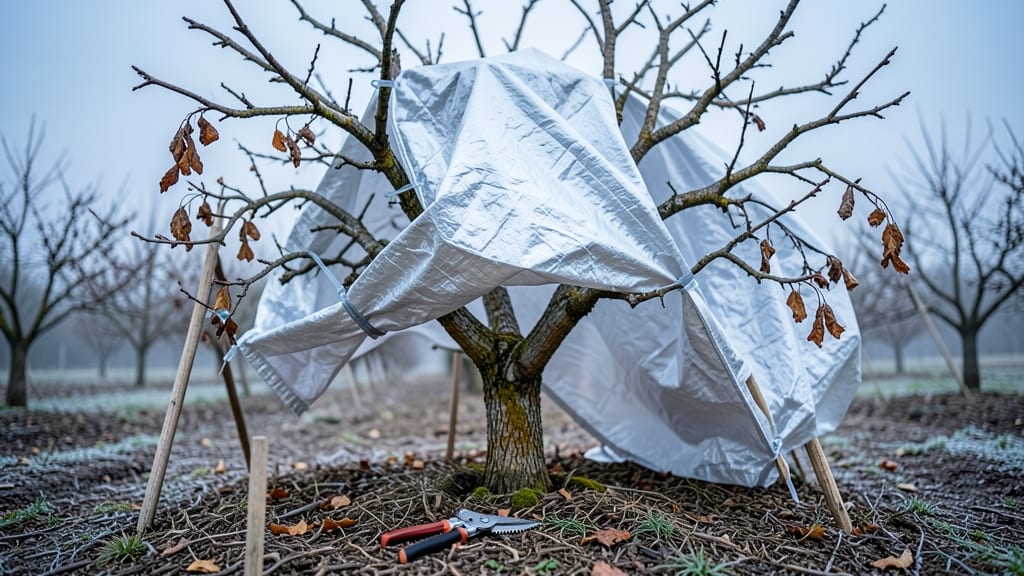
Tree frost blankets protect plants from cold damage by trapping heat and insulating foliage, preventing ice crystals from forming while allowing sunlight to penetrate. Use them during unexpected freezes when temperatures drop below 28°F (-2°C).
These protective coverings create a microclimate around your plants, raising temperatures by 5-10°F and shielding delicate leaves from frostbite. 🌿 The lightweight fabric blocks wind chill while letting sunlight filter through, which prevents overheating during the day.
I’ve seen them save entire gardens during late spring frosts when tender perennials like tomatoes or peppers are still vulnerable. Unlike row covers, frost blankets are specifically designed to drape over individual trees or shrubs without smothering growth.
For best results, apply them just as temperatures dip below 32°F—typically at dusk—and remove them in the morning once the sun rises. Heavyweight blankets work better for large trees, while lightweight versions suit smaller plants.
Just be careful not to leave them on too long, as trapped moisture can encourage fungal growth.
💡 In This Article
- How Tree Frost Blankets Work to Safeguard Plants
- When and How to Apply Frost Blankets for Maximum Protection
How tree frost blankets work to safeguard plants
Tree frost blankets create a protective microclimate by trapping radiant heat emitted from the ground and plant surfaces. The fabric—typically made from lightweight, breathable materials like polypropylene—acts like a thermal barrier, reducing heat loss by up to 70% compared to uncovered plants.
This trapped warmth raises the air temperature near foliage by 5-10°F, which is often enough to prevent ice crystal formation on leaves and stems. Unlike row covers, which can smother plants, frost blankets allow sunlight to penetrate while blocking harmful wind chill, which can drop temperatures even further.
The key mechanism is how these blankets disrupt the process of frost formation. When temperatures fall below 32°F, water vapor in the air begins condensing into ice crystals on plant surfaces. Frost blankets delay this by creating a layer of still air that insulates the plant.
Studies show that even a 1°F temperature increase can delay frost damage by hours—critical for tender plants like citrus or young fruit trees. The material’s slight permeability also allows excess moisture to escape, preventing condensation buildup that could lead to fungal issues.
Compared to other frost prevention methods, frost blankets offer a balance of effectiveness and ease. Sprinkler systems, for example, work by releasing water that freezes on plants, releasing latent heat—but they require constant monitoring and water sources. Row covers provide protection but are less flexible for larger trees.
Frost blankets, however, can be draped over individual plants or entire sections of the garden, making them ideal for targeted protection during unexpected freezes. Their lightweight design also means they won’t damage branches or interfere with natural growth patterns.
For optimal performance, choose blankets with a UV-resistant coating to prevent degradation from sunlight exposure. The fabric’s thickness matters too: lightweight versions (1.2 oz/yd²) work well for small shrubs, while heavyweight options (3.5 oz/yd²) are better suited for large trees.
The blanket’s ability to "breathe" is another critical factor—materials with 30-50% openness allow sunlight to filter through while still trapping heat, ensuring plants don’t overheat during the day.
One common misconception is that frost blankets must be used only at night. In reality, applying them in the late afternoon—when temperatures start to drop—gives them time to settle and begin insulating before the coldest hours.
The blanket’s drape should be snug but not tight, allowing air to circulate slightly while still blocking wind. For example, securing a 6x8-foot blanket over a young apple tree with stakes and clips ensures it stays in place during gusty conditions, maximizing protection without restricting growth.
Understanding the science behind frost blankets helps you use them more effectively. The trapped heat isn’t just about raising temperatures—it’s about creating a stable environment where plants can survive the cold stress.
This is why they’re especially valuable during radiation frosts, which occur on clear, calm nights when heat escapes rapidly. By using frost blankets, you’re essentially giving your plants a thermal shield that mimics the natural insulation of a forest canopy. 🌲