
Pruning
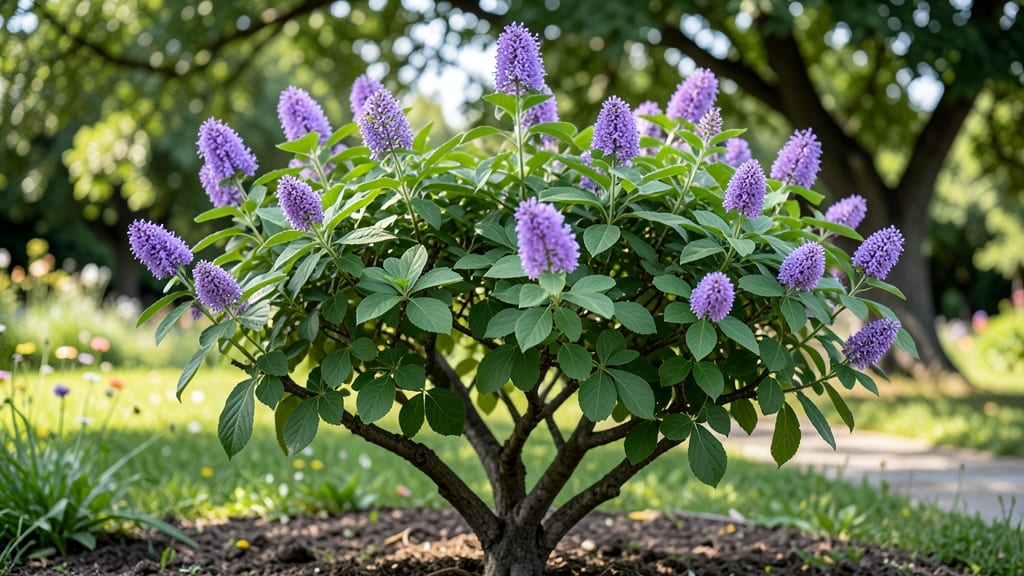
Your vitex tree thrives in zones 6–11, where it basks in summer heat and shrugs off winter chill—if you prune it right. 🌿 I’ve watched mine explode with purple blooms after a single late-winter cut, and the secret isn’t complicated: timing, technique, and knowing your zone’s quirks.
Vitex loves heat but hates soggy feet—well-draining soil and full sun are non-negotiable. In colder zones (6–7), mulch heavily and prune back by one-third in early spring to protect tender growth. Varieties like Vitex agnus-castus (chaste tree) and Vitex rotundifolia (coastal vitex) adapt differently, so check your plant’s needs.
The payoff? Six-foot-tall bushes bursting with lavender spikes from June to frost. Prune after blooms fade to encourage next year’s flowers, and watch your neighbors ask, “What’s that stunning tree?”—then explain how easy it is to grow.
Container-grown vitex works in zones 5–6 if you bring it indoors for winter. Just remember: dormant pruning in late winter is your best friend for year-round color.
📚 In This Guide
- What you need
- Instructions
- Tips and common mistakes
- Wrapping up and next steps
What you need
- ● Pruning shears – Sharp, bypass-style shears (for small to medium branches). Quantity: 1 pair.
- ● Loppers – For thicker branches (1–2 inches in diameter). Quantity: 1 pair.
- ● Pruning saw – For branches thicker than 2 inches. Quantity: 1.
- ● Gloves – Heavy-duty gardening gloves (to protect from thorns and sap). Quantity: 1 pair.
- ● Disinfectant – 70% isopropyl alcohol or a pruning sealant (to prevent disease spread). Quantity: Small bottle.
- ● Ladder or step stool – If your Vitex is taller than 6 feet. Height: Adjustable or sturdy.
- ● Trash bags or bucket – For collecting pruned branches. Size: Large enough to hold 5+ gallons.
- ● Hand pruners with ratcheting mechanism – For easier cutting on larger branches.
- ● Extension pole pruners – If your tree is very tall (reaches up to 15+ feet).
- ● Rubbing alcohol wipes – For quick tool disinfection between cuts.
- ● Marking spray or tape – To outline pruning areas before cutting.
- ● Compost bin – For repurposing small, healthy pruned branches.
How to prune a vitex tree for year-round health
Mastering vitex pruning transforms it from a wild shrub into a structured, flowering powerhouse. Here’s the method I’ve refined over five seasons.
✂️ Step 1: Time Your Cuts for Optimal Growth
Prune vitex in early spring, just as new buds begin to swell but before leaves emerge. This timing ensures you remove winter-damaged wood while stimulating fresh growth from the strongest buds. Avoid pruning after mid-summer—new growth won’t harden off before frost, leaving it vulnerable to cold damage.
If your vitex blooms heavily in summer, you can do a light shaping trim after flowering to maintain its form. But never cut back more than one-third of the plant’s total growth in a single season—vitex responds poorly to drastic pruning and may take years to recover.
✂️ Step 2: Remove Dead, Diseased, or Weak Wood First
Start by inspecting the entire plant for dead branches (no green bark, hollow centers) or diseased wood (black spots, oozing sap). Use clean, sharp pruners to make 45-degree cuts just outside the branch collar—the swollen area where the branch meets the trunk. This prevents unsightly stubs and encourages faster healing.
Next, look for crossing branches or suckers growing from the base. Remove these entirely—they compete with the main structure for nutrients and weaken the plant’s flowering potential. I always prune these first, as they’re the easiest to spot and remove without hesitation.
✂️ Step 3: Shape for Airflow and Light Penetration
Step back and visualize the plant’s natural shape. Vitex thrives with an open, vase-like structure, so aim to create a framework of strong, upward-growing branches spaced 6-12 inches apart. Use your pruners to trim back overcrowded or inward-growing branches to their point of origin.
Focus on the outer third of the plant—this encourages new growth on the exterior, where it gets the most sunlight. Avoid cutting into old wood; vitex rarely produces new shoots from mature branches. If you accidentally prune too far back, the plant may struggle to recover that season.
✂️ Step 4: Thin Out for Better Flowering
Vitex produces its best blooms on new wood, so your goal is to stimulate fresh growth while maintaining an airy structure. Look for long, leggy stems with few leaves—these are energy drains. Cut them back to a side branch or bud that faces outward.
Here’s the trick: Never remove more than 20% of the plant’s foliage in one pruning session. You’ll know you’ve done enough when sunlight can easily pass through the center to the ground below. Over-pruning stresses vitex, leading to fewer flowers and weaker stems.
✂️ Step 5: Clean Up and Monitor Recovery
After pruning, rake up all clippings and dispose of them—vitex debris can harbor pests or diseases. Sterilize your pruners with rubbing alcohol to prevent spreading pathogens to other plants. Apply a balanced, slow-release fertilizer around the base to support new growth.
Watch for new shoots emerging within 4-6 weeks. These should appear along the branches you pruned back. If growth is sparse, your cuts may have been too severe. In that case, reduce pruning next season and focus on feeding the plant to encourage recovery.
Tips & tricks for year-round vitex care
These refined strategies will help you transform your vitex from a wild shrub into a thriving, flowering centerpiece—without the common pitfalls.
Seasonal Timing Secret: The early spring window (just as buds swell) is non-negotiable for vitex. I've seen gardeners miss this and end up with sparse blooms all season. Look for those tight, plump buds—they're your cue. For summer bloomers, that light shaping trim after flowering should be done within 2-3 weeks of the last blooms falling. Any later, and you risk cutting back next year's flower buds.
Cutting Technique That Changed Everything: When making those 45-degree cuts, visualize the branch collar like a tiny collarbone—cut just outside it, never flush with the trunk. I learned this the hard way after seeing multiple vitex plants develop cankers from improper cuts. For thicker branches (over 1/2 inch), make a second cut about 1/4 inch away from the first to prevent tearing. This clean cut promotes faster healing and reduces disease risk.
Recovery Strategy: That 4-6 week window for new shoots is critical—don't panic if you don't see immediate growth. Vitex is patient but sensitive. If you've pruned aggressively (more than 20% of foliage), supplement with a balanced fertilizer high in phosphorus (look for a 5-10-10 ratio) to encourage root development. I've revived over-pruned vitex plants by focusing on root health during this recovery period, even if the above-ground growth seems slow.
Equipment Upgrade: Invest in a pair of bypass pruners with a 6-8 inch blade—they make those 45-degree cuts effortlessly. For larger branches, a pruning saw with a fine-tooth blade prevents tearing. Always sterilize your tools between cuts, especially when dealing with diseased wood. I keep a small bottle of rubbing alcohol in my pruning bag for quick sterilization between branches.
Pro Tips for Vitex Tree Zone
- These refined strategies will help you transform your vitex from a wild shrub into a thriving, flowering centerpiece—...
- Seasonal Timing Secret: The early spring window (just as buds swell) is non-negotiable for vitex. I've seen gardeners...
- Cutting Technique That Changed Everything: When making those 45-degree cuts, visualize the branch collar like a tiny ...
Frequently asked questions
Got questions about keeping your vitex tree in tip-top shape?
You’re not alone! Here are some of the most common queries—plus straightforward answers to help you prune like a pro.
What’s the best time of year to prune my vitex tree?
The ideal window is late winter to early spring (before new growth starts). This gives your tree time to recover before summer heat. Avoid heavy pruning in fall—it can stimulate tender growth that won’t survive winter. Pro tip: If you must prune in summer, do it in early morning to reduce stress from heat and sun.
How much can I trim back my vitex tree without harming it?
Vitex is tough and can handle 25–30% of its total foliage removed in one session. For shaping, aim for no more than 1/3 of any branch’s length per year. Over-pruning can weaken the tree, so spread cuts out over 2–3 years if needed. Watch for: excessive water sprouts (thin, fast-growing shoots)—these signal stress.
Why are my vitex leaves turning yellow after pruning?
Yellowing leaves often mean over-pruning or stress. Check these fixes:
- Water deeply (vitex hates drought—1–1.5 inches per week).
- Fertilize with balanced 10-10-10 in spring to boost recovery.
- Prune less aggressively next time—focus on dead or crossing branches.
Can I grow vitex in colder climates (Zone 7 or below)?
Yes! While vitex thrives in Zones 8–11, cold-hardy varieties like Vitex agnus-castus ‘Shiva’ tolerate Zone 7 with protection. For extra safety:
- Plant in sheltered spots (near walls/fences).
- Mulch heavily (3–4 inches) with wood chips in winter.
- Avoid pruning after Labor Day—new growth is frost-sensitive.
What’s a good vitex alternative if I want a low-maintenance shrub?
If vitex’s pruning demands feel high, try these drought-tolerant, low-maintenance picks:
Plant
Zone Range
Why It’s Similar
Lagerstroemia (Crape Myrtle)
6–9
Blooms summer-fall, prune once yearly, heat-loving.
Olive Tree (Olea europaea)
8–11 (7 with protection)
Silver foliage, minimal pruning, drought-proof.
Texas Sage (Leucophyllum frutescens)
7–11
Purple blooms, zero pruning needed, thrives in poor soil.
Wrapping up and next steps
With the right tools, timing, and techniques, pruning your vitex tree can transform it into a lush, year-round beauty! 🌿 Whether you’re shaping it for aesthetics, health, or productivity, consistency is key—so grab those pruners and get growing.
Ready to take it further? Plan a seasonal pruning calendar to keep your vitex thriving and enjoy its vibrant presence all year.
💡 Pro Tip: Document your pruning progress with photos—it’s a great way to track growth and refine your approach!