
Pruning
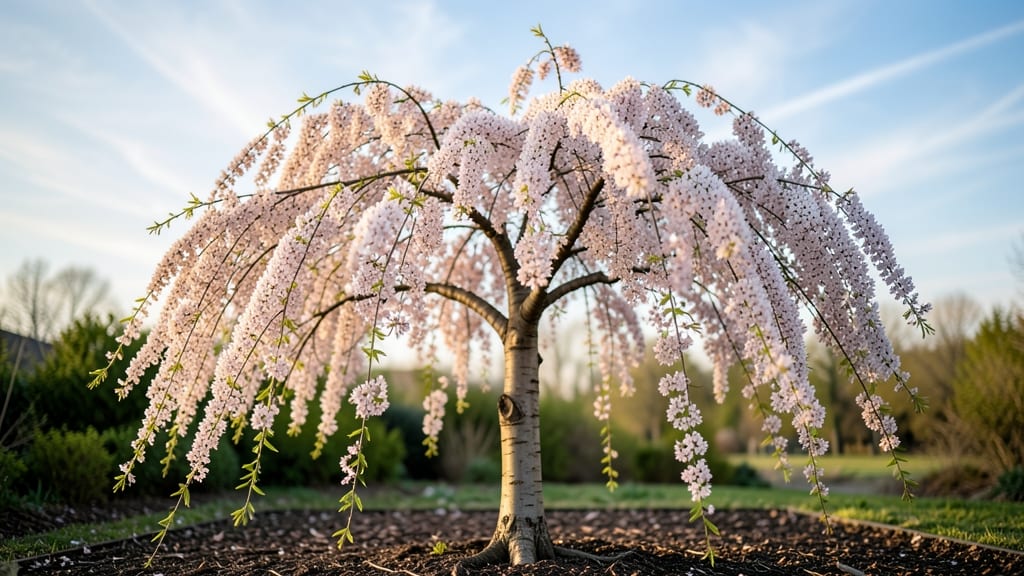
The Weeping Yoshino cherry tree size you choose will shape your landscape for decades — and getting it wrong means either a cramped yard or a tree that never fills its potential.
Picture this: a 🌸 cascading canopy of pink blossoms, softening your home’s entrance or framing a patio, but only if you plant it with 20+ feet of horizontal space in mind. Most varieties top out between 15-30 feet, with some reaching nearly twice that height, so spacing is everything.
This guide breaks down exactly how fast your tree will grow each year, how its spread compares to other cherries, and the pruning tricks to keep it from outgrowing your space.
You’ll learn the most common mistakes that lead to overcrowded plantings, how to estimate final size before buying, and why some Weeping Yoshinos stay compact while others stretch skyward.


Weeping Yoshino cherry tree mature height: variety-specific growth ranges explained
The Weeping Yoshino cherry tree (Prunus × yedoensis) is famous for its dramatic, cascading branches and stunning spring blooms. But before planting, knowing the exact mature size of your chosen variety is essential for proper landscape planning.
These trees vary significantly in height and spread, so let's break down the key varieties to help you choose the perfect fit for your space.
Most Weeping Yoshino varieties reach mature heights between 15-30 feet, but some compact selections stay under 10 feet. The spread can be even more impressive, often exceeding the height with their graceful, weeping branches.
Understanding these dimensions ensures you plant with enough clearance for sidewalks, driveways, and other landscape features.
Key factors affecting size include rootstock type, pruning habits, and growing conditions. Dwarfing rootstock can reduce mature height by 30-50%, while aggressive pruning can keep even standard varieties more compact. Let's explore the most popular varieties and their growth characteristics.
| Variety | Mature Height | Mature Spread | Growth Rate | Notes |
|---|---|---|---|---|
| 'Pendula' | 20-30 ft | 25-35 ft | Moderate-Fast | Most popular weeping form; dramatic cascading branches |
| 'Tama-no-Ue' | 15-25 ft | 20-28 ft | Moderate | Slightly smaller than 'Pendula'; excellent for smaller yards |
| 'Shidare Yoshino' | 18-28 ft | 22-30 ft | Fast | Japanese selection with slightly darker foliage |
| 'Mount Fuji' | 10-15 ft | 12-18 ft | Slow-Moderate | Compact selection; ideal for small landscapes |
| 'Kiku-shidare Sakura' | 12-20 ft | 15-25 ft | Moderate | Double flowers; slightly slower growth |
The 'Pendula' variety is the most widely available and typically reaches 20-30 feet tall with a spread that can exceed 30 feet. This makes it perfect for large landscapes where you want that dramatic, weeping effect.
If your space is more limited, consider the 'Tama-no-Ue' or 'Mount Fuji' varieties, which stay more compact while still delivering stunning spring blooms.
When planning your planting location, remember that the spread is often wider than the height. The cascading branches can extend 10-15 feet beyond the trunk, so maintain at least 20 feet of clearance from buildings, sidewalks, and other structures.
This prevents future pruning headaches and ensures your tree has room to develop its natural shape.
For urban gardens or small yards, the 'Mount Fuji' variety is an excellent choice. It typically matures between 10-15 feet tall with a spread of 12-18 feet, making it suitable for medium-sized landscapes.
Even in this smaller form, it still produces abundant pink double flowers that create a spectacular spring display.
Pruning plays a crucial role in managing size. Young trees benefit from structural pruning to encourage a strong central leader and well-distributed branches. As the tree matures, light pruning to remove dead or crossing branches maintains its health and shape without significantly altering its natural form.
Avoid heavy pruning during the flowering season, as this can reduce next year's bloom production.
Soil quality and sunlight exposure also influence final size. Well-draining, slightly acidic soil (pH 6.0-7.0) supports optimal growth, while full sun exposure (6+ hours daily) encourages vigorous flowering. In shadier conditions, growth may be slower, and flowering less abundant, potentially resulting in a slightly smaller mature size.
If you're unsure which variety to choose, consider your long-term landscape vision. For a statement piece in a large garden, the 'Pendula' variety offers unmatched drama. For a more manageable size that still delivers stunning blooms, the 'Tama-no-Ue' or 'Mount Fuji' selections provide excellent alternatives.
Always check with your local nursery for region-specific growth expectations, as climate variations can affect mature size. With proper planning and care, your Weeping Yoshino will become the centerpiece of your spring garden for decades to come. 🌸
How fast does a Weeping Yoshino cherry tree grow? Size progression by age
The Weeping Yoshino cherry tree grows at a moderate-to-fast rate during its early years, reaching its mature size over 15-25 years. In its first decade, you'll see dramatic height increases, while the final 10-15 feet may take decades to develop.
Understanding this progression helps you plan for proper spacing and long-term landscape design.
For the first 5 years, expect 3-5 feet of growth annually under ideal conditions. By year 5, your tree will likely stand 15-25 feet tall with a 10-15 foot spread.
This rapid early growth is why proper planting location is critical—you don't want to plant too close to structures or power lines!
Between years 5-10, growth slows to 2-4 feet annually as the tree establishes its structural framework. By year 10, you'll typically see 20-25 feet in height with a 15-20 foot spread. This is when the tree's signature weeping branches begin to cascade beautifully, creating that stunning springtime display.
After 10 years, growth becomes much slower, averaging just 1-2 feet per year. The final 5-10 feet of height may take another 10-15 years to develop.
By maturity (around 25 years), your tree will reach its 15-30 foot height with a 20-25 foot spread, creating a stunning focal point in your landscape.
Several factors influence growth speed: full sun exposure accelerates growth, while poor soil drainage or shady locations can stunt it. Regular pruning in late winter helps maintain shape and encourages denser foliage. In my experience, trees planted in USDA zones 6-8 with well-draining soil reach maturity fastest.
To estimate final size, consider your tree's growth environment. In optimal conditions (full sun, rich soil, proper watering), you can expect the upper end of the size range.
In less-than-ideal conditions, plan for the smaller end. Always leave at least 20 feet of clearance around your tree for mature spread and branch reach.