
Pruning
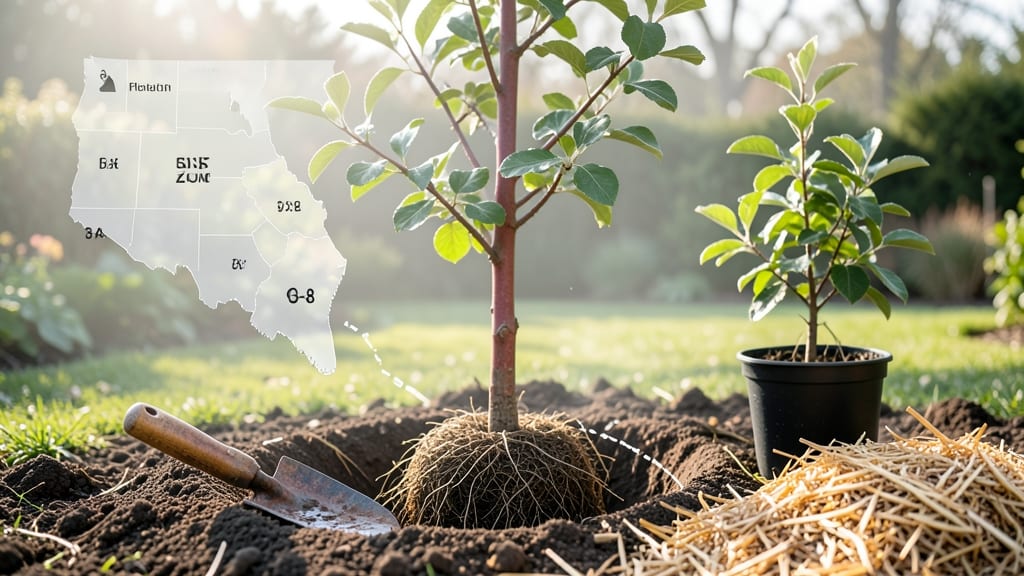
Planting an apple tree in the wrong zone is like setting up a lemonade stand in a hurricane—it’s doomed before it starts. 🌳 The USDA Plant Hardiness Zone Map isn’t just a tool; it’s your first clue about which apple varieties will thrive where you live, from the deep-freeze resilience of Zone 3 to the heat-tolerant charm of Zone 9.
I’ve watched my neighbor’s Honeycrisp struggle in Zone 5 while my Granny Smith thrives—because zones matter more than we think.
Start by finding your zone using the USDA map (or your local extension office), then match it to apple types: crabapples for cold Zones 3-5, Fuji or Gala for milder Zones 6-8, and Anna or Dorsett Golden for the warmest Zones 9-10.
Microclimates—like a south-facing slope or urban heat island—can shift your effective zone by one or two numbers, so scout your spot before buying. Frost dates are just as critical: late-blooming varieties avoid spring freezes, while early varieties need winter chill hours.
You’ll end up with a tree that produces consistent, high-quality fruit instead of bitter disappointment. The right zone means fewer pests, better pollination, and apples that ripen reliably every year.
Even my black thumb can’t kill a properly matched apple tree—once you nail the zone, the rest is just good soil and patience. Let’s get you planted right.
Pro tip: Check your local nursery’s recommendations—they’ve seen what works in your area. And if you’re on the border (like Zone 6/7), consider dwarf varieties for easier management. Now, grab that shovel—your future orchard starts with a map and a little research.
📚 In This Guide
- What you need
- Instructions
- Tips and common mistakes
- Wrapping up and next steps
What you need
- ● Apple tree sapling: Choose a dwarf, semi-dwarf, or standard variety based on space (e.g., Honeycrisp, Fuji, or Granny Smith). Ensure it’s bare-root or potted and disease-resistant for your zone (check local nurseries!).
- ● Shovel or spade: Medium-sized (18–24 inches) for digging the planting hole.
- ● Garden fork or tiller: For loosening soil, especially in compacted areas.
- ● Pruning shears: Sharp, sterilized shears (or a saw for thicker branches).
- ● Organic compost or well-rotted manure: 5–10 gallons, mixed with native soil.
- ● Mulch (wood chips, straw, or pine needles): 2–3 inches to retain moisture and regulate temperature.
- ○ Tree stakes (optional but recommended for young trees): 2–3 stakes (2–3 feet tall) + soft ties.
- ● Watering can or hose with a gentle spray nozzle: For post-planting hydration.
- ○ Soil pH test kit (optional but helpful): Aim for a pH of 6.0–7.0; amend with lime or sulfur if needed.
- ● Root stimulator gel or powder to boost early growth.
- ● Tree guard or protective wrap to shield from pests/sun in Zone 3–5.
- ● Drip irrigation system for consistent moisture in dry zones (e.g., Zones 7–9).
- ● Fertilizer with balanced NPK (10-10-10) for the first year (avoid high-nitrogen!).
How to choose the right apple tree planting zones for your climate
Your apple tree’s success starts with matching its needs to your local climate—here’s how to get it right.
☀️ Step 1: Determine Your USDA Hardiness Zone
Find your exact USDA Plant Hardiness Zone using the interactive map from the USDA Agricultural Research Service or your local cooperative extension office. Most apple varieties thrive in zones 4-8, but cold-hardy types like Honeycrisp or McIntosh handle zones 3-6, while heat-tolerant varieties like Anna or Dorsett Golden suit zones 7-9. Write down your zone number—this is your first filter for selecting apple trees.
If you’re in a transitional zone (like 7a/7b), opt for varieties labeled for both adjacent zones to account for temperature fluctuations. For example, Fuji apples grow well in zones 5-8, making them versatile for many climates. Check the tree tag or nursery description for zone compatibility—this prevents costly mistakes later.
📏 Step 2: Assess Your Microclimate for Optimal Growth
Your yard’s microclimate—sun exposure, wind patterns, and soil temperature—can shift a tree’s hardiness by 1-3 zones. South-facing slopes warm up faster in spring, allowing earlier planting, while frost pockets in low areas delay bud break. Measure your site’s average last frost date (use historical records from your local weather station) and match it to the apple variety’s chill-hour requirements.
Most apples need 300-1,000 chill hours (temperatures between 32-45°F) to set fruit. If you’re in a warm zone like 9a, choose low-chill varieties like Anna (200-300 hours) or Ein Shemer (300-400 hours). Avoid high-chill varieties like Granny Smith (800+ hours) unless you live in a cooler zone (5-7).
🌡️ Step 3: Select Varieties That Thrive in Your Zone’s Extremes
Apple trees struggle when pushed beyond their minimum winter temperature tolerance. For example, McIntosh can survive down to -25°F, while Golden Delicious tops out at -15°F. If your zone hits -30°F in winter, avoid heat-sensitive varieties like Gala or Braeburn—they’ll suffer winter dieback. Instead, pick cold-hardy types like Northern Spy (zone 3) or Cortland (zone 4).
Summer heat is equally critical. Trees in zones 8-10 need drought-tolerant varieties like Dorsett Golden or Tropsburg, which handle 90°F+ temperatures without stress. If you’re in a humid zone (7-9), avoid varieties prone to fire blight (like Rome Beauty)—opt for resistant types like Liberty or Enterprise. Always cross-reference variety traits with your zone’s climate extremes.
🌱 Step 4: Plan for Pollination and Zone Compatibility
Most apple trees require cross-pollination from a different variety blooming at the same time. If you’re in zone 5, pair McIntosh (late bloom) with Cortland (mid-bloom) for reliable fruit set. In warmer zones (7-9), Anna (early bloom) pairs well with Dorsett Golden (late bloom). Check each variety’s bloom time (early, mid, or late season) and ensure at least one compatible pollinator is within 50 feet for successful pollination.
If space is limited, choose self-pollinating varieties like Liberty or Enterprise, which produce fruit alone. However, these often yield 20-30% less than cross-pollinated pairs. In urban areas with limited pollinators, hand-pollinate with a paintbrush if natural bees are scarce. Note bloom times on your calendar—this ensures you’re ready to assist if needed.
⏰ Step 5: Time Planting for Zone-Specific Conditions
Plant bare-root trees in early spring (just as buds swell) or fall (6-8 weeks before first frost) for best establishment. In zones 4-6, fall planting is ideal—cooler temps reduce transplant shock, and roots grow slowly over winter. In zones 7-9, plant in late winter to avoid summer heat stress. Avoid planting in summer (zones 8-10) or late fall (zones 3-5)—extreme temperatures hinder root growth.
Amend your soil with compost (2-3 inches mixed into the top 12 inches) to improve drainage and warmth retention, especially in cool zones. In sandy soils (common in zones 7-9), add organic matter to retain moisture. Mulch with 4-6 inches of wood chips to regulate soil temperature—critical in hot zones (prevents root scorch) and cold zones (insulates roots). Water deeply once a week for the first year, adjusting for rainfall (zones 4-6 need more winter watering than 7-9).
Tips & tricks for perfect apple tree planting by climate
Here's what nobody tells you about matching apple trees to your local growing conditions—these details make all the difference.
Zone Matching Beyond the Basics: When checking your USDA zone, don't stop at the whole number—pay attention to the letter designation (like 7a vs 7b). The temperature difference between these can be 5°F, which might push your tree's limits. For example, a Honeycrisp (zone 3-6) planted in 6b might struggle when winter dips below -10°F—opt for Cortland instead, which handles -25°F without issue.
Chill Hours Are Non-Negotiable: Those 300-1,000 chill hours between 32-45°F aren't just a suggestion—they're the difference between fruit set and disappointment. I've seen orchards in zone 9a fail completely with Granny Smith because they only got 250 chill hours one winter. Track your local chill hours using a weather station or your extension office's records for the past 3 years to be absolutely certain.
Microclimate Mapping: Your yard's microclimate can create a 3-zone difference right in your own space. Test your planting site for 3 days before choosing varieties: place a thermometer at ground level in your potential planting spot and compare it to your official zone's average. If your spot runs 5°F warmer than the zone average, you can push one zone warmer in your variety selection—just don't go beyond that margin.
Winter Protection Strategy: For trees at the edge of their zone tolerance (like Golden Delicious at -15°F in zone 6a), create a 4-inch thick mulch ring around the base and wrap the trunk with tree wrap in late fall. This can extend cold tolerance by 3-5°F—enough to make the difference between survival and dieback. Remove the wrap in early spring to prevent bark damage from moisture buildup.
Pro Tips for Apple Tree Planting Zones
- Here's what nobody tells you about matching apple trees to your local growing conditions—these details make all the d...
- Zone Matching Beyond the Basics: When checking your USDA zone, don't stop at the whole number—pay attention to the le...
- Chill Hours Are Non-Negotiable: Those 300-1,000 chill hours between 32-45°F aren't just a suggestion—they're the diff...
Frequently asked questions
Got questions about planting apple trees in the right zones? You’re not alone! Here are answers to the most common queries to help you grow a thriving orchard—no guesswork required.
What are the best apple tree planting zones in the U.S.?
Apple trees thrive in USDA Hardiness Zones 4–8, but specific varieties suit different climates. For example, Honeycrisp loves Zones 3–8, while Fuji prefers Zones 5–9. Check your zone here and match it to cold-hardy, heat-tolerant, or disease-resistant cultivars.
When is the best time to plant an apple tree?
Plant in early spring (March–April) or fall (October–November) for optimal success. Spring lets roots establish before summer heat, while fall planting (6+ weeks before frost) avoids winter stress. Avoid extreme heat or cold—your tree will thank you!
Can I grow apple trees in containers or small spaces?
Dwarf varieties (like Columnar or Semi-Dwarf) thrive in containers (15+ gallon pots) or small yards. Use well-draining soil, prune regularly, and ensure 6–8 hours of sunlight daily. Just pollinate with a second tree (or a compatible variety) for fruit!
Why aren’t my apple tree leaves turning green, or are there brown spots?
Brown spots or slow greening often signal fungal diseases (apple scab), pests (aphids), or nutrient deficiencies (iron/chlorosis). Treat with copper fungicide, neem oil, or adjust soil pH (aim for 6.0–7.0). Mulch and proper spacing improve airflow—preventing future issues.
How do I protect my apple tree in extreme heat or cold?
For heat: Mulch heavily, water deeply (1–2 inches/week), and use shade cloth if temps exceed 90°F. For cold: Wrap the trunk with tree guard, avoid late pruning, and plant in a sheltered spot. Young trees benefit from burlap wraps in winter.
Wrapping up and next steps
Planting an apple tree is a rewarding journey, and understanding your apple tree planting zones is the first step to success! Whether you're in the chilly USDA Zone 3 or the milder Zone 9, choosing the right variety and location ensures a bountiful harvest for years to come. 🌳🍏
Now that you’re armed with the knowledge, it’s time to take action! Start by selecting a tree suited to your climate, prepare your soil, and give it the love it deserves. Happy planting—and may your orchard thrive! 🌱✨