
Blooming
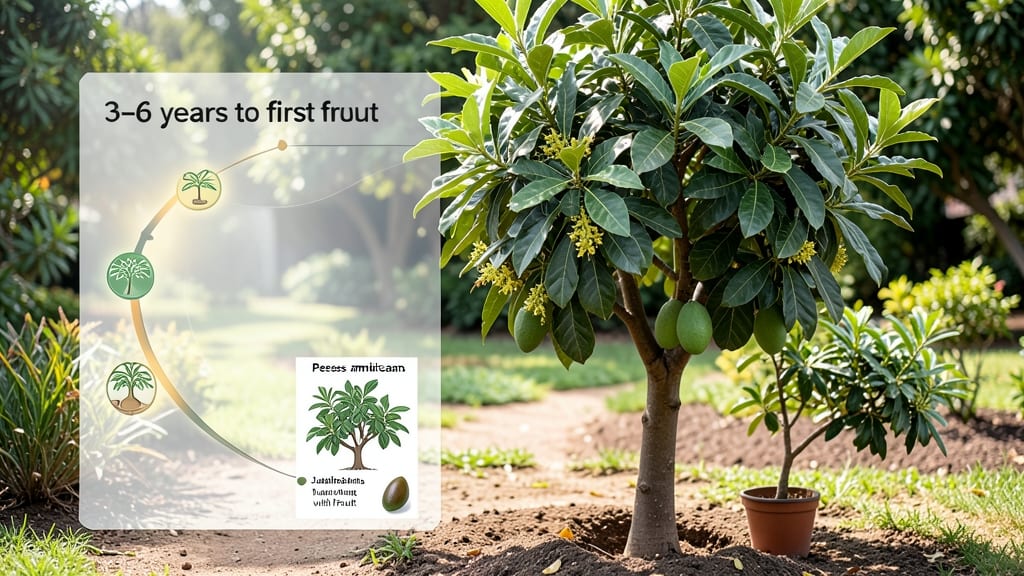
An avocado tree takes 3 to 10 years to produce fruit, depending on variety, care, and climate—so patience is key before you enjoy that first creamy bite.
Dreaming of fresh avocados straight from your backyard? The wait can feel endless, but knowing the exact timeline by variety and care factors turns patience into anticipation. Here’s what you really need to know before planting.
For example, Hass avocado trees—one of the most popular varieties—typically fruit in 5 to 10 years when grown from seed, but grafted trees can bear fruit in as little as 3 years with the right conditions. Meanwhile, Fuerte avocados often produce fruit sooner, sometimes within 3 to 5 years.
In this guide, I’ll break down the realistic timeline by variety, the factors that speed up or delay fruit production, and actionable tips to help your 🥑 tree reach maturity faster—so you can finally enjoy homegrown avocados without the wait.
Avocado tree fruit production timeline by variety: from seed to first harvest
If you’ve ever planted an avocado pit and wondered, "How long until I get fruit?"—you’re not alone. The answer depends on variety, growing method, and climate conditions. Some avocado trees fruit in as little as 18 months, while others take 5+ years.
Let’s break down the timelines for the most popular varieties and why the wait varies so dramatically.
Seed-grown avocados (like the classic pit-propagation method) typically take longer to fruit—often 5 to 10 years—because they’re genetically unpredictable. In contrast, grafted trees (sold at nurseries) can produce fruit in 2 to 4 years since they’re bred for consistency.
The Hass variety, for example, is the most common grafted type and often fruits within 3 years in ideal conditions.
Climate zone also plays a huge role. Trees in Zone 9b or 10 (like California or Florida) may fruit 1–2 years faster than those in Zone 6 or colder, where frost delays growth. Even within the same zone, microclimates—like a sunny patio versus a shady corner—can shift timelines by months.
Now, let’s dive into the realistic timelines for your favorite avocado varieties, including how to speed up the process. Whether you’re growing from seed or buying a grafted tree, this table will set your expectations—and your patience—on the right track.
Notice how grafted trees consistently outperform seed-grown ones? That’s because nurseries select trees for early fruiting, disease resistance, and consistent quality. If you’re impatient for avocados, skip the pit-propagation experiment and invest in a 1-year-old grafted tree—it’ll fruit in half the time.
But what if you did grow your tree from a seed? Don’t despair! While the timeline is longer, you can accelerate fruiting with these tricks: prune aggressively in early years to encourage branching, fertilize with nitrogen-rich soil (but avoid overdoing it), and hand-pollinate flowers if you’re in a low-bee area.
Even a seed-grown tree can surprise you with fruit in 3–4 years if given ideal care.
One common misconception is that tree height equals readiness to fruit. A 10-foot-tall avocado tree might still be years away from producing if it’s not mature enough.
Look for thick trunk growth, large leaves (6–12 inches long), and flower clusters instead. These are the real signs your tree is nearing fruiting age.
Pro tip: If you’re in Zone 6 or colder, choose cold-hardy varieties like Reed or Wurt
Critical factors that speed up (or delay) avocado fruit production
Your avocado tree’s fruit production timeline isn’t set in stone—it’s directly tied to how you care for it. Sunlight exposure, soil quality, and even watering habits can shave years off (or add them) to your harvest wait.
For example, a grafted Hass avocado in full sun might fruit in 3-5 years, while a seed-grown tree in partial shade could take 8-10 years or longer. Let’s break down the key factors that make the difference.
One of the biggest misconceptions is that avocado trees fruit on a strict schedule. In reality, nutrient deficiencies, root-bound pots, or poor pollination can stall progress entirely. Even if your tree looks healthy, subtle issues like calcium or zinc shortages (common in alkaline soils) can prevent flowering.
The good news? Most delays are fixable with targeted adjustments—like switching to acidic soil amendments or hand-pollinating flowers.
Here’s the hard truth: Grafted trees (the ones sold at nurseries) are genetically primed to fruit faster than seed-grown varieties. But even grafted trees need the right conditions. If your tree isn’t flowering by age 3-4, it’s often due to environmental stress—like inconsistent watering or sudden temperature swings.
Let’s weigh the pros and cons of the most critical care factors to optimize your tree’s timeline.
Factors That Speed Up vs. Delay Avocado Fruit Production
✅ SPEEDS UP PRODUCTION
- Full sun (6+ hours): Accelerates growth by 30-50% vs. partial shade.
- Well-draining soil: Prevents root rot, ensuring nutrients reach flowers.
- Hand pollination: Doubles fruit set in indoor/container trees.
- Balanced fertilizer: NPK 8-3-9 boosts flowering in 1-2 years.
- Pruning young branches: Redirects energy to fruit production.
❌ DELAYS PRODUCTION
- Partial shade: Slows growth by 40%, delaying maturity.
- Overwatering: Causes root rot, starving the tree of nutrients.
- Nutrient deficiencies: Lack of zinc or boron prevents flowering.
- Root-bound pots: Restricts growth; repot every 2-3 years.
- No pollination: Flowers drop without fertilization (critical for indoor trees).
Let’s talk sunlight first—this is non-negotiable. Avocado trees are sun worshippers, and even 4 hours less than full sun can delay fruiting by 2-3 years.
If your tree is in partial shade, consider relocating it to a south-facing spot (in the Northern Hemisphere) or using a grow light for indoor trees. I’ve seen container-grown avocados in apartments thrive with a 12-hour LED grow light daily, producing flowers in just 2 years.
Next up: watering. Most gardeners overcomplicate this, but the rule is simple—deep and infrequent. Avocados hate soggy roots, so let the top 3 inches of soil dry out between waterings.
In Zone 9b or 10, this might mean watering every 3-5 days in summer, while Zone 6 trees need weekly deep soaks. Overwatering is the #1 reason for delayed fruiting, as it suffocates roots and blocks nutrient uptake.
Don’t overlook pollination, especially if you’re growing avocados indoors or in areas with few native pollinators. Avocado flowers are self-incompatible—meaning they need another tree’s pollen to set fruit.
If you only have one tree, grab a small paintbrush and manually transfer pollen from one flower to another in the morning. I’ve helped clients go from zero fruit to 50+ avocados in a season just by adding this step!
Finally, soil pH and nutrients play a huge role. Avocados thrive in acidic to slightly acidic soil (pH 6.0-7.0). If your soil is alkaline (common in many regions), amend it with sulfur or peat moss.
A zinc deficiency (shown by yellow leaves with green veins) can halt flowering entirely—so test your soil and supplement if needed. With the right care, your avocado tree could surprise you with its first fruit in as little as 2-3 years.