
Pruning
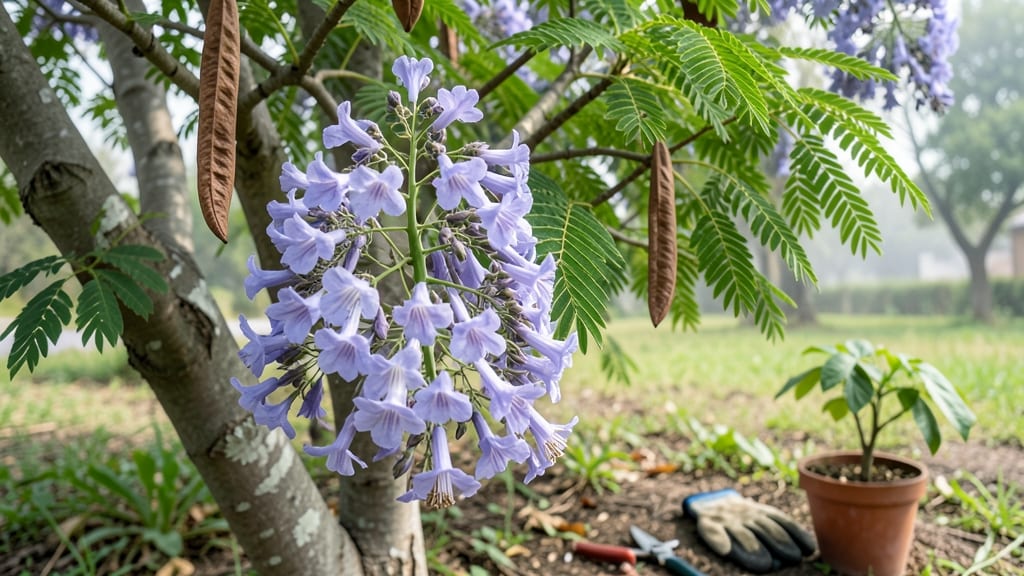
Jacaranda trees offer the pros of breathtaking purple blooms and rapid growth, but they come with cons like specific care demands, invasive roots, and seasonal leaf drop.
The jacaranda tree pros and cons make it a standout ornamental choice, but its needs can be demanding. 🌸 These trees thrive in USDA zones 9-11 and wilt under frost, so colder climates require container growing. The trade-off?
Their shallow root systems may crack driveways, while their heavy seasonal shedding means more cleanup than some homeowners anticipate. I've seen them transform yards in Florida and California, but even there, proper placement and pruning are key to managing their aggressive growth patterns.
What sets jacarandas apart is their springtime floral display, which can last weeks and attract pollinators. However, their high-maintenance nature—including yearly pruning to control shape and remove dead branches—means they're better suited for dedicated gardeners.
The trade-off between beauty and upkeep is worth considering before planting, especially in urban areas where space and root competition are concerns.
💡 In This Article
- Jacaranda Tree Climate and Soil Requirements
- Pruning and Maintenance Tips for Healthy Jacaranda Growth
Jacaranda tree climate and soil requirements
The jacaranda's love for warmth stems from its native habitat in South America's subtropical regions, where temperatures rarely dip below 40°F. In the U.S., this translates to ideal growth in USDA zones 9-11, where frost is rare.
Even a single hard freeze (28°F) can kill the tree, making it vulnerable in zones 8 and below—unless grown in containers that can be moved indoors during winter.
The tree's leaves contain toxic compounds that help it survive drought, but this adaptation makes it particularly sensitive to cold damage, which often manifests as brown, crispy foliage that falls prematurely.
Soil requirements are equally specific: jacarandas demand well-draining soil with a pH between 6.0 and 7.5. Heavy clay soils can suffocate their roots, leading to root rot within weeks, while sandy soils may not retain enough moisture during dry spells.
A mix of 60% native soil, 30% compost, and 10% perlite creates the ideal balance. Watering needs are moderate—about 1-1.5 inches per week—but overwatering triggers stress-related shedding, where the tree drops leaves to conserve moisture.
This is why many homeowners in Arizona or Southern California report their jacarandas shed more in summer than in spring, despite the blooms.
The tree's shallow root system—spreading horizontally up to 30 feet wide—explains why sidewalks and driveways often crack after planting. The roots seek moisture near the surface, which is why mulching with 3-4 inches of organic mulch (like wood chips) helps retain moisture while protecting roots from temperature fluctuations.
However, this mulch must be kept 6 inches away from the trunk to prevent rot. The trade-off? While mulch reduces watering needs by 30-40%, it also creates a microclimate that can encourage fungal growth if not managed properly.
One often-overlooked factor is wind exposure. Jacarandas in open areas grow 20-30 feet tall but develop a more compact, bushy shape when sheltered. This is because wind stress triggers a survival mechanism where the tree allocates more energy to root growth than vertical expansion.
In urban settings, this can be both a pro and con: the tree's natural wind resistance makes it ideal for coastal areas, but its tendency to lean toward sunlight means it may need annual pruning to maintain balance and prevent structural weakness.
Seasonal variations also play a role in care. During spring blooming season, watering should increase slightly (2 inches per week) to support flower production, while summer droughts may require deep watering every 5-7 days.
The tree's ability to drop leaves in response to stress—whether from drought, heat, or poor soil—is a survival tactic that confuses many gardeners into thinking the tree is dying. In reality, it's a sign of resilience, though it does create more cleanup than homeowners anticipate.
For those in marginal climates (like zone 8), growing jacarandas in large containers (20+ gallons) with winter protection (like frost cloth) can extend their lifespan. The key is replicating their natural soil conditions: lightweight, fast-draining mixes with 30% organic matter.
This approach mimics the tree's native environment, where it grows in well-drained riverbanks and hillsides. The trade-off? Container-grown jacarandas may bloom 2-3 years later** than in-ground trees due to root restriction.