
Propagation
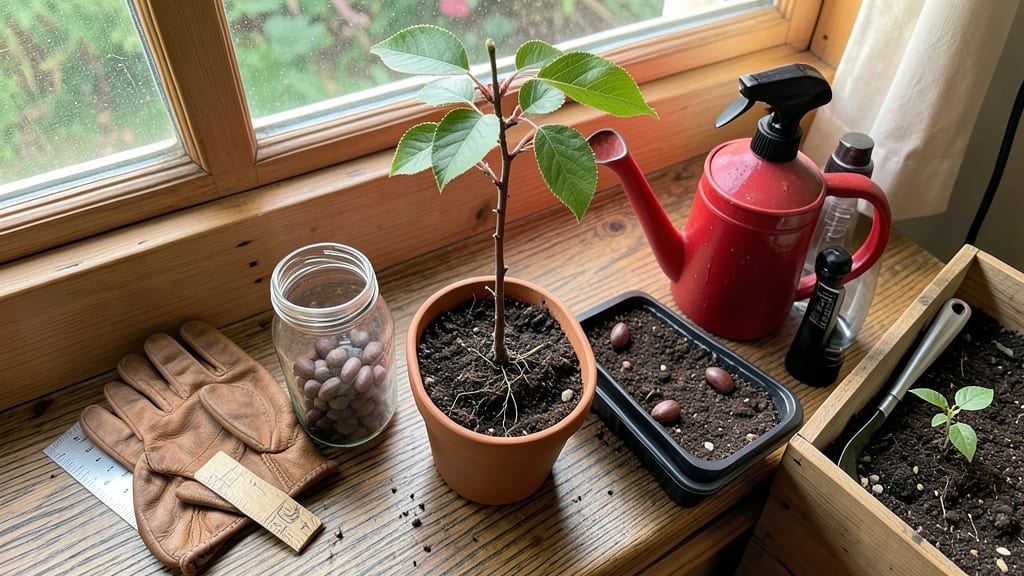
Growing a cherry tree 🌳 from seed to fruit-bearing takes 5 to 10 years—far longer than you might expect, but understanding each stage helps you set realistic goals and optimize care.
Picture this: you plant a seed in spring, nurture it through slow germination, and watch it grow just a few inches its first year. By year three, it’s still a sapling, not a tree.
Most gardeners give up before they see flowers, let alone fruit—but the ones who stick with it are rewarded with a tree that could live for decades.
This guide breaks down the year-by-year milestones so you know what to expect, from the first tiny sprouts to the day your tree finally blooms. We’ll also cover how to accelerate growth (and when to accept that patience is part of the process).
Ready to start? You’ll learn how soil, sunlight, and even pruning techniques can shave years off the timeline—or why some trees never fruit at all. Let’s get growing.


Year-by-year growth timeline: from seed to sapling
Watching a cherry tree grow from a tiny seed into a towering sapling is one of the most rewarding experiences for any gardener. While fruit production may take years, understanding each developmental stage helps you provide the right care for faster, healthier growth.
From the first sprouts to winter hardiness, here’s what to expect in the first five years of your cherry tree’s life.
Your journey begins with seed germination, a process that can take anywhere from 2 to 4 weeks under ideal conditions. During this time, maintaining consistent moisture and warmth is critical.
Once the seedling emerges, it enters a phase of rapid but delicate growth that requires careful attention to soil, sunlight, and watering routines.
Environmental factors like climate, soil quality, and sunlight exposure play a massive role in how quickly your cherry tree matures. For example, a seedling in USDA Zone 6a with full sun may grow twice as fast as one in partial shade or cooler climates. Let’s break down each year to understand the milestones and care adjustments needed.
In Year 0, your cherry tree’s life begins with germination. Seeds typically sprout within 2 to 4 weeks if kept in warm, moist conditions. During this time, focus on maintaining a consistent soil temperature of around 70°F and keep the soil lightly moist.
Avoid overwatering, as soggy soil can lead to rot. Once the first sprouts appear, you’ll notice cotyledons (seed leaves) unfurling, followed by true leaves within a few weeks.
By Year 1, your seedling will have grown to 1 to 2 feet tall and developed a more robust root system. This is the ideal time to transplant it into a larger container or directly into the ground, provided your climate allows for outdoor planting.
Ensure the soil is well-draining and rich in organic matter. Introduce a balanced fertilizer (like 10-10-10) in early spring to support its growth. Mulching around the base will help retain moisture and protect young roots.
As your tree enters Year 2, it will reach 3 to 5 feet in height and begin developing a thicker trunk. This is a critical year for winter hardiness, so focus on preparing it for colder months.
Apply a 2-3 inch layer of mulch around the base to insulate roots, and prune any weak or crossing branches to encourage a strong structure. If you’re in a colder climate, consider wrapping the trunk with burlap for added protection.
By Year 3, your cherry tree will likely stand 6 to 10 feet tall and may even produce its first flower buds. While these early flowers may not yield edible fruit, they signal that your tree is maturing.
This is also when you should start thinning fruit clusters to improve size and quality. Continue to monitor for pests like aphids or borers, and apply neem oil or insecticidal soap as needed. Ensure the tree receives full sun exposure (6+ hours daily) to support vigorous growth.
Years 4 and 5 are exciting phases where your cherry tree reaches 10 to 15 feet and may finally produce harvestable fruit. However, be patient—even at this stage, fruit production can be inconsistent.
To encourage better yields, consider planting a second cherry tree for cross-pollination, as many cherry varieties require another tree to produce fruit. During these years, focus on soil fertility by adding compost annually and pruning to maintain an open canopy for airflow and sunlight penetration.
Understanding these milestones helps you anticipate the needs of your cherry tree at each stage. While it may take 5 to 10 years for a seed-grown tree to bear consistent fruit, the journey is filled with rewarding moments—from the first true leaves to the first blossoms.
With the right care, your cherry tree will thrive
Critical factors that speed up or delay cherry tree fruit production
When growing a cherry tree from seed, the timeline to fruit production isn’t set in stone—it depends on several critical factors.
The variety you choose (sweet vs. sour cherries) directly impacts how quickly your tree will bear fruit. Pollination requirements also play a role, as some varieties need cross-pollination from another tree.
Even the pruning techniques you use can accelerate or delay fruiting by shaping the tree’s structure and encouraging flowering branches. Don’t overlook soil nutrients and climate zones, which determine whether your tree thrives or struggles to reach maturity.
For example, dwarf varieties may fruit faster than standard trees, but they also produce smaller yields. Meanwhile, standard cherry trees take longer to mature but offer higher fruit production.
Understanding these variables helps you set realistic expectations and optimize care for faster results. Let’s break down how each factor influences your cherry tree’s fruit-bearing timeline.
🌱
Factors Affecting Cherry Tree Fruit Production
✅ Speeds Up Fruit Production
- Dwarf varieties: Fruit in 5-7 years vs. 10+ for standards
- Grafted trees: Bypass seed unpredictability; fruit in 3-5 years
- Cross-pollination: Plant two compatible varieties for better fruit set
- Full sun exposure: 6+ hours daily boosts flowering and fruiting
- Balanced fertilizer: 10-10-10 NPK in spring encourages blooms
❌ Delays Fruit Production
- Seed-grown trees: Unpredictable traits; may take 10+ years to fruit
- Poor pollination: Self-pollinating varieties may fail to set fruit
- Over-pruning: Removing too many branches reduces flowering sites
- Nutrient deficiencies: Lack of zinc or boron stunts fruit development
- Cold climates: USDA Zone 5 or colder slows maturation
Your choice of cherry variety is the first decision that shapes your timeline. Sweet cherries, like Bing or Rainier, often take longer to fruit—sometimes 10-12 years—because they require more time to develop hardiness and structural strength.
In contrast, sour cherries (e.g., Montmorency) tend to fruit sooner, often within 5-7 years, making them a better choice if you’re impatient for harvests. However, sour cherries are typically used for preserves rather than fresh eating, so weigh your priorities carefully.
Pruning plays a pivotal role in encouraging fruit production. Open-center pruning promotes airflow and sunlight penetration, which are essential for flower development. Avoid heavy pruning in the first 3-4 years, as this can delay the tree’s ability to produce flowers.
Instead, focus on shaping the tree and removing suckers or water sprouts that compete with fruiting wood. Proper pruning can shave off 2-3 years from your fruiting timeline by ensuring the tree directs energy toward productive branches.
Soil nutrients are another non-negotiable factor. Cherry trees thrive in well-draining, slightly acidic soil (pH 6.0-6.5). A deficiency in phosphorus or potassium can stunt growth and delay flowering. Conduct a soil test every 2-3 years and amend with compost or a balanced fertilizer in early spring.
In my experience, trees grown in nutrient-rich soil often flower 1-2 years earlier than those in poor conditions. Don’t forget to mulch around the base to retain moisture and regulate soil temperature.
Finally, your climate zone dictates how quickly your cherry tree matures. Trees in warmer zones (USDA 7-9) may fruit 2-3 years sooner than those in colder regions (USDA 5-6), where winter dormancy slows growth.
If you’re in a cooler climate, choose cold-hardy varieties like Stella or Meteor and provide winter protection for young trees. Even small adjustments, like planting on a south-facing slope, can extend the growing season and accelerate fruit production.
🌿