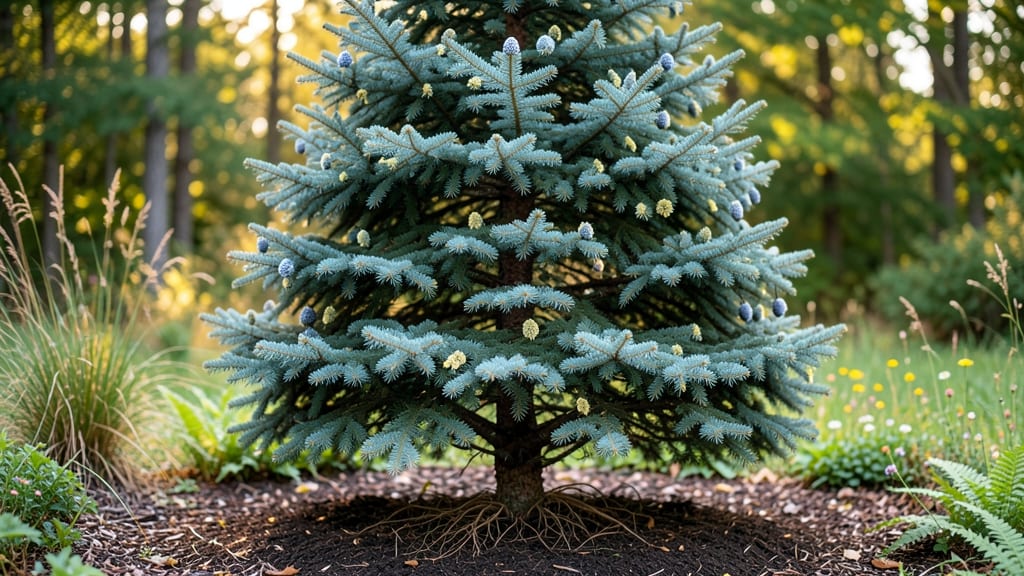
A cedar tree’s height can range from a modest 10 feet to towering over 100 feet, depending on the species and growing conditions—but how tall can a cedar tree grow really depends on the variety and where it’s planted.
If you’re dreaming of a fragrant evergreen hedge or a towering shade provider, the right cedar tree makes all the difference. But not all cedars play by the same rules—some stay low and bushy, while others shoot up like skyscrapers.
Let’s explore how tall your cedar can grow and what factors shape its future height.
From the Eastern Red Cedar, which typically reaches 30–40 feet, to the Atlas Cedar, which can soar past 60 feet, each variety has its own growth story.
Even dwarf cedars like the ‘Green Spire’ stay under 30 feet, making them perfect for small yards. Understanding these differences helps you pick the perfect fit for your space.
In this guide, you’ll discover exact height expectations by species, how sunlight, soil, and pruning influence growth, and even how to control a cedar’s size if it’s getting too tall. Ready to find your ideal 🌲?
Dwarf
8-15 ft
Container friendly
Semi-Dwarf
15-25 ft
Most popular
Standard
30-40 ft
Full orchard size
Cedar tree height by species: from dwarf to towering giants
Choosing the right cedar tree depends entirely on your space and vision. Some varieties stay under 15 feet, perfect for small yards, while others reach 100 feet or more, dominating large landscapes. The key is understanding each species' mature height and growth habits to avoid planting regrets.
Let’s explore the full range of cedar tree heights so you can pick the perfect fit for your garden.
Cedars belong to the Cupressaceae family and include junipers, cypresses, and true cedars. Their heights vary dramatically—some grow just 2 feet per year, while others shoot up 3 feet annually under ideal conditions.
Below, I’ve compiled a detailed comparison of 10+ cedar species, including their mature heights, growth rates, and spread, so you can make an informed decision.
⚠️ NON-NEGOTIABLE: Always check your local USDA hardiness zone before planting, as cold tolerance affects growth potential. Most cedars thrive in zones 4-9, but some, like the Deodar Cedar, prefer milder climates (zones 6-9).
Species
Mature Height (ft)
Mature Spread (ft)
Growth Rate (ft/year)
Best For
Eastern Red Cedar (Juniperus virginiana)
30–40 ft
15–25 ft
1–2 ft
Privacy screens, wildlife habitats
Atlas Cedar (Cedrus atlantica)
40–60 ft
20–30 ft
1–2 ft
Large landscapes, specimen trees
Deodar Cedar (Cedrus deodara)
100+ ft
30–50 ft
2–3 ft
Park settings, grand estates
'Green Spire' Cedar (Chamaecyparis lawsoniana)
20–30 ft
8–12 ft
6–12 in
Small gardens, container planting
'Blue Ice' Cedar (Thuja occidentalis)
10–15 ft
3–5 ft
4–6 in
Borders, hedges, small yards
Wichita Mountain Cedar (Juniperus ashei)
20–30 ft
10–15 ft
8–12 in
Drought-prone areas, wildlife
'Emerald Green' Arborvitae (Thuja occidentalis)
12–15 ft
3–4 ft
6–10 in
Hedges, foundation planting
'Sargentii' Cedar (Chamaecyparis pisifera)
30–40 ft
15–20 ft
1–2 ft
Specimen trees, large properties
'Glauca Globosa' Cedar (Thuja occidentalis)
8–12 ft
4–6 ft
4–6 in
Containers, bonsai-style gardens
'Columnaris' Cedar (Chamaecyparis nootkatensis)
30–50 ft
6–8 ft
1–2 ft
Narrow spaces, vertical accents
Factors that determine cedar tree height: soil, climate, and care
Cedar trees thrive under specific conditions, and their mature height depends heavily on soil quality, climate, and care practices.
For example, an Eastern Red Cedar in full sun with well-draining soil may reach 40 feet, while the same tree in partial shade or compacted soil could stay under 25 feet. Understanding these factors helps you predict—and control—growth to fit your landscape.
Sunlight exposure is the single biggest influencer on cedar height. Most varieties need 6+ hours of direct sun daily to reach their full potential. In low-light conditions, growth slows by 30–50%, resulting in shorter, denser trees. For instance, a Deodar Cedar (which can grow 100+ feet in ideal conditions) might only reach 60 feet in partial shade.
Growth Potential Score by Cedar Type
☀️ Full Sun (Max Height) | 🌿 Partial Shade (Reduced Height)
Cedar Type
Max Height (Full Sun)
Height Reduction (Partial Shade)
Eastern Red Cedar
40 ft
25–30 ft
Atlas Cedar
60 ft
40–45 ft
Deodar Cedar
100+ ft
60–70 ft
'Green Spire' Cedar
30 ft
20–25 ft
Soil type also plays a critical role. Cedar trees prefer slightly acidic to neutral soil (pH 6.0–7.5). In alkaline soil (pH 8.0+), nutrient uptake slows, stunting growth by 20–30%. To improve acidic soil, mix in peat moss or pine bark. For alkaline soil, add sulfur or composted leaves to lower pH gradually.
Watering habits affect height too. Young cedars need deep watering weekly, while mature trees tolerate drought once established. Overwatering leads to root rot, which weakens the tree and reduces height potential. For height control, reduce watering by 40%—this slows vertical growth without harming the tree.
Pruning techniques are the most direct way to manage cedar height. To stunt growth by 30%, prune new growth tips in late spring (after the last frost). Use clean cuts just above a leaf node to encourage bushier growth. For taller cedars, avoid heavy pruning—focus on shaping instead of height reduction.
Finally, climate matters. Cedar trees in USDA Zones 3–8 grow fastest due to longer growing seasons. In cooler zones (Zone 2), growth slows, and mature heights may be 10–20% shorter.
If you’re in a warmer zone (Zone 9+), cedars may grow faster but require more frequent pruning to maintain shape.