
How To
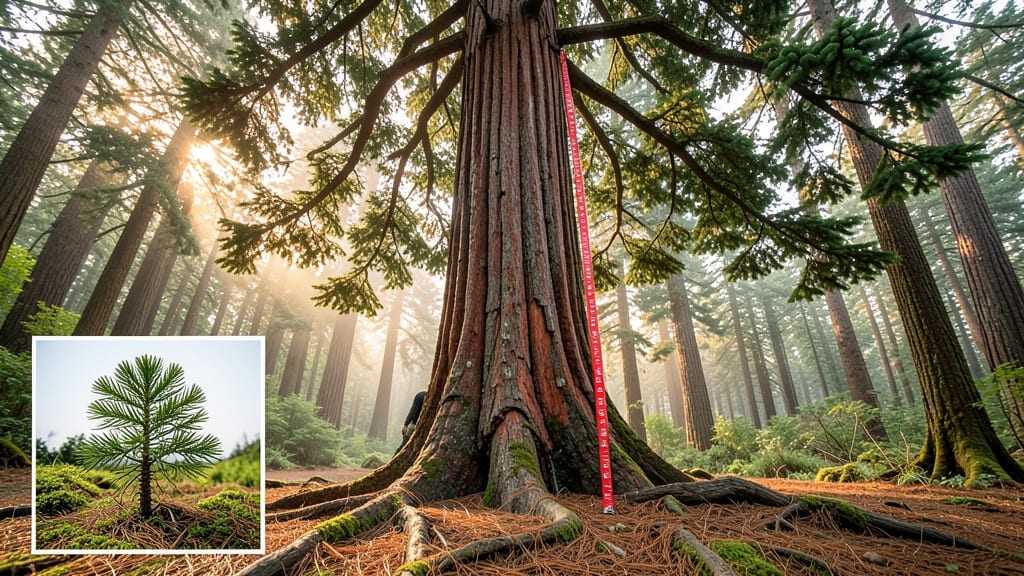
Sequoia tree height records: the tallest trees on Earth
When we talk about the tallest trees on Earth, sequoias immediately steal the spotlight. These ancient giants don’t just reach for the sky—they dominate it, often surpassing even the tallest human-made structures.
The coast redwood (Sequoia sempervirens) and giant sequoia (Sequoiadendron giganteum) hold the title for the most impressive heights, with some specimens stretching over 375 feet into the atmosphere.
The tallest known tree on Earth is Hyperion, a coast redwood located in California’s Redwood National and State Parks. Standing at a staggering 380.1 feet, Hyperion wasn’t just discovered until 2006, proving that even today, we’re still uncovering nature’s hidden wonders.
Its height is equivalent to a 30-story building stacked vertically, making it a true marvel of the natural world.
But Hyperion isn’t alone in its grandeur. Other sequoias like Helios (379.7 feet) and Icarus (379.4 feet) follow closely behind, all within the same grove. These trees aren’t just tall—they’re ancient, with some exceeding 2,000 years old.
Their sheer size challenges our understanding of what’s possible in the plant kingdom.
What makes these trees so extraordinary isn’t just their height but their growth rate. While they grow slowly—about 2 feet per year in ideal conditions—they can live for millennia, accumulating height over centuries.
This combination of lifespan and growth allows them to reach heights that dwarf most other trees, including the African baobab or eucalyptus.
To put their height into perspective, imagine stacking 11 school buses on top of each other. That’s roughly the height of Hyperion. These trees aren’t just breaking records—they’re redefining what’s possible in the plant world, and their existence reminds us of nature’s incredible capacity for growth and resilience.
While coast redwoods hold the record for height, giant sequoias like General Sherman take the crown for volume. Located in California’s Sequoia National Park, General Sherman is the largest tree by volume on Earth, with a massive trunk that could hold a 40-seat classroom inside.
Its height of 275 feet is impressive, but its base diameter of 36 feet and weight of over 2.7 million pounds make it a true giant in every sense.
What’s fascinating is how these trees achieve such unprecedented heights. Their success isn’t just about genetics—it’s a combination of optimal growing conditions, including high humidity, abundant rainfall, and well-draining soil.
The coastal fog that blankets redwood forests, for example, provides a constant moisture source, allowing these trees to grow taller without the stress of drought. In contrast, giant sequoias thrive in the
How sequoias grow so tall: the science behind their massive height
Sequoias achieve their staggering heights through a combination of genetic adaptations and environmental advantages that most trees simply can’t match. Their success starts with a shallow but expansive root system that spreads widely to anchor the massive trunk while absorbing water efficiently.
Unlike many trees that develop deep taproots, sequoias rely on their extensive lateral roots to stabilize against wind and gravity.
Their photosynthetic efficiency is another key factor—sequoias have evolved to maximize sunlight capture with needle-like leaves that reduce water loss while maintaining high chlorophyll production. This allows them to grow in cooler, foggy climates where other trees might struggle, giving them a competitive edge in their native habitats.
One of the most fascinating adaptations is their xylem structure. Sequoias have exceptionally wide vessel elements in their wood, allowing water to travel up the trunk at an astonishing rate.
This efficient transport system supports their rapid vertical growth, especially in their youth when they can add 3-5 feet per year under ideal conditions.
Compared to other trees, sequoias outpace even the fastest-growing species. While a redwood might grow 2-3 feet annually, a young sequoia can nearly double that rate.
Their genetic resilience to pests and diseases further eliminates growth bottlenecks that plague many other trees, letting them focus solely on reaching for the sky.
Their ability to thrive in cooler, foggy climates also plays a crucial role. Unlike tropical trees that rely on constant warmth, sequoias can photosynthesize efficiently in temperate zones, where many other species would struggle.
This adaptability, combined with their fire-resistant bark, allows them to dominate ecosystems for thousands of years.
For gardeners dreaming of growing sequoias, remember: their massive height requires space, patience, and the right conditions. While they won’t reach 300 feet in a backyard, providing well-draining soil, full sun, and protection from pests can encourage impressive growth—just on a smaller scale. 🌲