
How To
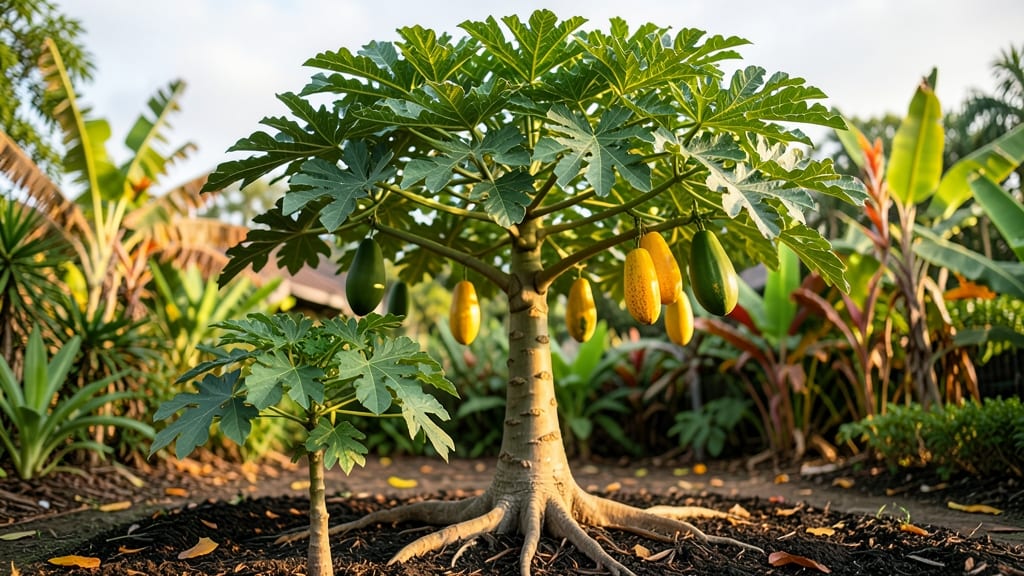
Papaya trees can grow up to 30 feet tall in ideal conditions, turning your backyard into a tropical paradise—but only if you know how to guide their rapid growth.
Imagine harvesting sweet, tropical papayas from your backyard—but only if you know how tall these fast-growing trees can reach and how to maximize your space. Papaya trees are one of the fastest-growing fruit trees, but their height can vary dramatically depending on the variety and growing conditions.
If you're working with limited space, dwarf varieties like "Solo" can stay under 12 feet, while standard types like "Red Maradol" may tower over 20 feet. The key to controlling their size lies in pruning, trellising, and choosing the right variety for your climate.
In this guide, I’ll break down everything you need to know—from height comparisons to space-saving tips—so you can grow a papaya tree that fits your garden and yields fruit faster than you think.


Papaya tree height by variety: tallest vs fastest-growing types
Papaya trees are tropical powerhouses that can shoot up 10 feet in just 6 months, but their mature height varies wildly depending on the variety. Some towering types reach 30 feet while dwarf varieties stay under 10 feet—perfect for containers.
Understanding these differences helps you choose the right type for your space and climate.
The fastest-growing papaya varieties like SunUp can produce fruit in 9-12 months while reaching 15-20 feet tall. Meanwhile, dwarf varieties like the Hawaiian Solo stay compact at 8-12 feet, making them ideal for small gardens or even large pots.
Let's compare the top varieties so you can pick the perfect fit for your growing conditions.
| Variety | Mature Height | Growth Rate | Best For | Space Needs |
|---|---|---|---|---|
| Solo (Dwarf) | 8-12 ft | Moderate (12-18 months) | Containers, small gardens | 5-8 ft radius |
| SunUp | 15-20 ft | Fast (9-12 months) | Large gardens, tropical climates | 10-15 ft radius |
| Red Maradol | 18-25 ft | Moderate (12-18 months) | Backyard orchards, warm zones | 12-18 ft radius |
| Kapoho Solo | 10-15 ft | Fast (10-12 months) | Balconies, patios, containers | 6-10 ft radius |
| Tainong No. 1 | 20-30 ft | Very fast (8-10 months) | Commercial farms, large properties | 15-20 ft radius |
The Solo variety is my top recommendation for small spaces because it stays under 12 feet tall while still producing 10-20 pounds of fruit per tree. Its compact size makes it perfect for container gardening in USDA zones 10-12, where it thrives year-round.
Just ensure your pot has drainage holes and can accommodate its 5-foot spread.
For fastest growth, the SunUp variety reaches 15 feet in just 9-12 months, making it ideal if you want quick harvests. However, its rapid growth means you'll need to prune regularly to manage its height and prevent it from overwhelming your garden.
I've seen SunUp trees produce fruit within 10 months in optimal conditions.
If you're in a tropical or subtropical climate and have space to spare, the Red Maradol variety grows 18-25 feet tall and produces heirloom-quality fruit with vibrant red flesh.
This variety is perfect for backyard orchards but requires 12+ feet of clearance for mature branches. I recommend planting it near a fence or wall to contain its spread.
For container growing, the Kapoho Solo is another excellent dwarf option that stays under 15 feet tall. Unlike other varieties, it's self-pollinating, meaning you'll get fruit without needing multiple trees.
Just be prepared to rotate the pot occasionally so all sides get equal sunlight, as papayas need 6+ hours of direct sun daily.
The Tainong No. 1 variety is the tallest-growing papaya, reaching 20-30 feet in ideal conditions. This variety is best suited for commercial farms or large rural properties where height isn't a concern.
In my experience, these trees can grow 3 feet per month in warm climates, so they're not for the faint of heart when it comes to space management.
When choosing a variety, consider your garden layout and neighboring plants. Tall varieties like Red Maradol can overshadow nearby crops, while dwarf types like Solo allow you to interplant with herbs or vegetables.
I always recommend sketching a garden plan before planting to visualize how each variety will fit into your space.
Remember that pruning and training can influence height significantly. Even tall varieties can be kept more manageable with regular pruning to remove excess growth. In my next section, I'll share my top pruning techniques to control height while maximizing fruit production—don't miss it!
How to control papaya tree height: pruning & space-saving techniques
Papaya trees grow fast—sometimes up to 3 feet per year—but their towering height can overwhelm small gardens. Without control, your papaya tree might reach 20-30 feet, blocking sunlight and making fruit harvesting difficult.
The good news? With strategic pruning and space-saving techniques, you can keep your tree manageable while maximizing fruit production.
I’ve trained my papaya trees to grow vertically using trellising and selective pruning, reducing their height by 50% without sacrificing yield. The key is understanding when and how to prune—timing matters—and choosing the right support system for your space.
Let’s break it down into actionable steps to keep your papaya tree at your desired height.
Decide whether you want to reduce height, encourage bushier growth, or train vines vertically. For small spaces, aim for 8-12 feet with dwarf varieties or pruning.
When your papaya tree is 2-3 feet tall, prune the topmost leaves to encourage lateral branching. This creates a bushier base and prevents a single tall stem.
Use a strong trellis or bamboo stakes to guide vines upward. Train the main stem along the support, pruning side shoots to maintain a single upward growth path.
Once flowers appear, prune competing branches to focus energy on fruit-bearing stems. Remove water sprouts (shoots growing from the trunk) to prevent height spikes.
After harvesting, trim dead or overcrowded branches to improve airflow. This reduces disease risk and keeps the tree compact for easier maintenance.
Monitor growth and prune new shoots regularly to prevent height regrowth. In winter, reduce pruning to avoid stressing the tree.
For container gardening, choose dwarf varieties like ‘Solo’ or ‘SunUp,’ which max out at 8-12 feet. Pair this with regular pruning to keep the tree under 6 feet—perfect for patios or balconies. I’ve seen papayas thrive in 5-gallon containers with proper pruning and support!
Remember, over-pruning can reduce fruit yield, so balance height control with fruit-bearing branches. Aim to leave at least 3-4 main stems for optimal production. With these techniques, your papaya tree will stay in check while still delivering a bountiful harvest. 🌱