
Pruning
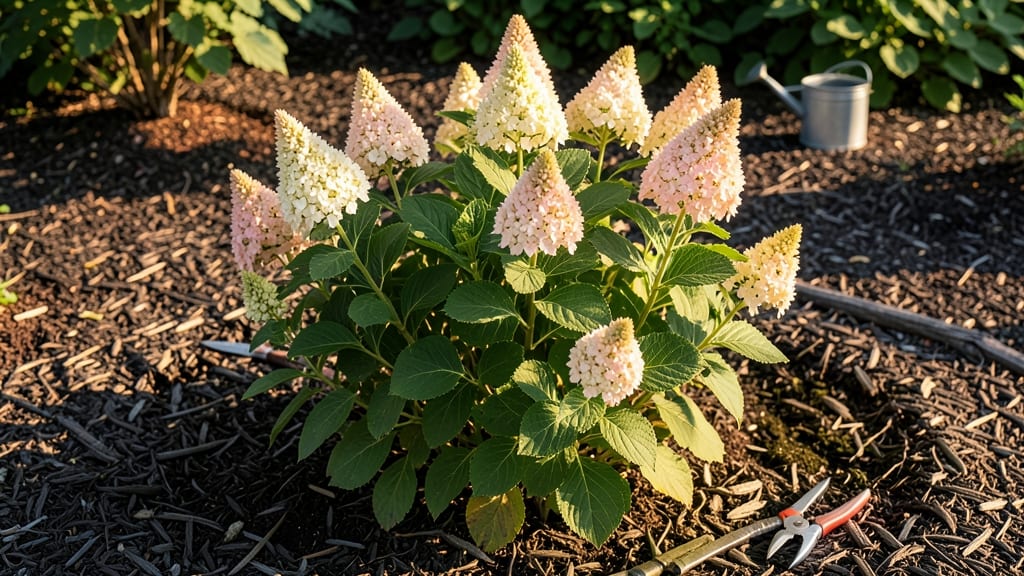
Panicle hydrangea tree care thrives when you prune them right—not just when you think you should. 🌿 The key is understanding their unique blooming cycle, which means cutting back at the right time to guarantee those showstopping summer blooms that last until frost.
I’ve spent years perfecting this, and the difference between a leggy, sparse tree and one bursting with football-sized clusters comes down to timing, technique, and a little seasonal TLC.
These trees reward patience with long-lasting blooms that start as lime-green buds in summer and deepen to pink, red, or cream by fall. The secret?
Pruning in late winter or early spring—right before new growth begins—while avoiding the urge to trim in fall, which can remove next year’s flower buds. You’ll also want well-draining soil, 6+ hours of sun, and consistent moisture, especially during their first two years.
Skip the heavy-handed pruning, and you’ll end up with a tree that outperforms shrub varieties in both size and bloom power.
By summer’s end, you’ll have a tree that stays lush even through droughts and resists common pests like aphids. The blooms won’t just be bigger—they’ll last weeks longer than hydrangeas pruned at the wrong time. And the best part?
You can shape it into a small tree, multi-stem shrub, or even a hedge without sacrificing those bold, architectural blooms. Let’s get into the exact steps that’ll transform your hydrangea from “meh” to “wow” next season.
Fair warning: If you’ve ever pruned hydrangeas and ended up with bare branches or sparse blooms, this is where it gets interesting. We’ll cover how to revive over-pruned trees, spot early signs of stress, and adjust your approach based on your climate.
(Yes, I’ve killed one too—twice.) The goal isn’t perfection; it’s confident, repeatable results that make your neighbors ask, “What’s your secret?”
📚 In This Guide
- What you need
- Instructions
- Tips and common mistakes
- Wrapping up and next steps
What you need
- ● Pruning shears: Sharp, bypass-pruners (4-6 inches) for clean cuts on small branches.
- ● Loppers: For thicker branches (8-12 inches), with a ratchet or bypass blade for precision.
- ● Pruning saw: Bow or folding saw for branches over 1.5 inches in diameter.
- ● Gloves: Heavy-duty, gardening gloves (waterproof, reinforced palms) to protect from thorns and sap.
- ● Disinfectant: 70% rubbing alcohol or diluted bleach solution (1 part bleach to 9 parts water) to sterilize tools between cuts.
- ● Rake or broom: For clearing debris after pruning.
- ● Mulch: 2-3 inches of organic mulch (e.g., shredded bark or wood chips) to retain moisture and suppress weeds.
- ● Watering can or hose: With a gentle spray nozzle for post-pruning hydration.
- ● Hand pruners: Compact, for detailed trimming in tight spaces.
- ● Extension pole: Attaches to loppers/shears for high branches (10-15 ft reach).
- ○ Tree wound dressing: Pruning paste (optional; only for large cuts to prevent disease).
- ● Plant food: Balanced fertilizer (10-10-10 or slow-release granules) for post-pruning growth.
- ● Safety gear: Safety glasses and long sleeves if working near power lines or dense foliage.
- ● Knowledge: Familiarize yourself with panicle hydrangea’s growth habits and pruning timeline (late winter/early spring is ideal!).
- ● Weather check: Prune on a dry, overcast day (or morning) to reduce stress on the tree.
- ● Tree health: Inspect for diseases (e.g., powdery mildew) or pests before pruning.
Step-by-step instructions for year-round panicle hydrangea tree care
Master this pruning schedule and your panicle hydrangea will reward you with bold, summer-long blooms.
✂️ Step 1: Late Winter Pruning (Before Bud Break)
Timing is everything with panicle hydrangeas—prune when the tree is still dormant but buds are just swelling, typically late February to early March in most climates. This is when the tree's energy is focused on new growth, not protecting existing buds. I always check for tight, plump buds along the stems before making any cuts.
Start by removing any dead, diseased, or crossing branches first—they'll compete with healthy growth. Use clean, sharp pruners to make cuts just above a bud that faces outward on the branch. This encourages an open, airy structure that prevents fungal issues. Never cut into old wood (last year's growth) unless you're shaping the tree's overall form, as panicle hydrangeas bloom on both old and new wood.
☀️ Step 2: Summer Pruning (After First Blooms Fade)
About 6-8 weeks after flowering, when the first blooms have faded but new buds are forming, it's time for your second pruning. This is where you shape the tree for next year's display. Look for branches that grew too long or produced weak flowers—these are your targets. I like to step back and assess the tree's natural shape before making any cuts.
Remove up to one-third of the oldest stems at the base to encourage vigorous new growth. For remaining branches, cut back to just above a leaf bud or lateral branch. Never remove more than 25% of the tree's total growth in one season, or you'll stress the plant. After pruning, give the tree a light watering to help it recover from the shock.
🌿 Step 3: Light Maintenance Pruning (Fall and Spring)
In early spring, do a quick inspection for any winter damage or weak growth. Remove any branches that look mushy, discolored, or have died back completely. This prevents pests and diseases from taking hold. I also check for any suckers growing at the base—these compete with the main tree for nutrients and should be removed immediately with a clean cut.
In late fall, after the first hard frost but before the ground freezes, do one final light pruning. Remove any deadheading that might harbor pests over winter. Reduce watering but keep the soil moist—panicle hydrangeas are drought-tolerant once established, but they still need consistent moisture to develop strong buds for next year. Mulch around the base with 2-3 inches of organic mulch to protect roots from temperature swings.
⏰ Step 4: Year-Round Monitoring for Health
Panicle hydrangeas thrive when you pay attention to their leaf color and growth rate. Yellowing leaves usually mean overwatering or poor drainage, while brown, crispy edges signal underwatering or too much sun. I check my trees weekly during growing season for any signs of stress—early intervention makes all the difference.
Watch for aphids or spider mites, which love the tender new growth. A strong spray of water often dislodges them, but for serious infestations, use an insecticidal soap. Avoid chemical fertilizers—they can burn roots and reduce flower quality. Instead, use a balanced, slow-release fertilizer in early spring, following package instructions for application rates. This keeps the tree fed without overwhelming it.
Tips & tricks for perfect panicle hydrangea tree care
These practical strategies will transform your pruning routine into a year-round maintenance plan that keeps your hydrangea thriving.
Timing is Critical: The late winter pruning window of late February to early March is non-negotiable for panicle hydrangeas. This timing ensures you're cutting just as the tree's energy shifts from dormancy to new growth. I've learned the hard way that cutting too early can remove flower buds that form on old wood, while waiting too long risks damaging emerging growth. Look for those tight, plump buds as your cue—when they're swollen but haven't yet opened, it's time to prune.
Pruning Technique Matters: When making cuts in Step 1, always aim for just above an outward-facing bud. This creates an open canopy that allows sunlight and air circulation to reach all parts of the tree, preventing fungal diseases. I use a simple trick: after making the cut, look at the branch from above—you should see the bud pointing toward the outside of the tree. For thicker branches, make the cut at a slight angle to prevent water from pooling on the wound.
Summer Pruning Secrets: The 6-8 week window after flowering is your opportunity to shape the tree for next year's display. Here's what I do: first, remove any branches that grew too long or produced weak flowers. Then, focus on removing up to one-third of the oldest stems at the base—this might sound drastic, but it's what encourages that vigorous new growth you want. For remaining branches, cut back to just above a leaf bud or lateral branch, which gives you more flexibility in shaping the tree's form.
Year-Round Monitoring: Weekly checks during growing season are your best defense against pests and diseases. I've found that yellowing leaves almost always indicate overwatering or poor drainage, while brown, crispy edges signal underwatering or too much sun. For pest control, I've had great success with a simple spray of water to dislodge aphids and spider mites from the tender new growth. Remember, prevention is always easier than treatment when it comes to plant health.
Pro Tips for Panicle Hydrangea Tree Care
- These practical strategies will transform your pruning routine into a year-round maintenance plan that keeps your hydrangea thriving.
- Timing is Critical: The late winter pruning window of late February to early March is non-negotiable for panicle hydrangeas.
- Pruning Technique Matters: When making cuts in Step 1, always aim for just above an outward-facing bud.
Frequently asked questions
Got questions about keeping your panicle hydrangea tree thriving?
You’re not alone! Whether you’re a first-time gardener or a seasoned pruner, these answers will help you master year-round care for stunning, long-lasting blooms.
When is the best time to prune panicle hydrangeas for maximum flowers?
Prune late winter or early spring (February–March)—before new growth starts—to encourage bigger, fuller blooms. Avoid pruning in fall, as it removes next year’s flower buds. For light shaping, you can trim dead or overgrown branches after blooming, but keep it minimal to avoid sacrificing next season’s flowers.
Can I prune panicle hydrangeas in summer? What’s the risk?
Yes, but only for maintenance—never heavy pruning! Summer cuts remove flower buds for next year, so stick to trimming dead, diseased, or overly leggy branches. If you must shape, do so after blooming (late summer) and avoid cutting more than 1/3 of the plant at once.
Why aren’t my panicle hydrangeas blooming as much as they used to?
Common culprits:
- Over-pruning: Cutting too late (fall/winter) or too aggressively removes flower buds.
- Poor sunlight: These trees need full sun (6+ hours/day) for optimal blooms.
- Underwatering: Drought stress weakens growth—keep soil consistently moist (but not soggy).
- Old wood decline: Panicle hydrangeas bloom on new and old wood; if the tree is mature, renewal pruning (cutting back 1/3 of oldest stems) can revive it.
Are there any alternatives to panicle hydrangeas for low-maintenance blooms?
If you love the easy-care, long-blooming vibe of panicle hydrangeas, try:
Yellow leaves usually signal:
My panicle hydrangea leaves are yellowing—what’s wrong?
Wrapping up and next steps
Caring for your panicle hydrangea tree is all about timing, precision, and patience—and with the right techniques, you’ll be rewarded with stunning, long-lasting blooms for years to come! 🌸 From seasonal pruning to proper watering and soil prep, these steps ensure your tree stays healthy and vibrant.
Now that you’re armed with the know-how, roll up your sleeves and give your hydrangea the love it deserves—your future blooms will thank you!
Ready to take the next step? Grab your pruners, mark your calendar for seasonal checks, and enjoy the process of nurturing this beautiful tree. Happy gardening! 🌿