
Pests and Diseases
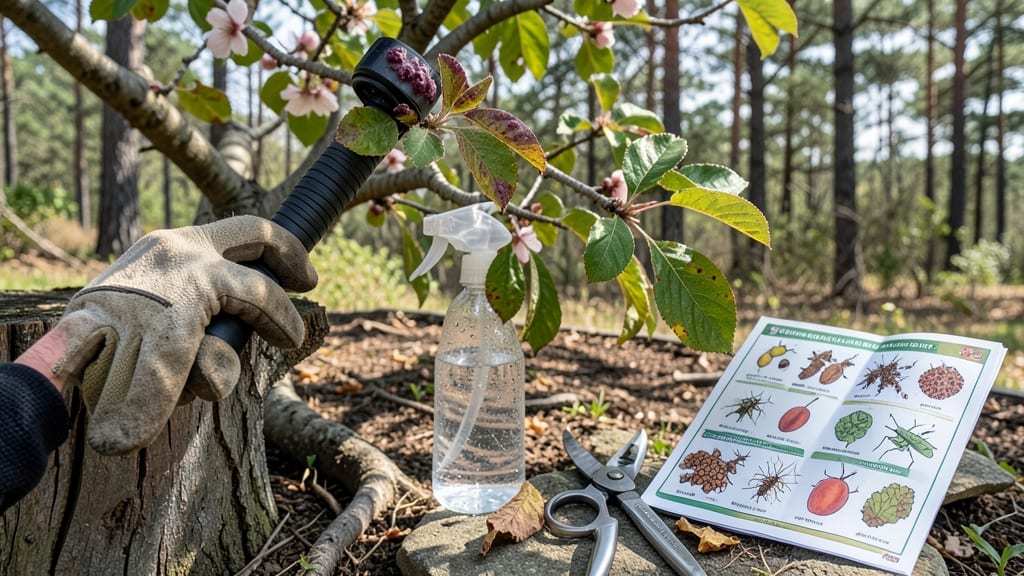
Red bumps on peach tree leaves mean your tree is fighting fungal spot—and it’s fixable. 🌿 I’ve seen this mess turn into a full-blown crisis when ignored, but with the right approach, your tree can bounce back stronger than ever.
The key is acting fast before the spots spread to the fruit or weaken the whole tree.
These red or purple bumps are usually fungal spores, often from peach leaf curl or rust. Scale insects or mites can also cause similar bumps, but the fungal version spreads like wildfire in damp spring weather.
The good news? Organic treatments like neem oil, copper fungicide, or baking soda spray can stop it in its tracks—if you catch it early.
Start by pruning infected leaves and applying a fungicide spray every 10-14 days until new growth appears. For prevention, improve airflow around the tree and water at the base (never overhead) to keep leaves dry.
A single season of neglect can turn a healthy tree into a shadow of itself—don’t let that happen.
This works for home orchards, backyard peach trees, and even container-grown varieties. The sooner you act, the less damage you’ll see—and next year, your tree could be bump-free and thriving. Let’s get to work before the spots take over.
Root Causes of Leaf Bumps
When you spot red bumps on peach tree leaves, it’s rarely a coincidence—these telltale signs usually point to a specific stressor or pathogen at work. Understanding the why behind these bumps is the first step toward restoring your tree’s health.
Below, we break down the most common culprits, their triggers, and what makes your peach tree vulnerable. 🌿🔍
Fungal pathogens are the #1 reason peach tree leaves develop red bumps, often accompanied by discoloration or spotting. These fungi thrive in humid, warm conditions and exploit weak spots in the tree’s defenses.
- Peach Leaf Curl (Taphrina deformans):
This fungal disease causes reddish-purple, thickened bumps on leaves, often curling the edges. It overwinters in buds and spreads via rain splashes in early spring (before leaves emerge). Peach trees are especially susceptible because their thin leaves provide easy entry points.
- Anthracnose (Colletotrichum spp.):
While anthracnose typically causes dark sunken spots, some strains produce reddish raised bumps with a velvety texture. It attacks during prolonged wet periods and thrives in overcrowded orchards with poor airflow.
- Rust Fungi (Tranzschelia spp.):
Rust infections create orange-red pustules (bumps) that rupture and release spores. These fungi require alternate hosts (like blackberry bushes) to complete their lifecycle, often spreading via wind or contaminated tools.
💡 Pro Tip: Fungal bumps worsen in wet springs or after heavy pruning (which opens wounds). If you see white powdery residue on the undersides of leaves, it’s a red flag for fungal activity.
Not all bumps are fungal—some are physical wounds from insects feeding or laying eggs. These pests chew, pierce, or inject saliva into leaves, triggering a defensive response (like gumming or reddened tissue).
- Peach Leaf Curling Mite (Eriophyes spp.):
These microscopic mites burrow into leaf tissue, causing reddish, puckered bumps (often on new growth). They thrive in hot, dry conditions and spread rapidly in unpruned trees.
- Japanese Beetles (Popillia japonica):
Adult beetles skeletonize leaves, but their larvae (grubs) damage roots, stressing the tree. Stressed trees may develop reddish necrotic bumps as a secondary symptom.
- Scale Insects (e.g., San Jose Scale):
These sap-sucking pests create hard, raised bumps (their protective shells) on leaves and stems. Heavy infestations lead to yellowing and premature leaf drop, weakening the tree’s immunity.
🔥 Watch For: Tiny black frass (feces) or sticky honeydew on leaves—signs of active pest feeding. Unlike fungi, pest bumps often move or multiply over days.
Sometimes, red bumps aren’t caused by pathogens or pests but by external stressors that disrupt the tree’s physiology. These issues don’t spread but can still harm your peach tree if ignored.
| Stressor | How It Causes Bumps | Key Signs |
|---|---|---|
| Extreme Heat or Sunburn | Intense sunlight damages leaf cells, triggering reddish, crinkled bumps (similar to scald). Common in young trees or those suddenly moved to full sun. | Bumps appear on upper leaf surfaces; often paired with white or brown patches. |
| Nutrient Deficiencies | Low magnesium (Mg) or zinc (Zn) causes interveinal reddening and bumpy texture. Peach trees need these minerals for chlorophyll production. | Bumps paired with yellowing between veins (chlorosis). Check soil pH—alkaline soil (pH >7) locks out Mg. |
| Herbicide Drift | Chemicals like 2,4-D (a common weed killer) can mimic fungal symptoms, causing red, raised bumps and leaf distortion. | Bumps appear suddenly on all leaves; no fungal spores present. |
| Physical Injury (Hail, Tools) | Impact damage ruptures cells, leading to reddish calloused bumps as the tree heals. Common after late-spring hail. | Bumps have irregular shapes and may ooze sap initially. |
✨ Quick Check: If bumps appear only on one side of the tree (e.g., facing a neighbor’s yard), suspect herbicide drift or directed pest spray.
Now that you know the why, the next step is identifying which cause matches your tree’s symptoms. See our diagnostic guide to narrow it down before treating.
How to Fix Leaf Bumps Naturally
Now that you’ve identified the culprit behind those pesky red bumps on your peach tree leaves—whether it’s peach leaf curl, rust fungus, mite infestations, or nutrient stress—it’s time to roll up your sleeves and restore your tree’s health.
The good news? Most of these issues can be tackled with organic, non-toxic solutions that won’t harm pollinators or your family. Below, we’ve mapped out targeted fixes for each cause, plus prevention tips to keep your tree thriving long-term.
Fungi thrive in damp, cool conditions, so the key is disrupting their lifecycle while boosting your tree’s defenses.
🔥 Step 1: Prune and Remove Infected Leaves
- 🔪 Trim away any leaves, shoots, or branches with reddish-orange pustules (rust) or thickened, curled leaves (leaf curl).
- 🗑️ Bag and dispose of pruned material in the trash (not compost)—fungi can survive and reinfect.
- ✂️ Sterilize pruners with rubbing alcohol or a 10% bleach solution (1 part bleach to 9 parts water) to prevent spreading spores.
🍳 Step 2: Apply Organic Fungicides
Use these preventive sprays before symptoms appear (early spring is critical for leaf curl):
- 🌿 Copper fungicide (e.g., Bordeaux mixture or copper soap): Spray every 7–10 days during rainy or humid periods. Caution: Avoid spraying when bees are active.
- 🍄 Neem oil (1–2% solution): Fungicidal and miticidal.
Mix 1 tbsp neem oil + 1 tsp mild soap + 1 quart water, then spray undersides of leaves (where fungi hide). - 🍎 Baking soda spray: For rust, blend 1 tbsp baking soda + 1 tsp oil + 1 quart water.
Spray weekly in dry conditions.
🌡️ Step 3: Improve Airflow and Drainage
- 🌳 Thin out dense branches to allow sunlight and air to circulate.
- 💧 Water at the base (not overhead) to keep leaves dry.
Early morning watering helps leaves dry faster. - 🪴 Mulch with wood chips (2–3 inches deep) to regulate soil moisture and temperature.
Tiny mites suck sap, causing stippling, reddening, or webbing on leaves. Knock them out with these gentle but effective methods.
👨🍳 Step 1: Blast Off Mites with Water
- 💦 Use a strong hose (not pressure-washer force) to knock mites off leaves in early morning or late evening.
- 🌧️ Repeat every 3–5 days for severe infestations.
🍯 Step 2: Spray Natural Miticides
- 🌿 Neem oil (as above) disrupts mites’ life cycle. Reapply every 5–7 days until mites disappear.
- 🍋 Horticultural oil (e.g., refined soybean oil): Mix 1 tbsp oil + 1 tsp soap per quart of water.
Spray evenly, covering undersides. - 🌶️ Hot pepper wax spray: Blend 1 tbsp cayenne pepper + 1 tbsp dish soap + 1 gallon water. Sprays irritate mites’ exoskeletons.
🐝 Step 3: Introduce Beneficial Predators
- 🕷️ Ladybugs and predatory mites (e.g., Phytoseiulus persimilis) eat spider mites. Buy from garden centers or online.
- 🌿 Plant companion flowers like marigolds or dill to attract mite-eating insects.
If red bumps are due to zinc, magnesium, or iron deficiency, your tree needs a quick nutrient boost.
📊 Step 1: Test Your Soil
- 🧪 Use a home soil test kit (or send a sample to a local extension office) to confirm deficiencies.
- 🔍 Common culprits: Compacted soil (poor drainage), high pH (locks out iron/zinc), or over-fertilizing with nitrogen.
💪 Step 2: Amend Soil Organically
- 🪴 For zinc/magnesium: Mix 1 cup of Epsom salt (magnesium sulfate) + 1 tbsp zinc sulfate per gallon of water.
Water deeply monthly in early spring. - 🍂 For iron deficiency (chlorosis): Apply chelated iron or iron sulfate as a soil drench or foliar spray. - 🌱 Loosen soil with a garden fork to improve root access to nutrients.
🎯 Step 3: Adjust Watering Practices
- 💧 Water deeply but infrequently (1–2 inches per week) to encourage deep root growth.
- ⚠️ Avoid soggy soil—fungi and mites love damp conditions!
Stop red bumps before they start with these proactive strategies:
💡 Early Spring Prep (Before Bud Break)
- 🍄 Spray dormant trees with copper fungicide or neem oil to prevent leaf curl and rust.
- ✂️ Prune in late winter to remove weak branches and improve airflow.
🌡️ Season-Long Care
- 🌿 Monitor leaves weekly for early signs of pests/diseases.
- 🐝 Avoid broad-spectrum pesticides—they kill beneficial insects that control mites.
- 🍂 Clean up fallen leaves in autumn to remove fungal spores.
🌱 Soil Health Boost
- 🪴 Add compost (2–3 inches) around the tree’s drip line annually.
- 🌿 Mulch with straw or wood chips to retain moisture and regulate temperature.
With consistent care, your peach tree can bounce back stronger than ever! Start with one or two solutions based on your tree’s specific issue, then layer in preventive habits to keep it healthy.
Remember: Patience is key—some fixes (like soil amendments) take time to show results, but your efforts will pay off in juicier peaches and lush foliage next season.
Got a stubborn case? Double-check your diagnosis (sometimes issues overlap!) and adjust your approach. Happy gardening! 🌳🍑
Frequently asked questions
Are red bumps on peach leaves always caused by fungus?
No, red bumps can come from fungal infections (like peach leaf curl or rust), pest damage (such as mites or scale insects), or even environmental stress like nutrient deficiencies or herbicide exposure. The key is checking for other symptoms: fungal bumps often appear with curling or powdery residue, while pest bumps may have tiny webs or honeydew.
How can I tell if my peach tree has mites or fungus?
Look closely: mite damage often shows up as tiny stippled red spots with webbing, while fungal bumps are usually larger, raised pustules that may ooze spores. Check leaf undersides—mites love hiding there, while fungi often leave a white powdery coating. A magnifying glass helps spot the difference!
Will pruning infected leaves help stop the spread?
Pruning removes the source of fungal spores and pests, but sterilize your tools first with rubbing alcohol or bleach solution. Bag the clippings (don't compost them) and dispose of them immediately—this breaks the disease cycle and prevents reinfection.
Can I use store-bought fungicides on my peach tree?
Yes, but choose organic options like copper fungicide or neem oil to protect pollinators. Avoid synthetic chemicals during bloom—wait until after flowering to apply. Always follow label instructions for safety and effectiveness, and reapply every 10-14 days during wet conditions.
How long does it take to see improvement after treatment?
With consistent care, you may see new growth within 2-4 weeks, but severe cases can take 6-8 weeks to fully recover. Monitor your tree weekly and reapply treatments if conditions (like rain) wash them away. Patience is key—trees heal gradually, especially after fungal stress.