
Pruning
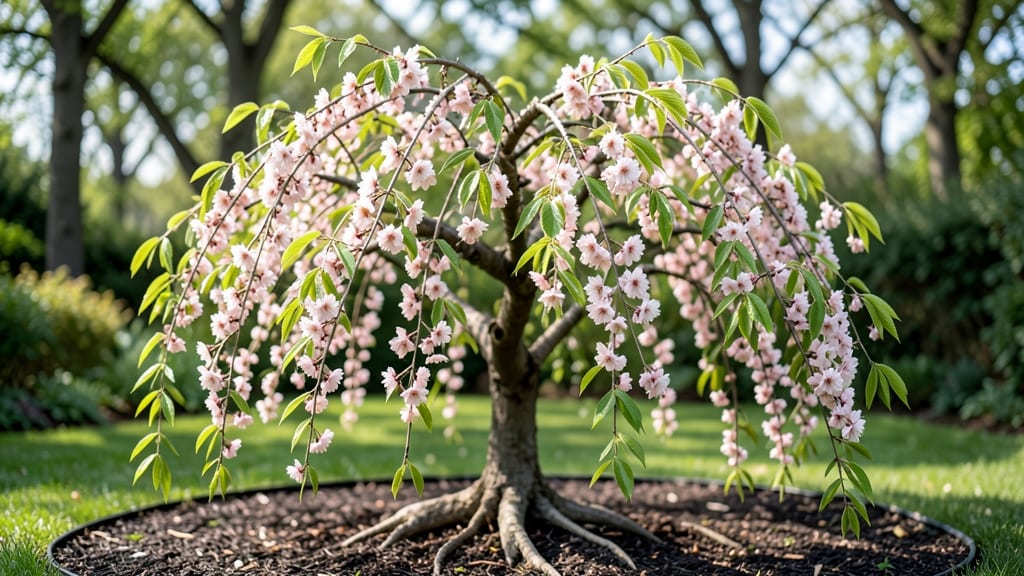
Growing a weeping peach tree in zone 5 taught me that patience and precision turn a delicate branch into a fruit-bearing masterpiece. 🌸 The key isn't just choosing the right variety—it's understanding how cold snaps and summer heat shape its growth.
My first tree nearly lost its branches to winter, but after learning the proper pruning rhythm, it now produces sweet peaches every July.
These trees thrive in zones 5 through 9, where they can handle winters down to -20°F—though younger trees need winter protection. The secret lies in late-winter pruning (just before buds swell) to remove damaged wood while encouraging strong new growth.
Well-drained soil rich in organic matter and 6+ hours of sunlight daily are non-negotiable for fruit production.
What you’ll get is a tree that combines beauty and bounty: cascading branches heavy with blooms in spring, followed by juicy peaches in summer. The trade-off? They’re frost-sensitive when flowering, so watch for late frosts and be ready to protect blossoms with row covers or a sprinkler system.
For zone 5 gardeners, choose cold-hardy varieties like 'Bonanza' or 'Reliance' and plant on a south-facing slope to maximize warmth. In hotter zones (7-9), focus on shade protection during peak summer heat to prevent sunburn on fruit.
The payoff? A tree that outlasts most fruit varieties and rewards you with years of harvests.
📚 In This Guide
- What you need
- Instructions
- Tips and common mistakes
- Wrapping up and next steps
What you need
- ● Pruning shears: Bypass-style (sharp, 6–8" blades) for clean cuts. Quantity: 1 pair.
- ● Loppers: Bypass or anvil (for thicker branches, 12–16" handles). Quantity: 1 pair.
- ● Pruning saw: Curved-tooth (for branches >1.5" thick). Quantity: 1.
- ● Disinfectant: 70% isopropyl alcohol or bleach solution (1:9 bleach:water) to sterilize tools. Quantity: Small spray bottle.
- ● Gloves: Heavy-duty, cut-resistant (gardening or pruning-specific). Quantity: 1 pair.
- ○ 5-in-1 pruning tool: Optional but handy for small cuts and sawing. Quantity: 1 (if desired).
- ● Sealing wax: Tree wound sealant (for large cuts; quantity: Small jar).
- ● Tarp or drop cloth: To protect surfaces from debris. Quantity: 1.
- ● Ladder: Sturdy, extendable (if tree exceeds 8–10 ft). Quantity: 1.
- ● Notebook/pencil: To sketch pruning plans or note branch IDs.
- ● Safety gear: Sunglasses, long sleeves (for protection).
- ● Know your USDA Hardiness Zone (Weeping Peach thrives in Zones 5–8).
- ● Check the weather forecast: Prune on a dry, cloudy day (avoid frost or extreme heat).
- ● Gather tree history: Review past pruning notes (if available) or observe branch structure.
Pruning secrets for cold-hardy weeping peach trees
Cold-hardy peach varieties need strategic pruning to survive winter and thrive in colder zones. Here’s how to shape your weeping peach for maximum fruit production and resilience.
✂️ Step 1: Prune Dormant Branches in Early Spring
Wait until late winter or early spring—after the last hard frost but before buds swell—when the tree is still dormant. This timing prevents bleeding sap and minimizes stress. Start by removing dead, diseased, or crossing branches first; these compete with healthy growth and invite pests. Use clean, sharp pruners to make cuts just outside the branch collar (the swollen area where the branch meets the trunk).
Next, thin out excessive vertical branches to open the canopy. Weeping peaches benefit from an airy structure that lets sunlight reach inner branches. Aim to remove no more than 25% of the tree’s total branches in one season—over-pruning weakens the tree’s ability to recover. Look for branches growing toward the center; these create dense areas where fruit rots and pests hide.
☀️ Step 2: Shape for Light Penetration and Fruit Access
Weeping peaches need 6-8 hours of sunlight daily, so prune to encourage an open, vase-like shape. Focus on selective heading cuts—shortening branches by ⅓ to ½ their length—to promote lateral branching. Avoid heavy cuts on young trees; they’re still establishing roots. Instead, guide growth by trimming the tips of upward-growing branches to redirect energy toward horizontal limbs where fruit develops.
Pay special attention to the lower scaffold branches (the main structural limbs). These should be spaced 12-18 inches apart along the trunk. If a branch is too close to another, remove the weaker one to prevent rubbing and bark damage. Use a 3-inch rule: if a branch is smaller than your thumb, it’s too small to bear fruit and can be pruned back or removed entirely.
🌿 Step 3: Summer Pruning for Fruit Quality and Pest Control
After the first flush of fruit sets (around late spring to early summer), do a light pruning pass to improve air circulation and fruit quality. Remove suckers (vigorous shoots growing from the base or roots) and water sprouts (fast-growing vertical shoots). These drain energy from fruit production. Thin out excessive fruit clusters—leave 6-8 inches between clusters to prevent overcrowding, which leads to small, poor-quality fruit.
Watch for dieback (dead or brown branches) caused by cold damage or disease. Cut these out immediately, then disinfect your pruners with 70% rubbing alcohol to prevent spreading pathogens. If you notice aphids or mites clustering on new growth, prune affected branches below the infestation to reduce their spread. Healthy weeping peaches have smooth, green bark and no excessive leaf drop—signs your pruning is working.
⏰ Step 4: Winter Protection for Cold-Hardy Varieties
Before the first hard freeze (typically November-December in most cold zones), apply a 2-3 inch layer of mulch around the base of the tree, keeping it 6 inches away from the trunk. Use straw or shredded bark—they insulate roots better than wood chips. For young trees or especially cold-hardy varieties, wrap the trunk and scaffold branches with burlap or tree wrap to prevent sunscald and frost cracks.
If your zone experiences extreme cold (below -10°F), consider wrapping the entire canopy with frost cloth for the first few winters. Weeping peaches are more vulnerable to cold damage than upright varieties because their branches hang lower, where frost lingers. After winter, check for dead branches in early spring—these will be brown and brittle—and prune them out before buds swell. Healthy branches should flex slightly when bent (like a young willow branch) and not snap.
Tips & tricks for perfect weeping peach tree pruning
Mastering the art of pruning cold-hardy weeping peaches transforms a fragile winter survivor into a fruit-bearing powerhouse. Here's what I've learned after years of trial and error with these delicate trees.
Timing is Everything: The window between the last hard frost and bud swell is narrower than you think. I've ruined two pruning seasons by starting too early—buds begin swelling at different rates depending on your microclimate. Check your local frost date calendar and add a 10-day buffer. For extra insurance, do a quick scratch test: gently scratch the bark on a small branch. If green shows beneath the bark, wait a week—buds are about to swell.
Branch Collar Precision: Cutting too close to the trunk or too far away both create wounds that invite disease. The branch collar is the swollen area where the branch meets the trunk—it's your visual guide. I now use a small piece of masking tape as a temporary guide when learning. Place the tape at the collar line, then make your cut just outside it. This simple trick prevents the common mistake of cutting flush with the trunk, which can girdle the branch over time.
Light Penetration Strategy: Weeping peaches need that 6-8 hours of sunlight to ripen fruit properly. In Step 2, when shaping your tree, I recommend using a simple string-and-stake method to visualize the open vase shape. Tie a string between two stakes at the tree's height, then step back and look for branches that would block light from reaching the center. These are your priority cuts. You'll be amazed how much more sunlight reaches the inner branches after just a few strategic cuts.
Winter Protection Hacks: For extreme cold zones below -10°F, I've found that wrapping the entire canopy with frost cloth works better than just protecting the trunk. The key is to secure it loosely—think "swaddling" rather than "mummifying." Use soft ties or cloth strips to avoid damaging the bark. After wrapping, give the tree a gentle shake to ensure branches aren't trapped too tightly. This prevents frost pockets where moisture can accumulate and damage branches.
Pro Tips for Weeping Peach Tree Zone
- Mastering the art of pruning cold-hardy weeping peaches transforms a fragile winter survivor into a fruit-bearing powerhouse.
- Timing is Everything: The window between the last hard frost and bud swell is narrower than you think.
- Branch Collar Precision: Cutting too close to the trunk or too far away both create wounds that invite disease.
Frequently asked questions
What’s the best time of year to prune a weeping peach tree in cold climates?
Prune your weeping peach tree during late winter or early spring (before buds swell but after the coldest months). This timing minimizes frost damage and encourages strong growth. Avoid pruning in fall—it can leave wounds vulnerable to disease. For cold-hardy varieties, wait until USDA Zone 5-7 frost risks have passed!
How do I protect my weeping peach tree from late spring frosts?
Use frost cloths or row covers to shield blossoms (peach trees are extremely frost-sensitive!). Water tree trunks deeply the night before—it releases heat as it freezes. If frost hits, prune damaged blossoms after the last frost date. Pro tip: Plant near a south-facing wall to trap heat!
Can I prune a weeping peach tree too aggressively?
Yes! Weeping peach trees are sensitive to over-pruning—never remove more than 20-25% of the canopy in one season. Heavy cuts stress the tree, reducing fruit production. Focus on open-center shaping and thinning out crossing branches to improve airflow. Warning: Avoid "topping" (cutting the main trunk)—it invites disease!
Why isn’t my weeping peach tree bearing fruit?
Common culprits: lack of sunlight (needs 6+ hours daily), over-fertilizing with nitrogen (prioritize phosphorus/potassium for fruiting), or poor pollination. Plant a second tree nearby for cross-pollination. Check for pests (aphids, peach tree borers) or disease (leaf curl)—these can also stunt fruit. Fix: Thin fruit early to boost size!
Are there cold-hardy alternatives to traditional peach trees?
Try these low-maintenance, cold-resistant options:
Pro tip: Graft cold-hardy scions onto rootstock like Lovell for extra resilience!
Wrapping up and next steps
Mastering the Weeping Peach Tree Zone is all about patience, precision, and a little love for your fruit-bearing friend! 🌳 With the right tools, timing, and techniques—like open-center shaping, winter pruning, and disease prevention—you’re well on your way to a thriving, cold-hardy peach tree bursting with sweet rewards.
Remember, consistency is key, and every snip brings you closer to that bountiful harvest.
Ready to put your new skills into action? Grab those pruners and start shaping your tree this season! 🌟 Whether you’re a first-timer or a seasoned gardener, every cut counts—happy pruning! 🍑✂️